Sustainable CAS Field Experience: Day Hike and Regenerative Tourism in Nepal

CAS Program Nepal: Linking Classroom Learning with Real-World Sustainability
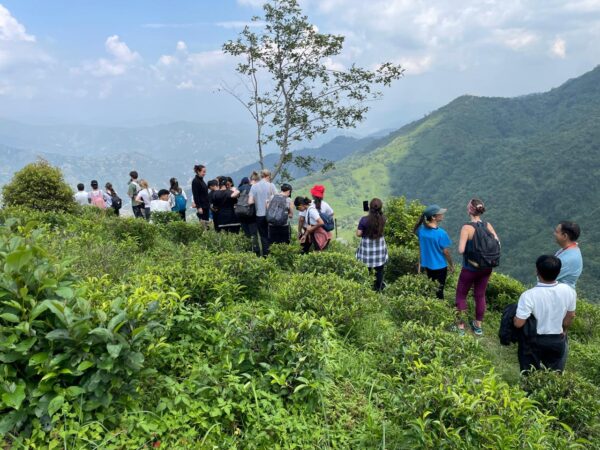
On June 16, 2026, Nepal Sanctuary Treks organized a meaningful CAS Program Nepal for students and teachers from an international school. The program combined outdoor adventure, environmental stewardship, sustainability education, organic farming, and community engagement. Through this CAS experience Nepal, students connected classroom learning with real-world action while exploring responsible tourism and environmental conservation.

The Managing Director led the program, and the Nepal Sanctuary Treks team supported every stage of the experience. Together, they created an engaging learning journey that aligned with the three CAS strands: Creativity, Activity, and Service.

Day Hike and Environmental Service in Shivapuri National Park
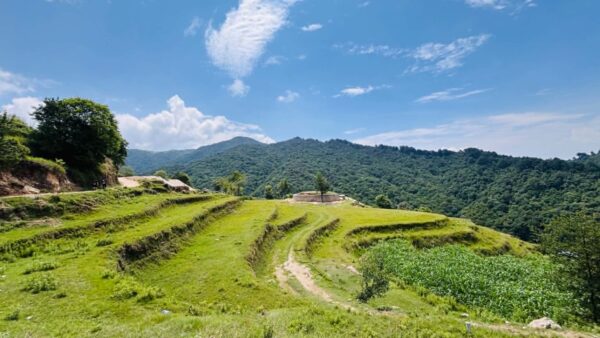
Students began the day with 2 hours scenic drive from Kathmandu to Mulkharka, followed by a guided hike through Shivapuri Nagarjun National Park, a key watershed and biodiversity area near the Kathmandu Valley.

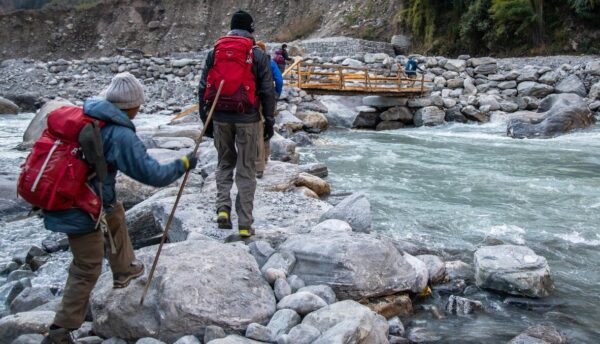
The trail from Mulkharka–Prabesh Hotel passed through Thulo Chaur, the Nagmati River valley, and Hille before reaching Prakriti Resort. Students walked through dense oak and rhododendron forests, terraced landscapes, Tamang village and open viewpoints across the mid-hills.

They crossed small streams and followed sections beside the Nagmati River, where the constant sound of flowing water created a calm natural atmosphere throughout the hike. Along the route, they observed native plants, birds, and changing forest ecosystems.

Students also participated in a trail clean-up activity. Nepal Sanctuary Treks provides gloves, reusable eco garbage bags, and litter pickers to the participants.
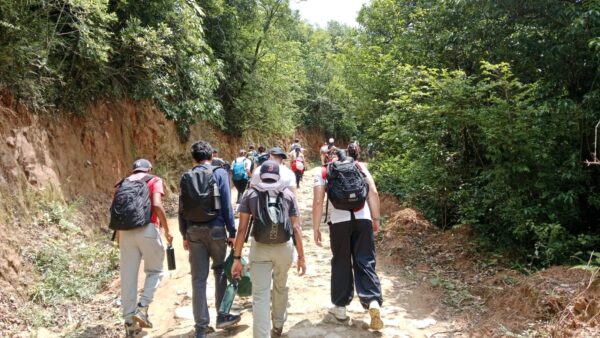
They crossed small streams and followed sections beside the Nagmati River, where the constant sound of flowing water created a calm natural atmosphere throughout the hike. Along the route, they observed native plants, birds, and changing forest ecosystems.
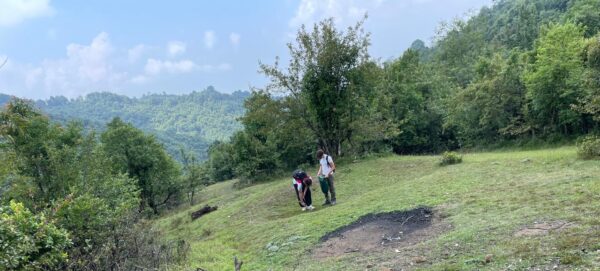
Students also participated in a trail clean-up activity. Nepal Sanctuary Treks provides gloves, reusable eco garbage bags, and litter pickers to the participants.

Environmental Impact
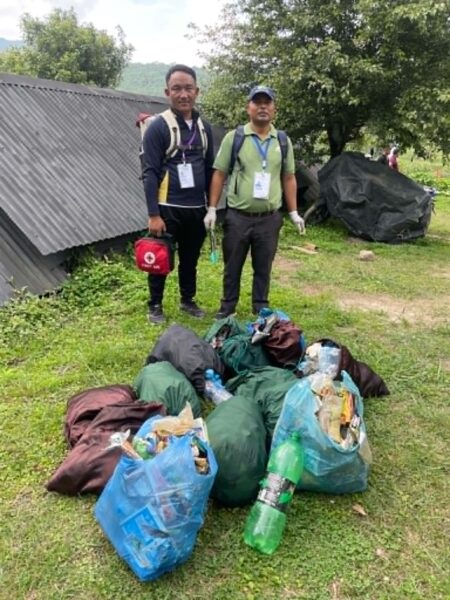
The clean-up reduced pollution pressure on forest and water systems within Shivapuri Nagarjun National Park. The group collected approximately 30 kilograms of waste, contributing directly to trail restoration and environmental protection. All collected waste was handed over to Prakriti Resort and Organic Farm for proper segregation and recycling, preventing further environmental contamination.

Nepal Sanctuary Treks further reduced environmental impact by providing refillable filtered water jars instead of single-use plastic bottles. With approximately 50 participants, the initiative helped eliminate the need for around 50 plastic bottles during the hike.

Through this experience, students saw how collective action and responsible tourism can create measurable environmental benefits in protected natural areas.

 A Regenerative Tourism Experience with Everest View
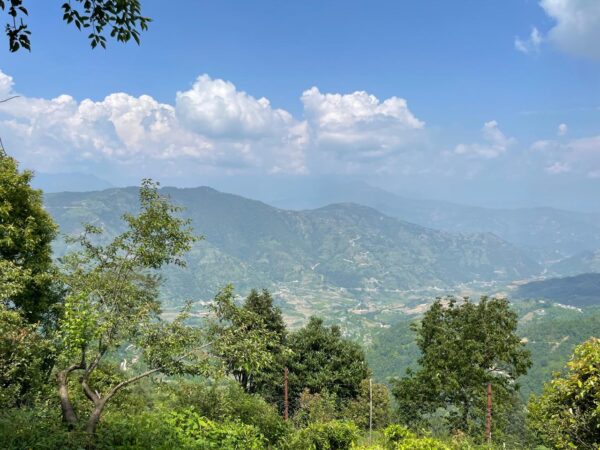
After completing a 3-hour hike, students reached Prakriti Resort and Organic Farm, perched at an altitude of about 2,000 meters. On a clear day, they enjoyed distant views of Mount Everest.

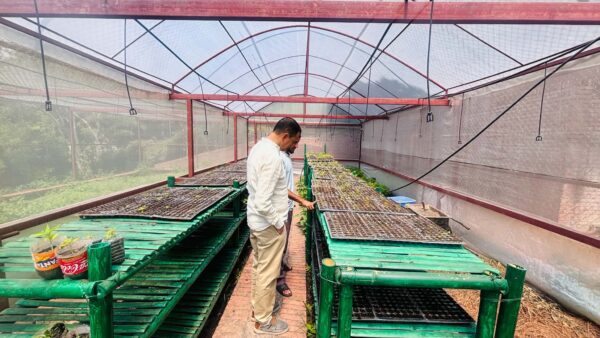
The Travelife-certified eco-resort showcased how regenerative tourism in Nepal can generate positive environmental and social impacts. During the visit, students explored organic farming systems, waste reduction initiatives, renewable practices, and community-based sustainability models. They learned how tourism businesses can actively restore natural resources while supporting local communities.

Farm-to-Table Organic Dining Experience

The group enjoyed a farm-to-table dining experience prepared with fresh organic produce grown on the resort’s farm.

Through this experience, students learned how sustainable agriculture supports healthy food systems while reducing transportation emissions. They also discovered how local sourcing strengthens eco-tourism Nepal and benefits surrounding communities.

Organic Waste, Vermicomposting, and Circular Farming
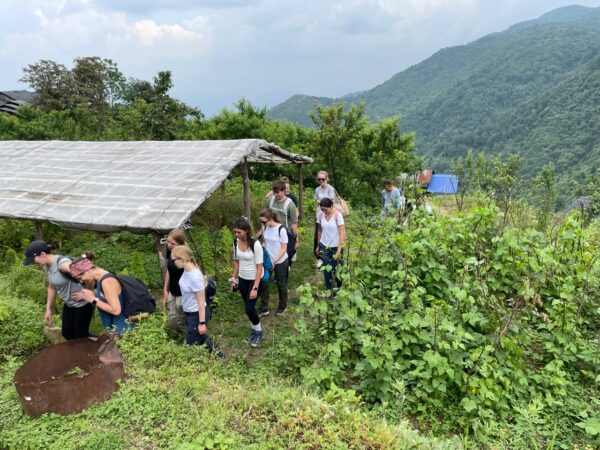
Students explored the resort’s zero-landfill waste management system. Staff members compost organic waste and convert it into nutrient-rich fertilizer for farming activities.

They also demonstrated vermicomposting techniques, where earthworms transform food waste into valuable compost. In addition, the resort uses food scraps to feed livestock and applies fireplace ash to improve soil fertility.

These practices showed students how sustainable tourism Nepal can support circular farming systems and reduce waste generation.

Water, Carp Fish Farming, and Integrated Farming Systems

Students visited a multipurpose pond that stores irrigation water and supports agricultural activities across the farm.

They also observed carp fish farming and learned how fish production contributes to food security and ecological balance. The integrated farming system demonstrated how water resources can simultaneously support agriculture, aquaculture, and regenerative land management.

Livestock, Tea Farming, and Self-Sustained Systems
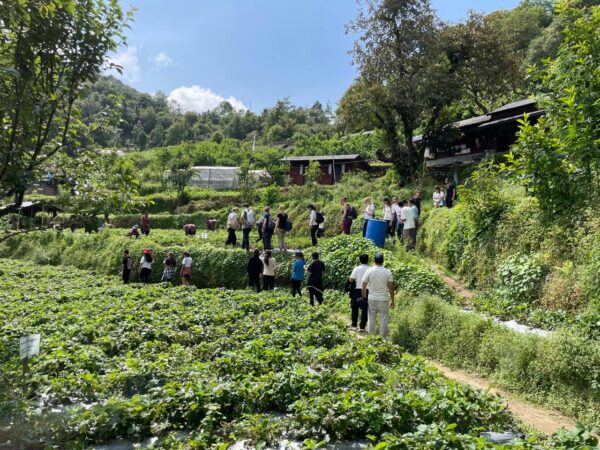
Students observed cow and buffalo farming operations and learned how livestock contribute to milk production, organic manure, and circular farming systems.

They also explored tea cultivation areas and discovered how tea farming supports biodiversity, agroforestry, and rural livelihoods. These examples highlighted the connection between sustainable agriculture and long-term environmental stewardship.

Plastic Reduction, Water Systems, and Sustainability Practices

The resort eliminates single-use plastics through several practical initiatives. These include refillable water systems, bamboo toothbrushes, eco-friendly toiletries, biodegradable corn-starch bags, reusable containers, and chemical-free cleaning products.

Students also observed advanced water management systems. The resort treats greywater and reuses it for irrigation, while septic systems safely process backwater.

Together, these initiatives demonstrate how businesses can reduce waste while conserving natural resources.

Water Management

Students learned how the resort manages wastewater through separate treatment systems.

The resort sends black water to septic tanks for treatment. Meanwhile, staff treat greywater and reuse it for irrigation across the property. The resort also uses plant-based, chemical-free cleaning products to minimize environmental impact.

These systems help conserve water resources and support sustainable land management.

Tea Farming

Students visited tea cultivation areas and explored the environmental and economic benefits of tea farming.

They learned how tea plantations support biodiversity, improve land use, and create employment opportunities for local communities.

Light Pollution Reduction for Eco-Tourism

Students observed how the resort reduces light pollution through thoughtful design and energy-efficient technology.

The property uses low-level pathway lighting, warm LED fixtures with natural covers, and motion sensors in gardens, candlelight in selected areas, and energy-efficient lighting systems.

These measures help protect nocturnal wildlife while creating a more natural environment for visitors.

Reflection and Appreciation

At the end of the program, students participated in a reflection session and shared insights from their experience. They discussed environmental challenges, sustainability solutions, and the role individuals can play in creating positive change.

Nepal Sanctuary Treks awarded Certificates of Appreciation to all students in recognition of their participation and environmental contribution.

Afterward, the group returned to Kathmandu, concluding a meaningful day of learning, service, and exploration.

Three Pillars of Sustainability

During this CAS Program Nepal, students explored the key pillars of sustainability and their role in sustainable development.

  • Environmental Sustainability: Regenerative farming, biodiversity conservation, and responsible resource management.
  • Socio-Cultural Sustainability: Community engagement, knowledge sharing, and preservation of local traditions.
  • Economic Sustainability: Responsible tourism that supports local livelihoods and employment.

How This CAS Program Nepal Supports Creativity, Activity, and Service

This CAS experience Nepal successfully integrated all three CAS strands through experiential learning, environmental service, and sustainability education.

Activity

The hiking experience fulfilled the Activity strand by encouraging physical effort, teamwork, and outdoor exploration.

Students:

  • Completed a 3-hours hike across varied terrain and Tamang village
  • Built endurance, resilience, and teamwork skills
  • Connected with nature through a real-world outdoor experience

Through this student trekking Nepal experience, participants challenged themselves physically while gaining a deeper appreciation for the natural environment.

Service

The trail clean-up initiative fulfilled the Service strand through direct environmental action and measurable impact.

Students:

  • Collected waste along hiking trails and surrounding forest areas
  • Removed approximately 30 kilograms of garbage
  • Helped protect ecosystems within Shivapuri Nagarjun National Park
  • Practiced responsible tourism and environmental stewardship

By working together, students demonstrated how small actions can create meaningful change. Their collective effort improved the trail environment and reinforced the importance of protecting natural spaces for future visitors.

Creativity

The Creativity strand emerged through sustainability learning, critical thinking, reflection, and discussion.

Students:

  • Explored regenerative tourism Nepal and sustainable farming practices
  • Participated in discussions about sustainability and responsible travel
  • Developed new perspectives on tourism, conservation, and community development

These experiences encouraged students to think creatively about how individuals and organizations can contribute to a more sustainable future.

Inspiring Responsible Global Citizens

This CAS Program Nepal gave students a unique opportunity to connect classroom learning with real-world action. By combining a Shivapuri National Park hike, environmental service, sustainability education, and regenerative tourism Nepal, the program encouraged students to become responsible travelers and active global citizens.

Through initiatives like this, Nepal Sanctuary Treks continues to promote sustainable tourism Nepal and create meaningful educational travel Nepal experiences that support environmental conservation, community engagement, and sustainable development.

Plan Your Sustainable Journey in Nepal

Partner with Nepal Sanctuary Treks, a Travelife Certified company, and experience authentic eco-tourism Nepal, responsible trekking, and regenerative tourism Nepal designed for schools, universities, and travelers seeking meaningful, sustainable adventures.

This ensures every journey supports responsible tourism, environmental conservation, and community wellbeing in Nepal.

For more information contact Nepal Sanctuary Treks to design your personalized sustainable travel experience in Nepal.
Read our Reviews | Contact Us for Custom Treks

Nepal Sanctuary Treks Supporting Carbon Offset and Tree Plantation Initiatives in Nepal

Nepal’s Carbon Offset and Tree Plantation Programs 

Nepal Sanctuary Treks is a Travelife Certified trekking company committed to responsible travel, sustainable tourism, and long-term environmental protection in Nepal. As part of its sustainability mission, the company actively supports carbon offset initiatives, tree planting programs, and biodiversity conservation projects across the Kathmandu Valley and beyond.

Through its partnership with Lily’s Leaves Social Enterprise and Pipal Tree, Nepal Sanctuary Treks contributes to urban reforestation, and ecological restoration.

Carbon Offset Commitment

As a responsible trekking company, Nepal Sanctuary Treks recognizes that tourism generates carbon emissions through travel and transportation. To balance this impact, the company participates in carbon offset programs in Nepal.

It contributes twice yearly to support tree plantation, forest restoration, and climate-positive initiatives.

Visited to Swayambhu–Bishnumati Urban Corridor

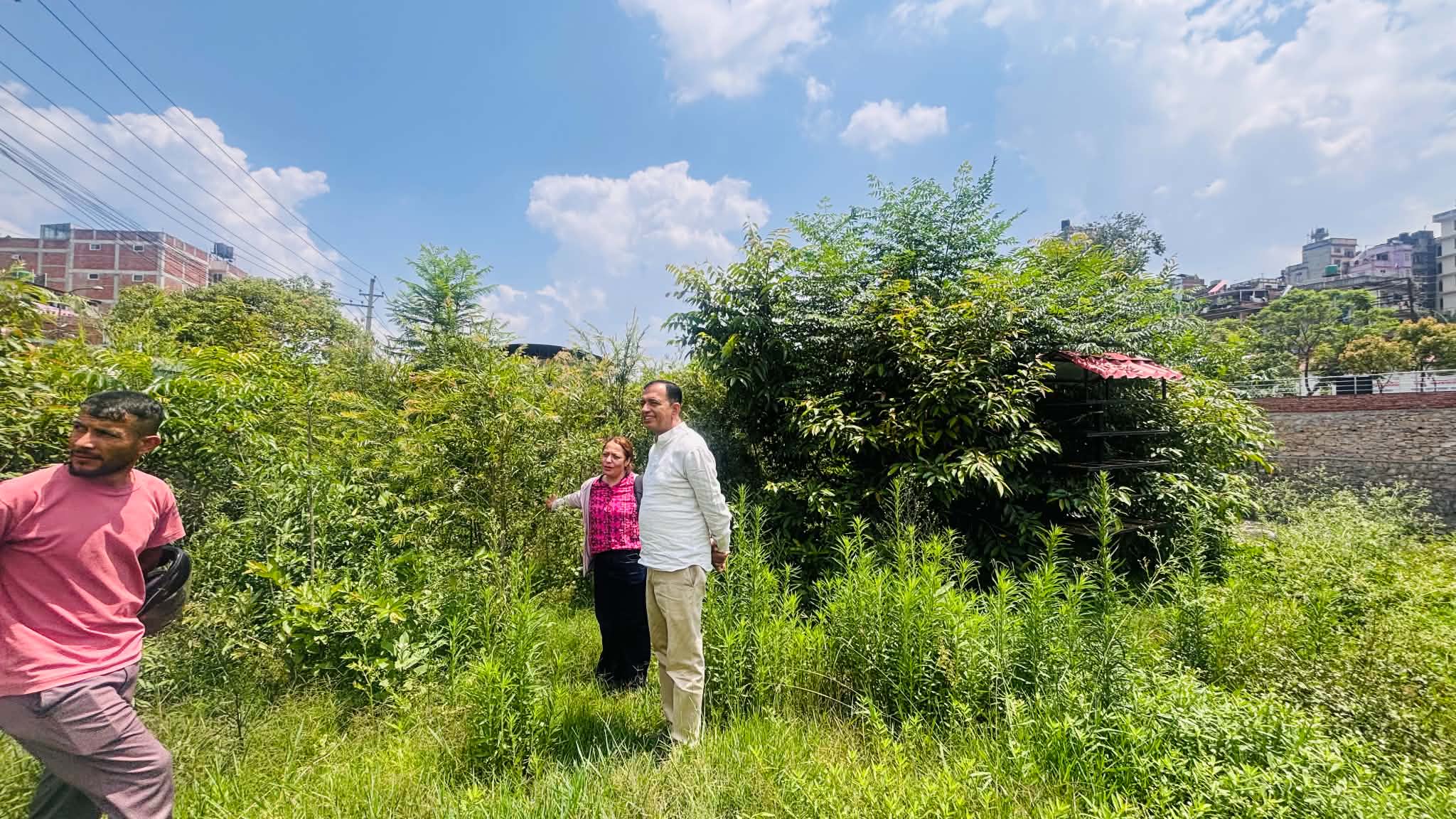
Recently, Managing Director Tulsi Gyawali visited the Swayambhu–Bishnumati Corridor urban forest restoration project in Kathmandu. He was accompanied by Lily Katuwal, Founder and CEO of Lily’s Leaves Social Enterprise, who shared insights into the ongoing restoration work.

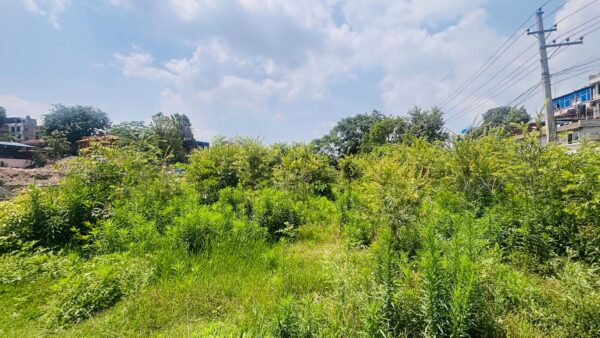
At the Bishnumati River right bank near Tankeshwor Road, the project covers 1,100 square meters and includes around 2,000 planted trees from 52 native species.

The project uses the Miyawaki method, a fast-growing afforestation technique that creates dense native forests, to transform degraded riverbanks and urban land into thriving green ecosystems. . The planting work also involves employment opportunities for deaf women, supporting inclusive community participation. 

This initiative transforms degraded urban riverbanks into dense forests that support carbon offset and biodiversity conservation in Nepal.

Visited Native Sapling Nursery and Seed Collection

During the visit, he also explored Lily’s Leaves native sapling nursery. The nursery uses native seeds collected from Swayambhu Forest, helping preserve ecological authenticity and protect indigenous plant species.

This process helps to:

  • Preserve native biodiversity
  • Strengthen forest resilience
  • Support ecosystem restoration
  • Supply high-quality saplings for plantation projects

These saplings are later planted across urban restoration sites in Kathmandu Valley.

Miyawaki Method for Fast Urban Forest Growth

The Miyawaki method creates dense, native forests that grow quickly and naturally.

Key benefits include:

  • High carbon sequestration for carbon offset
  • Rapid forest growth in small urban spaces
  • Increased biodiversity and wildlife habitat
  • Improved urban air quality
  • Soil regeneration and water retention
  • Stronger climate resilience in cities like Kathmandu

Nepal Sanctuary Treks supports these nature-based solutions as part of its long-term climate action strategy

Lily’s Leaves Social Enterprise

Lily’s Leaves Social Enterprise, founded by Lily Katuwal, combines environmental conservation with social empowerment.

The organization focuses on:

  • Urban forest restoration
  • River corridor rehabilitation
  • Native tree plantation
  • Biodiversity conservation
  • Women’s livelihood and skill development
  • Environmental education and community engagement

Through these efforts, it demonstrates how environmental restoration and social development can work together effectively

Pipal Tree

Pipal Tree supports environmental restoration and community-based forestry in Nepal. In partnership with organizations like Lily’s Leaves, it contributes to:

  • Urban reforestation projects
  • Native sapling nursery development
  • Biodiversity conservation programs
  • Climate-focused tree planting initiatives
  • Carbon offset and ecosystem restoration

Its work strengthens Nepal’s capacity to restore degraded ecosystems and promote sustainable land use.

Toward a Greener Future

Through collaboration with Lily’s Leaves and Pipal Tree, Nepal Sanctuary Treks actively supports carbon offset projects, greener cities, healthier ecosystems, and a more sustainable future.

Every tree planted represents a step toward climate balance, environmental restoration, and responsible tourism. Together, these efforts help build a future where travel protects nature, empowers communities, and restores the planet.

Manaslu Circuit Trek 2026: Ultimate Himalayan Adventure in Nepal

Manaslu Circuit Trek in Nepal

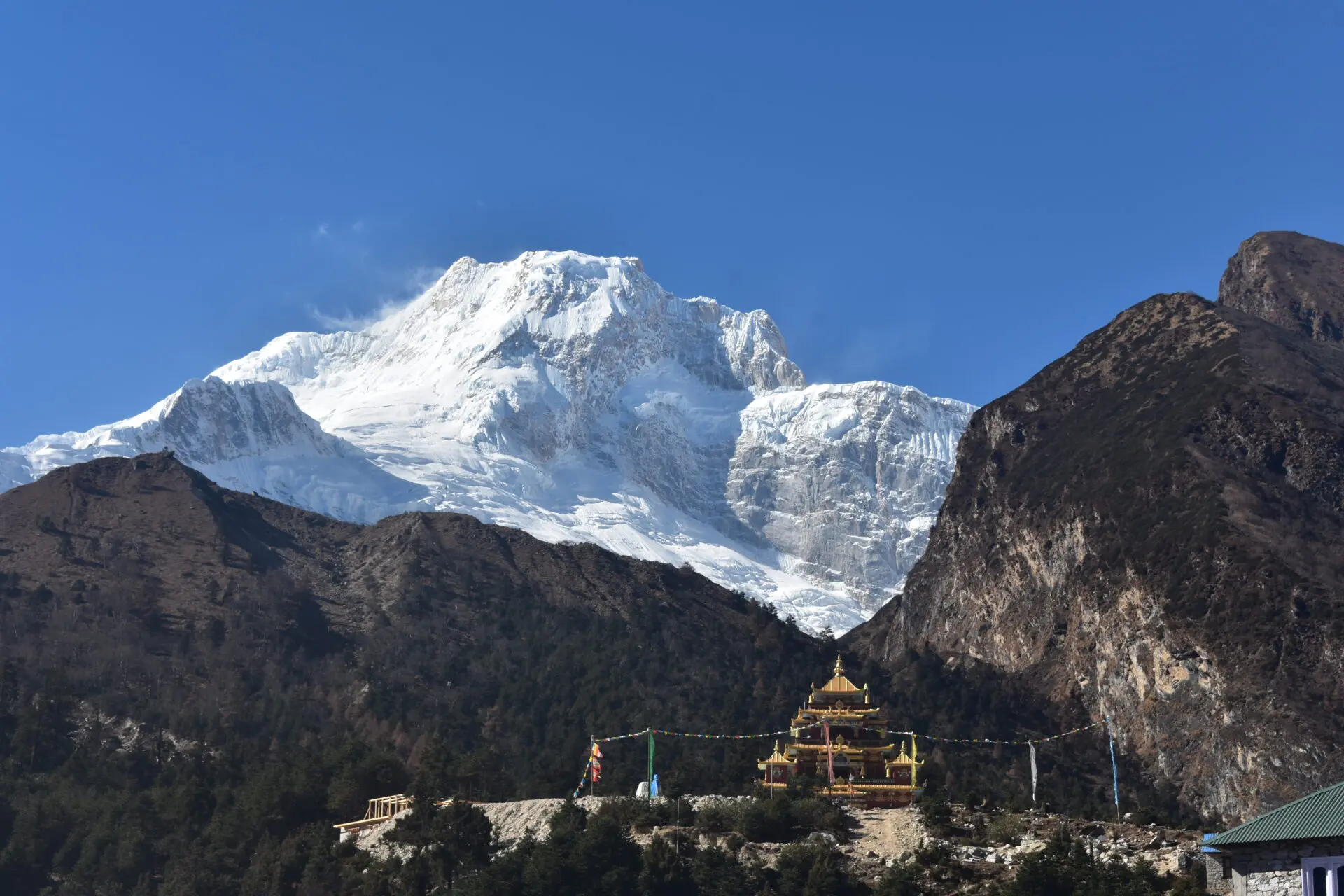
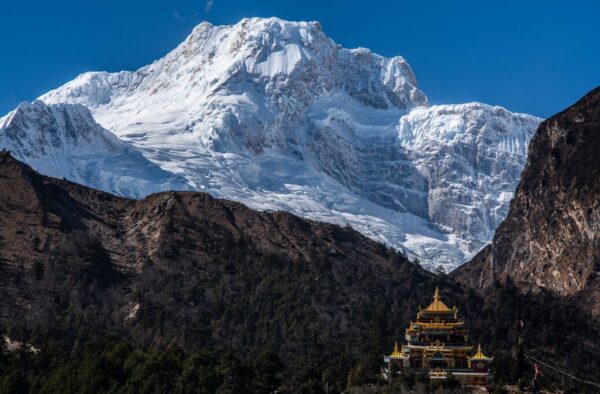
The Manaslu Circuit Trek 2026 is one of Nepal’s most rewarding Himalayan adventures, combining spectacular mountain landscapes, rich cultural heritage, and diverse natural environments. This classic trek circles Mount Manaslu (8,163 m), the world’s eighth-highest peak, within the protected Manaslu Conservation Area.

The name “Manaslu” comes from Sanskrit, meaning “spirit” or “soul,” reflecting the region’s strong Buddhist traditions and serene atmosphere. The trek covers approximately 180 kilometers, leading through lush forests, deep river valleys, traditional villages, alpine meadows, glaciers, and high mountain passes. Despite being only about 40 miles from Kathmandu, the region has preserved its remote character, offering an authentic Himalayan experience.

Manaslu Circuit Trek Trip Facts

Detail Information
Trek Duration 15 Days
Difficulty Moderate to Challenging
Maximum Altitude 5,160m
Highest Point Larkya La Pass
Trek Distance ~180 km
Best Seasons Spring & Autumn
Accommodation Teahouse Lodges
Region Manaslu Conservation Area
Starting Point Jagat
Ending Point Tilje
Permits Required RAP, MCAP, ACAP
Guide Requirement Licensed Guide Mandatory

Why Manaslu Circuit Trek is Special

Diverse Himalayan Landscapes

The Manaslu Circuit Trek landscape changes dramatically every day. The journey begins in lush green valleys along the Budhi Gandaki River, where trekkers walk through rice terraces, waterfalls, bamboo forests, and suspension bridges.

As altitude increases, the scenery transforms into alpine terrain with glaciers, rocky valleys, and snow-covered peaks. The trek offers panoramic views of Mount Manaslu, Ganesh Himal, Annapurna II, Himlung Himal, and other Himalayan giants.

One of the most dramatic highlights is crossing the Larkya La Pass (5,160m), where trekkers experience breathtaking 360-degree Himalayan views. Nepal Sanctuary treks offer one of the best Manaslu circuit trek package.

Peaceful Trails and Fewer Crowds

The Manaslu Circuit Trek’s less crowded experience is one of its biggest advantages. Because the region is restricted, trekkers must travel with a licensed guide and obtain special permits.

These regulations help preserve nature and control tourism. As a result, the trails remain quiet even during peak seasons, offering a peaceful Himalayan trekking experience far from crowded 

Teahouse Experience on the Manaslu Circuit

The Manaslu Circuit Trek offers a raw Himalayan experience without camping. Local families now run simple, cozy teahouses along the entire route, providing warm meals and basic lodging throughout the journey.

Authentic Tibetan Culture in Manaslu Region

The Manaslu Circuit Trek cultural experience is one of its strongest attractions. The trail passes through Tibetan-influenced villages such as Samagaun, Samdo, Lho, and Namrung.

These villages preserve centuries-old traditions, including yak herding, farming, and Tibetan Buddhism. Mani walls, prayer wheels, chortens, and ancient monasteries create a deeply spiritual atmosphere along the route.

This cultural authenticity makes the Manaslu Circuit Trek one of the most immersive Himalayan experiences in Nepal.

The Living Nubri Culture (Tibetan Heritage Zone)

The upper Manaslu region, known as the Nubri Valley, remains a protected cultural sanctuary. Local communities are descendants of Tibetan settlers who arrived centuries ago.

They still wear traditional Chubas, speak unique dialects, and maintain a high-altitude lifestyle based on farming and yak herding.

Nearby lies the sacred Tsum Valley, a deeply spiritual region where non-violence is strictly practiced, creating a peaceful atmosphere throughout the area.

Suspension Bridges and Budhi Gandaki Gorge

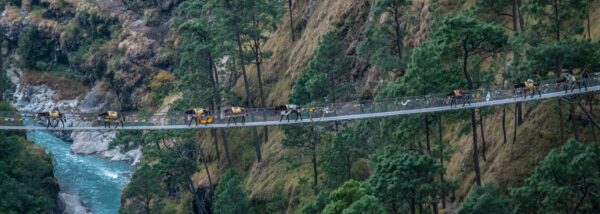
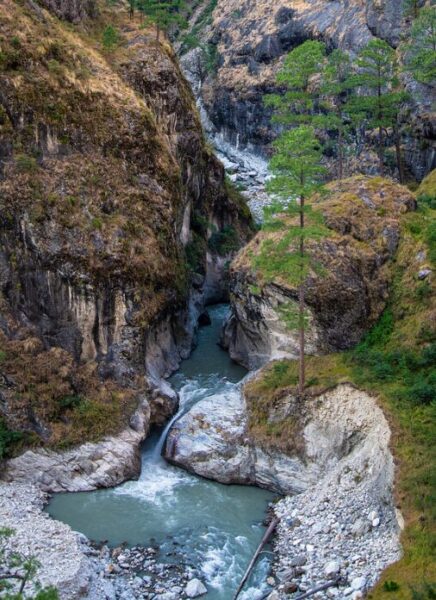
The lower section of the trek follows the dramatic Budhi Gandaki River gorge. The trail is carved into steep cliffs and includes multiple long suspension bridges decorated with prayer flags.

This section creates an exciting and adventurous start to the Manaslu Circuit Trek Nepal journey.

Changing Ecosystem and Wildlife

The Manaslu Conservation Area biodiversity is extremely rich. Trekkers pass through forests, alpine meadows, glacier valleys, and high-altitude deserts.

The Manaslu region supports over 33 mammals, 110+ bird species, and around 2,000 plant species. Wildlife includes Himalayan blue sheep, langur monkeys, marmots, and rare species like the snow leopard. The changing ecosystem makes the trek visually dynamic and exciting throughout.

Major Highlights of Manaslu Circuit Trek 2026

Larkya La Pass (5,160m)

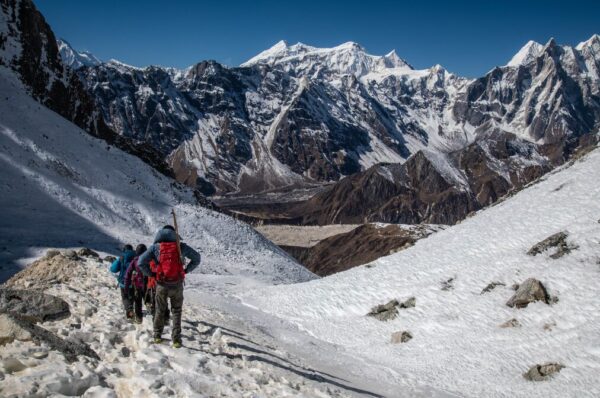
The Larkya La Pass crossing in Manaslu Circuit Trek is one of the most challenging sections of the journey. Trekkers usually start early in the morning and cross steep, icy terrain in cold conditions.

From the top, trekkers enjoy panoramic views of Himlung Himal, Cheo Himal, Kang Guru, Annapurna II, and surrounding peaks. This moment is often considered the most rewarding part of the entire trek.

Manaslu Base Camp Trek Side Trip

The Manaslu Base Camp hike from Samagaun offers one of the best viewpoints of Mount Manaslu. The trail passes glaciers, moraines, and alpine terrain before reaching around 4,800 meters.

Sunrise views from this area create unforgettable Himalayan scenery and give trekkers close-up views of expedition routes.

Birendra Lake (Glacial Lake in Manaslu)

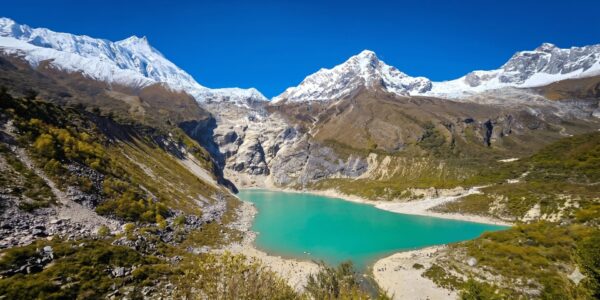
Birendra Lake near Samagaun is a peaceful glacial lake located at 3,691 meters. It reflects surrounding mountains and glaciers, creating a stunning mirror effect.

This short hike is ideal for acclimatization and offers a calm break during the trek.

Pungyen Gompa – Hidden Monastery

Pungyen Gompa lies in a remote alpine valley at around 4,100 meters. It is considered one of the most spiritual sites in the Manaslu region.

The monastery contains ancient Tibetan texts, murals, and Thangka paintings. The surrounding valley is also home to Himalayan wildlife like blue sheep and yaks.

Cultural Experience in Manaslu Region

The trek passes through three cultural zones:

  • Lower region: Hindu and Brahmin communities 
  • Middle region: Gurung villages 
  • Upper region: Tibetan Buddhist communities 

Trekkers experience monasteries, prayer flags, traditional food, and warm local hospitality along the route.

Tsum Valley Side Trip

The Tsum Valley Trek extension from Manaslu Circuit is a hidden gem in Nepal. It features ancient monasteries, sacred caves, Buddhist heritage, and untouched Himalayan culture.

Manaslu Circuit Trek 2026 Itinerary (15 Days Overview)

A typical Manaslu Circuit Trek itinerary 15 days follows a gradual ascent through diverse landscapes.

  • Day 1: Arrival in Kathmandu 
  • Day 2: Trek preparation & sightseeing 
  • Day 3: Drive to Jagat 
  • Day 4: Trek to Deng 
  • Day 5: Trek to Namrung 
  • Day 6: Trek to Lho 
  • Day 7: Trek to Samagaun 
  • Day 8: Acclimatization in Samagaun 
  • Day 9: Trek to Samdo 
  • Day 10: Acclimatization in Samdo 
  • Day 11: Trek to Dharamsala 
  • Day 12: Cross Larkya La Pass → Bimthang 
  • Day 13: Trek to Tilje 
  • Day 14: Drive to Kathmandu 
  • Day 15: Final departure

Optional extensions include Manaslu Base Camp or Tsum Valley. This is a standard itinerary outline, Nepal Sanctuary Treks customize the itinerary based on your preference, timeframe and fitness level. Explore our detailed itinerary   

Manaslu Circuit Trek Difficulty Level

The Manaslu Circuit Trek difficulty level is classified as strenuous. Trekkers should prepare for long walking days, steep ascents, high altitude, cold weather, and remote trails.

Most trekkers walk 6–8 hours per day. However, with proper preparation and guided support, even fit beginners can complete the trek successfully.

Altitude Sickness and Acclimatization

Altitude sickness is one of the most common challenges on the Manaslu Circuit Trek, but the gradual increase in elevation allows the body to acclimatize safely. Most itineraries also include dedicated rest days in places like Samagaun and Samdo before crossing the Larkya La Pass.

Trekkers are advised to maintain a slow pace, drink plenty of water, avoid alcohol, eat balanced meals, follow their guide’s instructions, and stay mentally prepared throughout the journey. Proper acclimatization significantly improves safety and increases the chances of successfully completing the trek.

Nepal Sanctuary Treks carefully designs itineraries with sufficient acclimatization days to help trekkers adapt gradually to the altitude.

Manaslu Circuit Trek Weather and Temperature Guide

Season Conditions Temperature Range
Spring (March to May) Trekkers enjoy clear skies, blooming rhododendrons, and stable weather. Lower regions: 10°C to 20°C
Above 4,000m: -5°C to 10°C
Nights: cold at higher altitudes
Autumn (October to November) Trekkers experience the best trekking conditions with dry trails and excellent visibility. Mid altitudes: 5°C to 15°C
Larkya La Pass: -10°C to 5°C
Winter (December to February) Trekking becomes challenging due to heavy snow and extreme cold at high passes. Lower regions: around 5°C
High passes: down to -20°C
Monsoon (June to August) Trails become wet and slippery with frequent rain and reduced visibility. Lower regions: 15°C to 25°C
Above 4,000m: 0°C to 10°C

Manaslu Circuit Trek Packing List

Footwear:

  • Walking boots. A pair of water-repellent boots with ankle support.
  • Walking socks.
  • Trainers or trail shoes. Can be used in and around the lodge in the afternoons/evenings.

Clothing:

  • Waterproof jacket and trousers (Gore-Tex or similar).
  • Trekking trousers.
  • Long sleeve shirts (not cotton).
  • Mid to heavyweight fleece.
  • Sleeveless or body warmer type fleece.
  • Thermals or base layer for top & bottom (merino wool or synthetic).
  • Fleece pants.
  • Medium weight down jacket (e.g.: Nuptse jacket by The North Face).

Hand wear:

  • Fleece gloves.
  • Warms mittens and/or gloves.

Headwear:

  • Wool or fleece hat.
  • Sun hat.
  • Bandana or scarf.
  • Head torch. Bring extra batteries.
  • Sunglasses.

For crossing the passes

  • Trekking poles
  • Yaktrax 
  • Gaiters

Personal Equipment:

  • Day pack (you’ll need during the day, such as warm clothes, a jacket, a camera, water bottles, snacks, and a personal first aid kit. Keep your daypack under 5 kg. A porter will transport the rest of your personal gear in a duffel or kit bag, which should not exceed 15 kg per trekker. Clearly mark your bag to help identify it easily.)
  • Stuff sacks for keeping your gear dry and organized.
  • Water bottles (Nalgene wide-mouth bottles are the best).
  • Sunscreen and lip salve with a high SPF.
  • Water purification tablets (Aqua Tab, Chlorine dioxide).
  • Favourite snack food.
  • Sleeping bag ( available for rental in Kathmandu approx.@ US$1.5/day)
  • Camera with spare batteries and memory cards.
  • Insurance certificate.
  • Flash Light
  • Earplugs (optional).
  • Hand sanitizer 
  • Face Mask
  • Spare cash for extra expenses like hot shower, boiled water, gadget charging during trek

Traveling:

  • Bring a small combination padlock to secure the bag.
  • Travel clothes. You will need casual clothing for air travel days and time spent in Kathmandu.
  • Toiletry bags include toilet paper, soap, towel, toothbrush, etc.
  • Quick dry towel

Personal first aid kit: Note: Nepal Sanctuary Treks provides a comprehensive group first aid kit, but please bring personal medications and other items you might use regularly.

Plan Your Manaslu Circuit Trek 2026 Today

Ready to explore one of Nepal’s most iconic restricted trekking routes?
Make your trek safe, well-organized, and unforgettable with expert guidance.

Contact Nepal Sanctuary Treks, a Travelife Certified Company to customize your Manaslu Circuit Trek itinerary, or request a detailed trip plan.

Frequently Asked Questions About the Manaslu Circuit Trek 2026

How difficult is the Manaslu Circuit Trek?

The Manaslu Circuit Trek is a moderate to challenging trek that requires good fitness and preparation. During the trek, you will walk 6–8 hours each day, gain significant altitude, and cross the high mountain pass of Larkya La Pass (5,160m). The combination of long trekking days, high altitude, and remote terrain makes the trek physically demanding. However, with proper acclimatization, a steady pace, and support from an experienced guide, most trekkers can complete the Manaslu Circuit Trek successfully.

What is the highest point of the Manaslu Circuit Trek?

The highest point of the Manaslu Circuit Trek is Larkya La Pass at 5,160 meters (16,929 feet). From Larkya La Pass, trekkers enjoy spectacular views of Mount Manaslu (8,163 m), Himlung Himal (7,126 m), Cheo Himal (6,820 m), and surrounding Himalayan peaks, glaciers, and alpine valleys.

Do I need trekking guide for Manaslu Circuit Trek?

Yes. The Manaslu region is a restricted trekking area in Nepal, and all trekkers must be accompanied by a licensed guide. Trekking with an experienced guide improves safety, navigation, acclimatization, and cultural understanding.

With over 27 years of experience organizing treks throughout Nepal, including the Manaslu Circuit Trek and sections of the Great Himalaya Trail (GHT), Nepal Sanctuary Treks provides expert guides, personalized service, and comprehensive safety support for a rewarding Himalayan adventure.

What accommodation is available on the Manaslu Circuit Trek?

Accommodation is provided in local teahouses along the trekking route. Rooms are generally simple but comfortable, offering basic facilities, warm meals, and an authentic Himalayan trekking experience.

What permits are needed for Manaslu Circuit Trek?

Trekkers need three permits for the Manaslu Circuit Trek:

  • Restricted Area Permit (RAP)
  • Manaslu Conservation Area Permit (MCAP)
  • Annapurna Conservation Area Permit (ACAP)
A licensed guide is mandatory for all trekkers in the region. Nepal Sanctuary Treks, a Travelife Certified company arranges all necessary permits and all inclusive support for a smooth trekking experience.

What are the major highlights of the Manaslu Circuit Trek?

The major highlights of the Manaslu Circuit Trek include crossing Larkya La Pass, visiting Manaslu Base Camp, exploring Birendra Lake, experiencing Tibetan Buddhist culture in Samagaun and Samdo, viewing Mount Manaslu (8,163m), and trekking through the diverse landscapes of the Manaslu Conservation Area.

Is the Manaslu Circuit Trek better than the Annapurna Circuit Trek?

Both treks are exceptional, but many trekkers choose the Manaslu Circuit Trek for its quieter trails, authentic cultural experiences, remote mountain scenery, and fewer crowds. It offers a more off-the-beaten-path trekking experience compared to the Annapurna Circuit.

Why choose Nepal Sanctuary Treks for the Manaslu Circuit Trek?

Nepal Sanctuary Treks has over 27+ years of experience leading trekking adventures across Nepal. Our team specializes in personalized trekking experiences, experienced guides, comprehensive safety protocols, and responsible tourism practices. We provide customized Manaslu Circuit Trek itineraries tailored to your fitness level, interests, and travel schedule.

Equine Vaccination and Welfare Initiative in Upper Mustang

Equine Welfare in Upper Mustang, Nepal

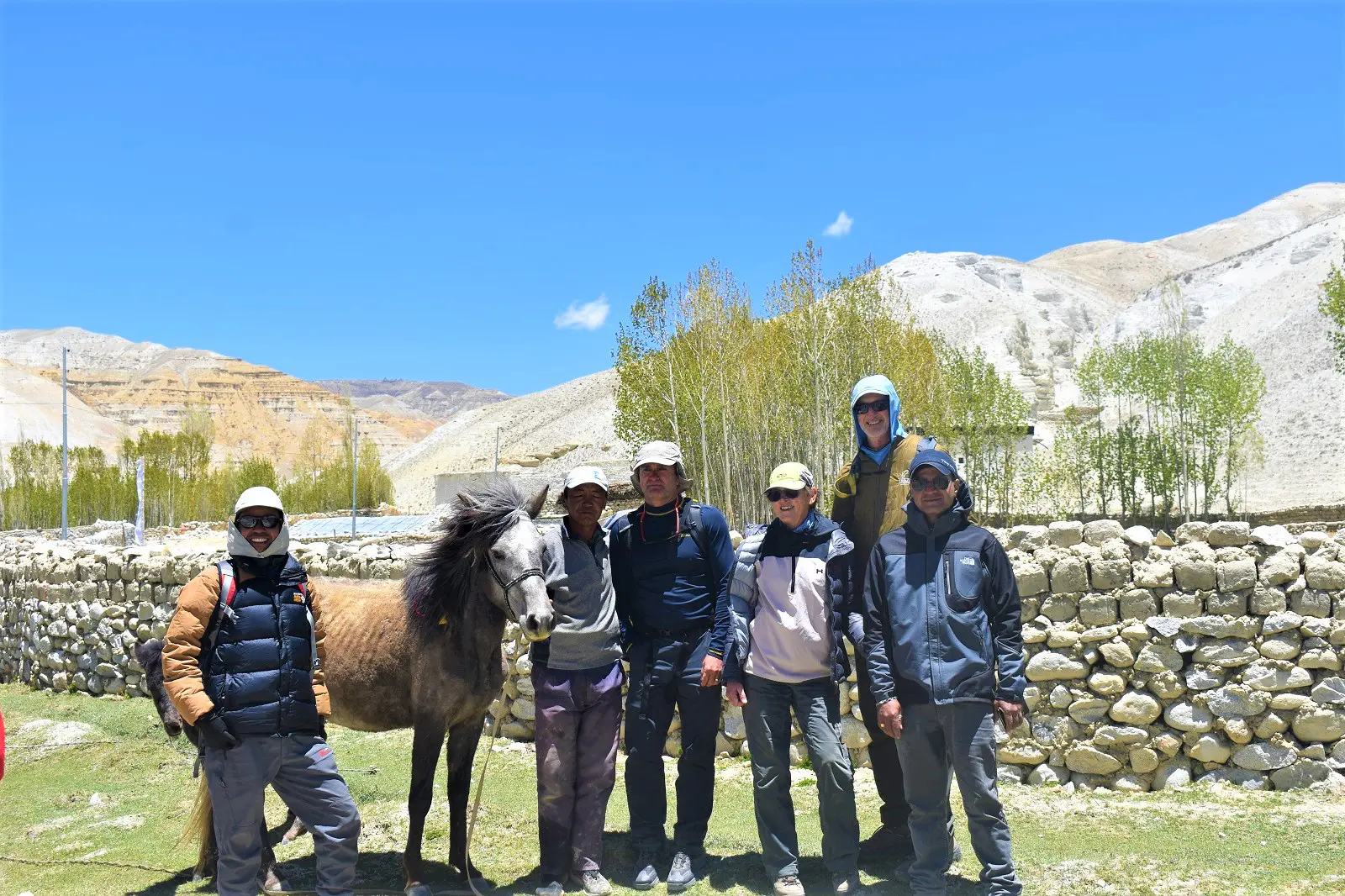
Nepal Sanctuary Treks, a Travelife-certified trekking company, actively improves equine welfare in Mustang, Nepal in partnership with veterinary doctor Dr. Atish Kumar Yadav and his team. Supported by Dr. Sheila Schils, owner of EquiNew Therapy, these programs focus on protecting horses, mules, donkeys, and native Tibetan ponies in Upper Mustang. These programs not only promote animal health but also enhance the safety and well-being of local communities who rely on equines for agriculture, transportation, and cultural traditions.

Equine Vaccination and Treatment Program in Upper Mustang

Since spring 2023, Nepal Sanctuary Treks has treated and vaccinated hundreds of equines in Upper Mustang. In spring 2023, 350 ponies received care, followed by 250 equines in autumn 2024. In 2025, the program expanded, treating 500 ponies in spring.

On December 10, 2025, the team conducted a district-level vaccination program, reaching 405 equines across three rural municipalities. This included horses, mules, and donkeys. The campaign also provided deworming and general health treatment at no cost to local owners.

The vaccination program began in Waragung Muktikshetra Rural Municipality and continued in Gharapjhong and Thasang Rural Municipalities. Veterinary teams vaccinated 305 horses, 50 mules, and 3 donkeys, conducting comprehensive health assessments in each community. These efforts ensured animals received preventative care, immediate treatment for minor illnesses, and long-term support for their well-being.

Strong Local Coordination for Equine Welfare in Mustang Nepal

Nepal Sanctuary Treks implemented the program in close coordination with the Agriculture and Livestock Development Office Mustang and the local governments of Waragung, Gharapjhong, and Thasang Rural Municipalities.

Despite harsh winter weather and remote terrain, the team ensured that even isolated villages received veterinary care by managing logistics and trekking support.

Animal Nepal provided technical expertise by deploying a veterinary team led by Dr. Yadav, supported by trained technicians and assistants.

Rabies and Tetanus Prevention for Community Health in Mustang

Rabies and tetanus are major threats to both animals and humans in Mustang. Experts estimate that up to 70% of disease transmission comes from infected equines. Vaccination is the most effective way to prevent these diseases and protect public health in rural communities.

In Mustang, equines stay in villages for six months and graze in highland pastures the rest of the year. During this time, attacks by wild dogs, jackals, and other wildlife increase the risk of infection. The vaccination program addresses these risks, enhancing safety for both animals and people.

Veterinary Findings and Free Treatment in Mustang

Veterinary teams assessed the health of all animals during the campaign. In Waragung Muktikshetra, animals were in good condition, while some in Gharapjhong and Thasang showed signs of weakness and minor health issues. The teams treated these conditions on-site and provided all medications free of charge.

Protecting Tibetan Ponies from Extinction

A key goal of the initiative is to protect native Tibetan ponies, which are at risk due to population decline, illegal trade, and the commercial use of sick animals. Limited local knowledge of equine health often causes overwork and poor treatment of injured or ill ponies.

To address these issues, Dr. Sheila Schils and Tulsi Gyawali, Managing Director of Nepal Sanctuary Treks, initiated the equine welfare program in Mustang. The program raises awareness, provides veterinary care, and promotes responsible animal management to help conserve the endangered Tibetan ponies and ensure sustainable equine welfare practices.

Future Plans for Equine Welfare in Mustang Nepal

Building on the success of this program, Nepal Sanctuary Treks plans to expand equine vaccination and welfare initiatives to Lomanthang and Loghekar Damodarkunda during Baisakh (April–May 2026). he program has strong local engagement, and even with improved road access reducing Mustang’s equine population, horses and ponies remain vital for agriculture, transport, and cultural traditions.

Nepal Sanctuary Treks remains committed to the long-term equine welfare in Upper Mustang, supporting both animal health and sustainable mountain livelihoods.

Honoring Dr. Sheila Schils for Her Impactful Involvement

We extend our heartfelt appreciation to Dr. Sheila Schils for her vital support in Mustang. Her contributions have been instrumental in preserving the Tibetan ponies and enhancing the health and safety of local communities.

Birkdale School Nepal Treks – 25 Years of Adventure & Community Work

School Treks to Nepal: 25 Years of Birkdale School Adventures

For over 26 years, Nepal Sanctuary Treks has proudly organised school treks to Nepal, including long-standing trips with Birkdale School. What began in 2000 with a trip led by Keith Brook has grown into a long-standing partnership that continues to inspire young people and strengthen communities across Nepal.

School Treks to Nepal

From the very beginning, visiting Nepal has meant far more than trekking. For students, teachers, and families alike, each journey has been about forming genuine connections, sharing experiences, and learning from the resilience and warmth of the Nepalese people. Over the years, the Birkdale community in Sheffield has supported a range of local projects, turning these visits into opportunities for real and lasting change.

Birkdale School Educational Treks: More Than Just Trekking

Colorful flowers with mountain backdrop

Every group that travels to Nepal returns with more than photographs of breathtaking landscapes. Students arrive home with new perspectives; often recognising, perhaps for the first time, how much they take for granted. Meeting determined children, committed teachers, and families facing daily challenges leaves a deep and lasting impression.

Many carry these lessons long after the trip ends, growing in empathy, leadership, and a desire to make a difference. Thanks to Keith Brook and the wider Birkdale community, hundreds of children have received vital educational and healthcare support. Just as importantly, countless friendships and memories have been formed, helping build a meaningful bridge of understanding between Nepal and England.

Birkdale School Adult Group (RNV Nepal) Trek and Ongoing Community Support

Group of hikers with mountain backdrop

This autumn, Nepal Sanctuary Treks had the pleasure of guiding a Birkdale School adult group on the Ghandruk Loop and Australian Camp; a journey full of stunning scenery, shared laughter, and renewed connection.

Beyond their love of travel, Birkdale continues to support Nepal through RNV Nepal, contributing to education, healthcare, soil testing, and teacher training. This ongoing commitment ensures that the impact of each visit reaches far beyond the trekking paths.

Honouring 25 Years of Adventure and Impact

Looking back, we feel truly fortunate to have shared this remarkable journey with Birkdale School. Even through political unrest, natural disasters, and global challenges, the community has returned year after year. They have been supporting local charities, encouraging local schools, and making a genuine difference in the lives of many.
We are especially grateful for the leadership and dedication that have shaped this partnership. Alongside Keith Brook, we warmly acknowledge Steve Kenyon for his guidance, and Charlotte Kidd for her exceptional organisation and care in coordinating each group. Their commitment has enriched every trip and strengthened the bond between our communities.

Plan Your School Treks to Nepal

If the story of Birkdale School treks to Nepal inspires you, Nepal Sanctuary Treks can help plan your own tailor-made school treks to Nepal.

We specialise in designing safe, educational, and unforgettable journeys that combine adventure with cultural learning.  Whether your group is trekking to remote mountain villages, or participating in local community projects, each Nepal school trip is carefully planned to leave a lasting impact on students and the communities they visit.

With decades of experience and Travelife Certified, Nepal Sanctuary Treks is dedicated to fostering responsible travel, supporting local communities, and helping students discover the transformative power of exploration.  Students gain first-hand insights into Nepalese culture, history, and daily life, fostering personal growth, leadership skills, and lifelong memories on every school trek in Nepal.

Start planning your school treks to Nepal today with Nepal Sanctuary Treks and create an educational adventure that leaves a lasting impression on both your students and the communities they visit. For more information please Contact our team today

Nepal Trekking Adventure: 20 Years with Nepal Sanctuary Treks

Nepal Trekking Adventure: Rense and Gerlunde’s Remarkable Journey with Nepal Sanctuary Treks

Dreaming of an unforgettable Nepal trekking adventure? Look no further than Nepal Sanctuary Treks, where we specialize in crafting personalized journeys that allow you to truly connect with Nepal’s breathtaking landscapes, rich culture, and vibrant communities.

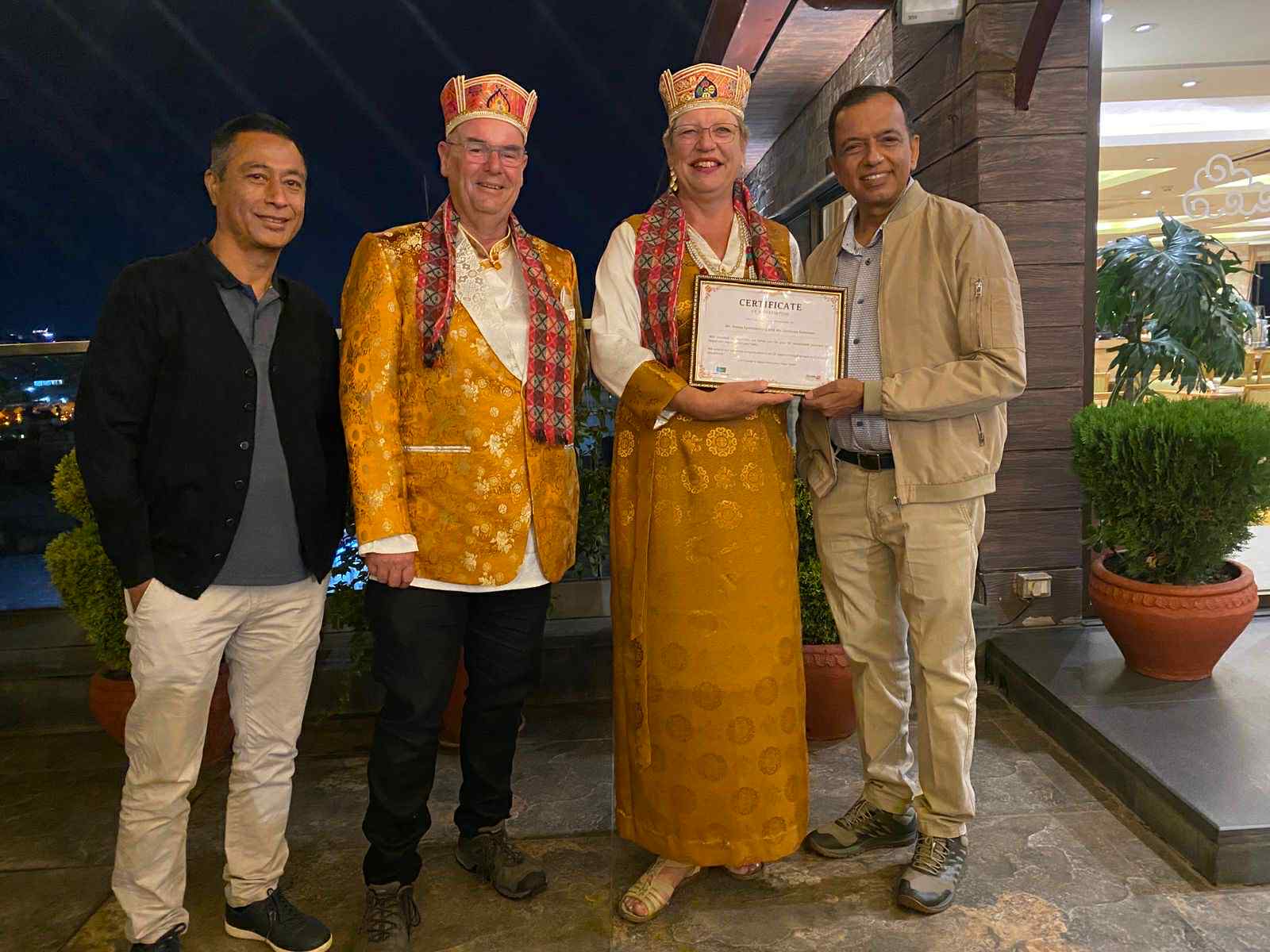
On October 16, 2025, we had the distinct pleasure of celebrating a heartwarming milestone with two of our dearest guests, Rense and Gerlunde from the Netherlands, as they marked their 25th anniversary in Nepal. This celebration was more than just a moment of joy; it was a reflection of the enduring bond and trust we have built with them through years of unforgettable trekking adventures.

A Celebration in Tamang Tradition

Rense and Gerlunde’s 25th Anniversary: A Celebration in Tamang Tradition

To celebrate 25 years together, Rense and Gerlunde chose a deeply meaningful way to mark the occasion: by immersing themselves in Nepal’s Tamang culture. Their trusted guide, Purna Tamang, who has been with them on every trek since the very beginning, is a proud member of the Tamang community. Through this connection with the people and traditions of Nepal, their journey reflects not just a love for adventure, but a heartfelt bond with the land and its rich, living culture.

Nepal Sanctuary Treks Managing Director, Mr. Tulsi Gyawali, along with General Manager Mr. Prashant Rana and Quality Control Officer Mr. Purna Shrestha, joined in celebrating this special occasion and expressed heartfelt gratitude for Rense and Gerlunde’s continued trust and loyalty. Their long-standing relationship with our team reflects the meaningful connections we build with our guests through personalized service, genuine care, and trust.

20 Treks, 25 Years, One Unbreakable Bond

Over 25 years, Rense and Gerlunde have returned to Nepal 20 times, each time choosing Nepal Sanctuary Treks and the same trusted guide, Purna Tamang, for their adventures. This remarkable consistency reflects our commitment to building lasting relationships not only with our guests but also within our team. Our low staff turnover and dedication to employee well-being are core values that allow us to provide exceptional, personalized trekking experiences consistently.

Exploring Nepal’s Iconic Trekking Trails

Rense and Gerlunde have had the privilege of trekking through some of Nepal’s most iconic trails, including:

Pikey Peak Trek,

Everest Base Camp,

Khopra Ridge Trek,

Langtang Trek,

Annapurna Base Camp Trek,

Tamang Heritage Trek and more.

Iconic Trekking Trails
2019 Pikey Peak Trek: Rense and Gerlunde with their guide, Purna Tamang

Each journey has deepened their connection to Nepal’s natural beauty, warm-hearted people, and vibrant cultural heritage. Their adventures are a testament to the type of transformative and sustainable travel experience we aim to create for every traveler.

Personalized Nepal Trekking Adventures That Connect You to Nepal’s Heart

What truly makes Nepal Sanctuary Treks special is the way we connect our travelers to Nepal; its people, its culture, and its landscapes. For us, trekking is never just about the destination, but the journey itself. Guides like Purna Tamang don’t just lead the trail; they share the soul of Nepal with you, weaving stories that make each journey feel personal. That’s what makes every trek with us feel truly special.

Every adventure is crafted with attention to safety, comfort, and a deep respect for local communities, ensuring that your journey leaves a positive impact on both you and the places you visit. It’s this attention to detail that has earned us the loyalty of guests like Rense and Gerlunde, who return year after year to experience something new and unforgettable.

A Transformative and Sustainable Nepal Trekking Adventure

Every journey with us goes beyond just trekking; it’s about truly connecting with Nepal. Rense and Gerlunde’s trips are proof of that each trek has not only brought them closer to Nepal’s stunning landscapes but also to its people. They have been part of the communities they visit, sharing in the everyday lives of locals and learning from them, too. From customized itineraries to expert local guides, every aspect of our trips is designed to make your adventure as meaningful and impactful as possible.

Start Your Nepal Trekking Adventure

At Nepal Sanctuary Treks, we’ve spent over 27 years creating journeys like this. As a Travelife Certified company, we take pride in ensuring every adventure is sustainable, leaving a positive impact on both our guests and the places they explore.

Ready to take the next step on your Nepal adventure? Get in touch with our team, and let’s start planning a trek you will remember forever.


FAQs

Which are the most popular trekking routes in Nepal?

Popular trekking routes include Everest Base Camp, Annapurna Base Camp, Langtang Valley, Pikey Peak, and Manaslu Circuit. Each route offers unique landscapes, cultural experiences, and difficulty levels suitable for different trekkers.

Can beginners go on a Nepal trekking adventure?

Absolutely. Many treks, such as Pikey Peak, Ghorepani Poon Hill, and Langtang Valley, are suitable for beginners. Our guided treks provide support and acclimatization tips to ensure a safe and enjoyable experience.

How long do trekking trips in Nepal usually last?

Trek durations vary from 5 days to 3 weeks, depending on the route and pace. Popular treks like Everest Base Camp usually take 12–14 days, while shorter treks like Poon Hill take 4–5 days.

Can Nepal Sanctuary Treks arrange customized trekking itineraries?

Yes. We provide customized trekking adventures based on your interests, fitness level, and schedule. This ensures a personalized experience and access to lesser-known trails.

A Legacy Trek: Four Generations of Dr. Carl Friedericks’ Family Return to Nepal

The Friedericks Family Nepal 2025

Friedericks Family Nepal 2025

In spring 2025, 14 members of the Friedericks family spanning four generations returned to Nepal to honor a legacy rooted in faith, compassion, and service.

This journey, organized by Nepal Sanctuary Treks, was far more than a vacation. It was a heartfelt tribute to Dr. Carl and Mrs. Betty Anne Friedericks, who helped bring modern medicine to remote regions of Nepal more than 70 years ago.

Dr. Friedericks’ First Steps in Nepal

Dr.Carl Friedericks always dreamed of being a pioneer in the medical field. After working in mission fields in China and India, he was invited in 1951 by his friend, Dr. Bob Fleming, to join a bird research trip to Nepal as the expedition doctor.

At that time, Nepal was beginning to open its borders after being isolated for 100 years. For Dr. Friedericks, this was a rare opportunity to bring medical care to a place with limited access to modern healthcare.

At the time of the invitation to go to Nepal, the Friedericks family had two young children; Richard, who was 5, and Anne, who was 3—and they were expecting their third child, Charles, who was born in October 1951. However, shortly after, Dr. Friedericks experienced a second episode of hepatitis, which delayed their plans.

First Steps in Tansen

In December 1951, the Friedericks family arrived in Tansen. Alongside Dr. Bethel Fleming, Dr. Friedericks set up a temporary medical camp. In just six weeks, they treated nearly 2,000 patients and performed surgeries under basic conditions.

One standout moment was when Dr. Friedericks removed a large bladder stone from a young boy. When he held it up for the crowd, people burst into cheers.

During that first visit, Dr. Friedericks also trekked to Pokhara and passed through Malunga, a village where people with leprosy lived in isolation. Moved by their suffering, he made a personal vow to return and help them.

Nepal’s Medical Needs

At that time, Nepal had almost no modern healthcare. Government hospitals were under-equipped, and poorly trained individuals sold most medicines. Traditional healers were the only option for many, and diseases like malaria and tuberculosis went mostly untreated. In response to the overwhelming need, Dr. Friedericks and Dr. Fleming were invited to return.

A Vision Becomes Reality

In 1954, the newly formed United Mission to Nepal (UMN) received permission to begin healthcare work in Tansen and the Kathmandu Valley. Dr. Carl and Betty Anne Friedericks moved into a modest space in the bazaar clinic on the ground floor, home upstairs. Dr. Friedericks began training local workers in basic medical care, eventually expanding the program to include science education and practical skills.

On September 1, 1954, the clinic officially opened. Over time, services grew to include outpatient care, minor surgeries, and health worker training.

Building the Mission Hospital, Tansen

The government granted land east of the bazaar in Bhusaldanda. In 1959, construction began on what would become the United Mission Hospital Tansen.

Today, it is a 169-bed acute care hospital serving thousands of patients every year. One of its key facilities is the Dr. Carl and Betty Anne Friedericks Building, which includes training centers, housing for doctors, classrooms, and a modern High Dependency Unit.

A Life of Service

Dr. Carl and Betty Anne Friedericks served in Tansen for over 30 years, retiring in 1986. Their faith, humility, and dedication helped transform healthcare in rural Nepal. But more than that, they built a lasting legacy of compassion that still inspires people today.

Continuing the Legacy

Mr. Richard Friedericks (“Rishi”), son of Dr. Carl and Mrs. Betty Anne Friedericks, Rishi’s wife, Suzanne, and their two young sons, David, age 4, Ethan, age 2, and their daughter, Elizabeth, born in Pokhara, served in Nepal with the International Nepal Fellowship and the United Mission to Nepal between 1981 and 1991. Rishi developed health education media for public information and health worker training.

Rishi, Suzanne, and their daughter returned to Tansen in 2004 for the 50th anniversary of the founding of United Mission Hospital Tansen. The people of Tansen showed their love and gratitude to Dr. Carl and Mrs. Betty Anne Friedericks, who were carried through the streets.

The Friedericks Family Returns

 Nepal Sanctuary Treks has been privileged to support the Friedericks family’s continued connection to Nepal over the years. Over the years, the Friedericks family has visited Nepal a number of times, organizing tours and treks through Nepal Sanctuary Treks.

2009-2014: Mr. Richard Friedericks (“Rishi”) visited Nepal multiple times with students from the Hong Kong International School for educational visits. He and his wife, Suzanne, also returned to reconnect with Nepal and introduce colleagues from Hong Kong International School to Nepal.

2013: Dr. Carl, Betty Anne Friedericks, and their close friends returned to Tansen and Pokhara. Nepal Sanctuary Treks was honored to organize this special trip.

2015: Mr. Richard Friedericks and his son, David, returned to Nepal following the earthquake with a team of Portland Firefighters and helped restore a health post in Gorkha and trained firefighters in Pokhara. Nepal Sanctuary Treks was instrumental in logistical support.

2025: A memorable three-generation reunion brought 14 members of the Friedericks family (plus Suzanne’s brother and sister in law) together for a special visit to Tansen Mission Hospital, originally established by their grandparents, Dr. Friedericks.
Among those who attended were:

  • Richard Friedericks and his wife, Mrs. Suzanne Friedericks
  • Their children and families:
    • David and his wife Stacey, along with their children Tsai, Finley, and Sylvie
    • Ethan and his wife Jody, with their children Maya and Kai
    • Elizabeth, accompanied by her daughters Adelle and Elkie
  • Suzanne’s brother, David, and his wife, Julie McCulloch, also attended.

Nepal Sanctuary Treks Expertise in Multigenerational Trek

At Nepal Sanctuary Treks, a Travelife Certified company, we specialize in curating multigenerational family trips, ensuring that travelers of all ages have an unforgettable experiences. The Friedericks family’s return to Nepal is a testament to our expertise and commitment to creating personalized, immersive experiences. This trip celebrated legacy, connection, and the power of shared memories.

The Friedericks Family’s Trip Review on TripAdvisor 

“Tulsi and his team have always been well-organized and highly professional while taking a personal interest in each group’s welfare and experience of Nepal. Over the years, I have come to regard Tulsi as a good friend and advisor. I highly recommend Nepal Sanctuary Treks for multi-generational, educational, cultural, and adventure tours in Nepal. 

Nepal Sanctuary Treks has been my go-to for organizing and guiding groups I have taken to Nepal since 2009. I have brought students and colleagues from Hong Kong in the past, a US firefighter team after the 2015 earthquake, and most recently, my wife and I came with 12 members of my immediate family (3 children, 2 spouses, and 7 grandchildren), and my brother-in-law and his wife. The purpose of this multi-generational tour was to revisit places we had lived and served in Nepal in the 1980s, where our three children grew up, and to visit the Tansen hospital founded in 1954 by my parents”.  Richard Friedericks

“Tulsi and his Nepal Sanctuary Treks team organized an incredible trip for our family. We traveled to Nepal with 16 members of our family (ages 11-78). Members of our family have lived and worked in Nepal dating back to 1952. The goal of our trip was to visit sites in Nepal that have significance to our family and introduce our children to Nepal. We visited Kathmandu, Pokhara, and Tansen and trekked to Australia Camp and Forrest Camp. Our guide, Bishnu, was instrumental in coordinating such a large group and the planning and organization of Nepal Sanctuary Treks was exceptional. Everyone in our group had a great time! We highly recommend Nepal Sanctuary Treks for multi-generational travel”. David Friedericks

“Tulsi and his team organized an incredible 2-week Nepal trip for our family. Our guide was so knowledgeable and was able to keep a family of 16 with ages 11-78 completely engaged. The entire staff we encountered was amazing – from the driver and his assistant to our porters while on trek. This was an A+ trip and one none of us will ever forget.” Jody Friedericks 

Preserving the Magnificent Tibetan Ponies of the Upper Mustang: Challenges and Collaborative Solutions

The Tibetan pony, an ancient breed, is believed to have originated from a combination of the Mongolian Pony and various Chinese breeds. Remains of Tibetan Ponies dating back 4,000 years were discovered in the eastern part of the Tibet Autonomous Region, confirming their long-standing presence in the region.

Some individuals consider various types of Tibetan ponies to be separate breeds. However, they all have many similar qualities, with outstanding endurance being the most notable one. The Tibetan pony is uniquely adapted to the tough conditions of the Qinghai-Tibet plateau due to generations of selective breeding. Even mixed-breed horses have a hard time surviving, which has likely kept the Tibetan pony breed pure.

Challenges and Concerns for the Tibetan Pony Breed

Throughout history, Nepal has had a strong bond between humans and ponies. For centuries, ponies were important for transportation and moving goods for kings, village leaders, and merchants as well as local farmers. Today, even though Nepal utilizes motorization as the main means of transportation, people in many parts of the country continue to raise and use horses in the same ways as their forefathers did.

However, the modernization of Nepal has caused significant changes, affecting the ponies’ population and their traditional roles in the country. In recent years, with the advent of road development projects, specifically in the Mustang region, the importance of Tibetan ponies as transportation has diminished. Since the income generated from the use of the Tibetan ponies for transportation has been significantly reduced, the farmers have limited means to support the health and care of their ponies. As a result, many farmers have started selling off these ponies, and not breeding the ponies they have as they are no longer needed for their traditional purposes. Unfortunately, this has led to a decline in the number of ponies as well as a decline in the quality of the care and attention given to these magnificent creatures.

This lack of resources for the ponies found in Nepal’s remote high-altitude areas, such as the Upper Mustang, has presently resulted in a desperate need for adequate care and attention. The cost of taking care of the ponies has become burdensome for the local community. The ponies require regular medical attention, but the lack of medical facilities and veterinary services in the remote Upper Himalayas, particularly in Mustang, means that the ponies suffer from diseases and injuries without proper treatment. Likewise, the lack of conservation efforts for grazing, and inadequate nutrition have combined to result in an overall decline in the Tibetan ponies’ population in Nepal.

Another important potential issue the Tibetan ponies face is the illegal export trade, which threatens their population and genetic diversity as they are smuggled out of the country and/or other breeds are smuggled in to be mixed with the current bloodlines. This poses a significant long-term risk to the survival of the breed.

Tibetan ponies are remarkable companions, safely transporting travelers across challenging terrains with their gentle gestures and resilience. However, discomfort for these ponies arises when they transport supplies without proper saddle pads, leading to painful pressure sores on their backs and withers.

Recognizing the scarcity of resources in the deep reaches of the Himalayas, a medical team from the USA, Canada, and Nepal arrived in the Mustang Region this June. Animal Nepal, based in Kathmandu, Nepal, the Equitarian Initiative from the US and the International program of Brooke Working Equids sponsored this first fact-gathering trip to Nepal. Their mission was to discuss the health and welfare of the Tibetan ponies with local officials and farmers, and to investigate if they could offer treatment and care to the ponies in Upper Mustang. These dedicated professionals are tirelessly working together with the owners of the ponies to offer any assistance necessary to enhance the health and well-being of these animals, ensuring their survival and preservation.

Initiatives and Collaborations for Tibetan Pony Care

In support of this noble cause, Nepal Sanctuary Treks, as a Travelife Certified company, has played a crucial role. Nepal Sanctuary Treks has supported doctors with safety and travel logistics, enabling them to reach affected areas and provide essential treatments to ponies. Our heartfelt gratitude goes to the Medical Team, comprising Dr. Sheila Schils, Dr. Luis Arroyo Castro, Dr. Atish Kumar Yadav, and Brian Schils, for their invaluable support in improving the health and welfare of Tibetan ponies through medical treatment.

Through collaboration and compassion, we raise awareness about the challenges of Tibetan ponies in the Upper Mustang. Nepal Sanctuary Treks supports initiatives for their care, proudly contributing to their preservation.

Findings and Goals from the Fact Gathering Trek to the Mustang Region, 2023

  1. Several farmers and government officials were interviewed during the recent Fact Gathering Trek in May/June 2023 in the Mustang Region. All individuals involved with the ponies felt that integration from the equine medical team would improve the health and welfare of their ponies and welcomed the assistance the team offered.
  2. To better identify the genetic profile of the Tibetan pony, research evaluating the DNA of the ponies in the Mustang Region is one of the goals of the Tibetan Pony project. It is important to identify if the Tibetan ponies in Nepal are a unique population for many reasons, but this information is essential to effectively managing and treating their diseases. Hair samples for DNA analysis were collected from ponies throughout the Mustang Region.
  3. In line with this, the team discussed collaborating with the Women’s Empowerment and Sustainable Pony Program in Upper Mustang to empower women, promote gender equality, and advocate for sustainable pony care practices. The Tibetan pony project will specifically focus on involving women in the management and registration of Tibetan ponies. As an example, the program seeks to benefit the Muktinath Temple community by providing sustainable transportation alternatives for pilgrims who cannot trek to the temple. The community’s formal registration and certification process for ponies ensure excellent care standards and create economic opportunities. Additionally, these initiatives offer safe and reliable transportation for pilgrims with disabilities, providing an inclusive pilgrimage experience while preserving the region’s cultural heritage. Other areas of Nepal could also implement similar initiatives. Initial discussions with stakeholders in women and youth programs took place during this first fact-gathering trek.
  4. Promoting pony trekking serves as an effective approach to discourage locals from selling ponies. By engaging in pony trekking activities, locals can derive economic advantages from their ponies while preserving the breeding population sustainably. This creates a win-win situation where the local community benefits financially while protecting the pony breed for the long term. The dedicated professionals evaluated pony trekking routes and conducted interviews with farmers to assess their interest in utilizing their ponies for pony trekking.

If you are interested, in supporting the noble cause of preserving and caring for Tibetan ponies, please Visit the GoFundMe  Your contribution, no matter how small, can make a significant impact on their well-being and survival. Every small contribution counts and goes a long way in making a difference in the lives of this magnificent creature.

Exploring Lumbini and Beyond: A Journey into Nepal’s Nature, Spiritual and Cultural Heart


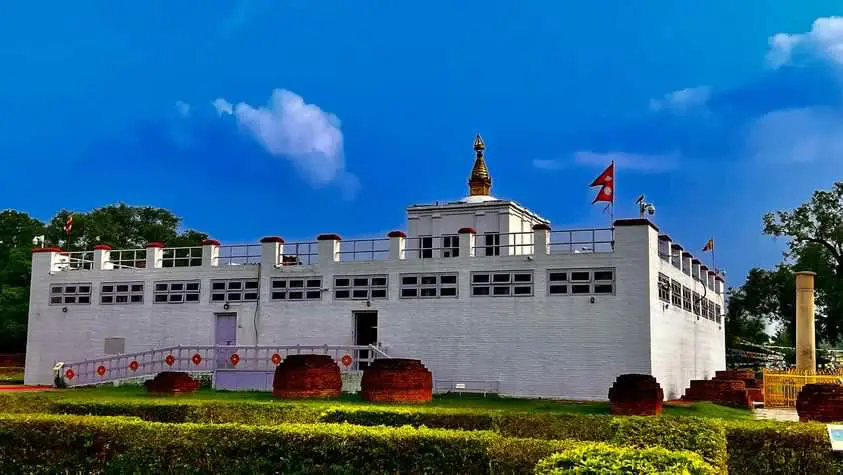
maya devi temple

Lumbini, the birthplace of Lord Buddha, offers a transformative experience, guiding visitors through his teachings and journey. Beyond Lumbini’s boundaries lie nearby attractions that provide a deep immersion into the region’s vibrant culture and stunning natural beauty.

thai temple in lumbini

Lumbini serves as a central hub for exploration in multiple directions. If you head west, you can visit prominent attractions such as Maya Devi Temple, Kudan, Gothihawa, Nilgihawa, Jagidshpur Reservoir, and Sagarhawa. On the other hand, if you move eastward, you’ll discover fascinating destinations like Devdaha, Ramagrama, Balmiki Ashram, and Chitwan.

North of Lumbini, you can discover Butwal, a vibrant city serving as a gateway to the hilly regions of western Nepal. It offers a mix of urban amenities and cultural experiences. In contrast, Tansen, a hill station in the Palpa district, showcases medieval architecture and stunning Himalayan views, providing a glimpse into the region’s cultural heritage. Moreover, in the east-west direction, make sure to visit the Chhapia fish farm, adding another interesting stop to your itinerary.

myanmar temple in lumbini

To fully experience Lumbini and its surroundings, it is recommended to allocate approximately 4-5 days. There are many interesting places to see and will have plenty of chances to explore and enjoy your time there.

Embark on a captivating journey beyond Lumbini, Nepal’s spiritual heart, and discover a wealth of ancient historical sites, vibrant cultural experiences, and awe-inspiring natural landscapes:

Maya Devi Temple: Spot where Queen Maya Devi gave birth to Siddhārtha Gautama

Maya Devi Temple, dating between the 3rd and 5th centuries, marks the sacred birthplace of Lord Buddha. Renowned for its Marker Stone placed by Emperor Ashoka in the 3rd century BC, the temple symbolizes deep spiritual reverence for Buddhists worldwide. Within the complex, visitors can witness this sacred stone which shows the exact birthplace of the Buddha. Nearby is the Puskarini, a holy pool where Queen Maya Devi bathed before giving birth. This tank is older than the Buddha himself. Around the sacred area, there are rows of stupas, with thirty-one discovered so far, mainly votive stupas. (Source: Chetan Pant’s article) Pilgrims and tourists can embark on a profound spiritual journey, connecting with Buddhism’s origins, and reflecting on the teachings that emerged from this significant site.

Tilaurakot: Tracing Buddha’s Early Life

Tilaurakot, located 24 km from Lumbini, is the site of Kapilavastu, where Lord Gautama Buddha is said to have lived for 29 years. The excavation of Tilaurakot offers valuable insights into the historical life of Buddha.

In addition to its Buddhist importance, Tilaurakot also holds significance in Hinduism. Within the ancient walls, there is a contemporary Hindu temple dedicated to the deity Samai Mai, attracting regular worshipers.

Tilaurakot

Kudan: A Sacred Relic and Symbol of Buddhist History

Kudan, formerly Nyigrodharama, is a historically significant site related to Buddha, located around 6 kilometers (3.5 miles) from his childhood home in Tilaurakot. It marks the place where Buddha had his initial meeting with his father, King Suddhodhana, after achieving enlightenment. This site played a crucial role in spreading Buddha’s teachings, as his family, including his son Rahula, who became ordained at the age of 8, embraced his mission.

When you visit Kudan today, you can follow Buddha’s footsteps and admire a collection of remarkable stupas. The first Stupa, called the Rahula Stupa, is where Rahula received teachings from Sariputra, one of Buddha’s disciples.

Transitioning to the second Stupa, you will find the exact spot where Buddha met his father for the first time after enlightenment, conveying the Panchashila (Five Precepts) to him.

Continuing onward, the third Stupa symbolizes Buddha’s mother presenting him with saffron robes, while his wife Yashodhara invited him for a meal.

Moreover, the ancient wells and the Nyigrodharama pond are additional alluring attractions that await you at this site.

Gothihawa: Birthplace of Lord Krakuchanda

Gothihawa, the birthplace of Lord Krakuchanda, holds deep spiritual and historical significance. Visitors can immerse themselves in a serene ambiance and connect with the rich legacy of this revered figure in Buddhist history.

Niglihawa: Uncovering the Ancient Secrets of a Buddhist Site

Niglihawa is the birthplace of Kanakmuni Buddha. In 249 BC, King Ashoka visited the site and installed the Ashoka pillar, which is now broken into two parts. Unfortunately, the Stupa that was once present at the site is currently absent. The pillar itself contains two distinct inscriptions, one in Pali language and the other in Sanskrit.

Jagdispur Reservoir: A Serene Oasis and Birdwatching

While exploring Lumbini and its surroundings, make sure to visit the peaceful Jagdishpur Reservoir, a manmade reservoir established in 1979 for irrigation purposes. This reservoir, listed in Ramsar on August 13, 2003, offers a serene escape and serves as a sanctuary for observing birds. Be on the lookout for various bird species, including waterfowl, raptors, herons, egrets, and kingfishers, among others. During winter, the reservoir becomes even more captivating as migratory birds grace its surroundings. Don’t forget to bring your binoculars and camera to capture the mesmerizing beauty of these feathered creatures in their natural habitat.

Lumbini Crane Sanctuary: Continuing the Legacy of Lord Buddha

Lumbini Crane Sanctuary

Lumbini Garden and an important Buddhist pilgrimage site, has become a large crane sanctuary that covers 6 square kilometers, including the ruins of Tilaurakot Palace where Siddhartha Gautam once lived. This unique attraction in Nepal is highly recommended for visitors interested in Buddhism and wildlife conservation. The sanctuary works actively to protect endangered Sarus Cranes in the wetlands around Lumbini by creating a community dedicated to conservation, restoring their natural habitat, and promoting education. The sanctuary continues the mission started by Gautam Buddha 2,500 years ago and allows visitors to see the blue bull, a species similar to an antelope.

Tharu Homestays: Experiencing the Vibrant Culture

Near the reservoir, homestays offer a comfortable and immersive experience for visitors. Additionally, guests have the opportunity to experience the vibrant Tharu lifestyle firsthand. They can witness the customs, dances, and folk music performances that showcase the rich cultural heritage of the Tharu people.

You may have the chance to observe Tharu dances, music, and cultural shows showcasing their mythology, folklore, and agricultural practices, depending on when you visit. These lively performances provide insight into the artistic expressions and communal spirit of the Tharu community.

Savoring the Flavors: Exploring Traditional Tharu Cuisine

While in Lumbini, immerse yourself in the spiritual ambiance and indulge in the rich culinary traditions of the region. A must-try is Tharu cuisine, which showcases locally sourced ingredients and reflects the community’s agricultural heritage. It’s a delicious way to fully experience the local flavors and gain deeper insights into the culture.

Sagarahawa: The Massacre Site of the Sakyas

Sagarhawa, located about 12 kilometers north of Taulihawa, is a forest area containing a significant rectangular tank known as Lumbusagar or the long tank. These ancient tank ruins were discovered by Dr. Alois A. Fuhrer in 1859 and hold historical importance as the “Place of the Massacre of the Shakyas.”

According to archaeologists, King Virudhaka, the son of Prasenajita Raja of Kosala, is believed to have orchestrated the revengeful act that resulted in the tragic demise of approximately 77,000 Shakyas. In honor of the fallen Shakya tribe members, several stupas have been built at the site. Visitors can explore these ruins located on the southwestern banks of Sagar.

Devdaha: The Maternal Home of Buddha

Continue your journey to Devdaha, the maternal home of Buddha. Queen Mayadevi, Buddha’s mother, is believed to have grown up in this place. Take the opportunity to wander through the ancient ruins, monasteries, and pagodas that grace the surrounding scenery. Engage yourself in the captivating legends and tales that revolve around Devdaha, as they hold a prominent position in Buddhist folklore.

Ramagrama: The Mysterious Relic Stupa

Ramagrama, situated near Lumbini, holds great significance in Buddhist history. It is home to the revered Ramagrama Stupa, which is believed to contain one of Buddha’s relics, specifically his ashes from the cremation.

According to Buddhist texts, Emperor Asoka desired to open the relic and construct 84,000 smaller Stupas throughout his empire. However, he honored the wishes of a serpent and the local residents of Ramagrama, who asked that the relic remain undisturbed. This sacred site holds profound reverence as a pilgrimage destination for Buddhists. Experience a tranquil atmosphere at the Ramagrama Stupa, where you can engage in meditation sessions filled with spiritual energy.

Ramagrama

The Holiest and Most Revered: The Rohini River in Buddhist Scriptures

The Rohini River, originating from the Siwalik hills and flowing through forests and plains, holds great importance in Buddhist scriptures. Once, during a severe drought, a dispute arose between the Sakyas and the Koliyas over water from a nearby dam, risking conflict. Informed of the situation, Lord Sakyamuni Buddha traveled from Vaisali and successfully convinced the warring groups to avoid battle, emphasizing the importance of family unity. As a result, the two sides peacefully shared the water, restoring harmony. This event inspired around 500 Sakyas and Koliyas to embrace Buddhism after hearing Lord Sakyamuni Buddha’s teachings.

Balmiki Ashram: A Spiritual Haven in the Heart of Nature

Located within the scenic and protected jungle area of Chitwan National Park, the Balmiki Ashram holds great historical and spiritual importance. It showcases ancient ruins associated with Balmiki Rishi, the esteemed author of Ramayana, and the presence of Sita and her sons, Lava and Kush.

Nature Retreats: Serenity in the Wilderness

Nature Retreats

After visiting Lumbini, you have the opportunity to explore nearby national parks such as Chitwan, located approximately 120 km away. In Chitwan, you can completely engage with the natural surroundings and uncover tranquil and secluded areas that are perfect for profound reflection and contemplation.

Chhapiya Fish Farming: Nurturing Aquatic Life for Sustainable Harvest

Chhapiya Fish Farming, located in Rupandehi, is a prominent operation that involves the active participation of every household in the village. This collective engagement showcases the community’s strong dedication to fish farming. Additionally, the village places great importance on preserving the culture and traditions of the Tharu community. Visitors to the village can enjoy boating on the fish ponds, adding to their overall experience. The presence of multiple restaurants further enhances the culinary offerings, providing a wide variety of delicious fish dishes to both locals and tourists.

Chhapia’s fish farming industry holds a significant position in the agricultural landscape of the Lumbini region, contributing to its overall development.

Lumbini Cable Car and Butwal Cable Car

Tourists often begin their journey in Basantpur, a popular destination in Butwal, when visiting Palpa, Pokhara, Muktinath, and Dhorpatan. The construction of the Lumbini cable car, connecting Basantpur and Palpa, is nearly finished and is currently undergoing technical testing. It consists of 25 gondolas, each accommodating eight passengers.

Workers are currently renovating the Durga Temple in Basantpur to resemble India’s Kamaksha Temple. Moreover, they are constructing a children’s park, restaurant, and viewpoint. The pleasant climate and natural beauty of Basantpur draw tourists who delight in the short 10-minute cable car ride from Butwal.

Preparations are underway for the Siddharth Cable Car Limited, which will connect Lumbini, the birthplace of Buddha, to Nuwakot in Palpa. The cable car’s base station will have six steps, representing Buddha’s seven steps at birth, with the final step in Nuwakot. Covering a distance of 1.94 km, the cable car journey takes approximately seven minutes to reach the top station. Nuwakot is renowned for its historical sites, including Raja Manimukund Sen’s summer palace, the Topahan area, Kharakhjanaghar, and Ranikuwa. The cable car project originates from the historically significant Mani-Mukundasen Udyan Phulbari in Butwal.

Apart from the cable car project, several other initiatives are taking place in Nuwakot, including the construction of the Kalabhairava Temple, Big Buddha Statue, Manimukunda Sen Park, Cultural Museum, and Sage Kaldeval Temple. Additionally, a viewing tower has been erected, and the foundation stone for the Balaji Temple has been laid, with blessings and inauguration conducted by a revered Guru from India.

Batauli Market: Butwal’s Timeless 600-Year-Old Marketplace

Butwal, previously known as Batauli, is a city in the Rupandehi district of the Lumbini province. Despite modernization, the old Batauli market, which has a history spanning nearly 600 years, still remains. There have been efforts to revive and transform this historical market into a tourist-oriented destination.

They renamed the market Butwal-Khasyoli Municipality in 2016, changing its previous name from Butwal-Khasyuli Nagar Panchayat during the Panchayat system. Batauli, originally located opposite the current main market, gradually expanded to include Wari Khasyauli.

Jitgadi Fort: Fortress during Anglo Nepal War

The Nuwakotgarhi Fort at the entrance of Batauli Bazaar is historically significant as it is connected to the victorious Jitgadhi Fort in a battle against the British during the Anglo-Nepalese War in 1816 AD. The Gorkha army, led by Ujir Singh Thapa, emerged triumphant in this battle known as Jeetgadhi. The fort serves as a historic reminder of the conflicts that shaped the city’s history.

Adjacent to the fort is a revered Bhairava temple with historical value. Near Nuwakot Gadhi, the meditation center of Guru Rishi Kaldeval (Ashutosh), the spiritual guide of King Suddhodana, is believed to be associated with Buddhist civilization.

Siddhibaba Temple: Center of religious faith

The Siddha Baba Temple, a renowned Hindu temple dedicated to Lord Shiva, attracts a large number of devotees and is situated near Butwal in the Palpa district of Nepal. Believers place their faith in the temple’s ability to fulfill their desires, and as a ritual, the temple releases a pigeon when a wish is granted, leading to a noticeable population of pigeons in the temple vicinity.

Siddha Baba: A wandering place of the primitive Rampithecus

The discovery of dental remains from the Ramapithecus species in the Siddha Baba area is very important for anthropology. Scientists believe that Ramapithecus is related to Asian Great Apes. They found fossils of Ramapithecus in 1932 near the Tinau River, also called Paari Butwal. One of the discoveries was a tooth estimated to be 10.1 million years old. To protect the site, they created Ramapithecus Park next to the temple.

Tansen: A Glimpse into Newari Architecture and Culture

karuwaTansen karuwa

Experience the picturesque town of Tansen, located near Lumbini, which combines history and tradition. With its charming Newari architecture and rich cultural heritage, Tansen offers a unique ambiance. Take leisurely walks along cobbled streets, explore Tansen Durbar Square, and embrace the vibrant local culture. Moreover, make sure not to miss the breathtaking sunrise and sunset views from the Srinagar Hilltop.

Rani Mahal: Exploring the Royal Palace

Rani Mahal

The 19th-century Rani Mahal in Palpa, was once the queen’s residence, combining Nepali and European influences with intricate wood carvings, courtyards, and spacious rooms. With its regal history, this palace has become a popular tourist spot, showcasing Palpa’s grandeur.

Bhairavsthan: Sacred Shrine of Palpa

The locals hold great religious and cultural significance for Bhairavsthan, a temple located in Palpa, dedicated to Lord Bhairav, a powerful incarnation of Lord Shiva. Drawing visitors and devotees, this central place of worship hosts various ceremonies, fostering devotion and unity within the Palpa community.

Palpa Ridi Bazaar and Cremation Site: Harmonious integration of daily life and sacred customs

Palpa Ridi Bazaar in Nepal is a bustling marketplace where locals and tourists trade various goods, including traditional crafts, clothing, fresh produce, and household items, creating a vibrant hub of activity.

Next to the market, the cremation site in Ridi has great cultural and religious importance. Located near the calm Kali Gandaki River, it offers a serene setting for performing Hindu funeral rituals. Families gather in this tranquil environment to bid their final farewells to their loved ones who have passed away.

Satyawati Taal/ Lake: If you shout your wish out it will come true

Satyawati Lake in Nepal’s Palpa district is a religiously significant Hindu pilgrimage site located in the village of Satyawati. Named after the Goddess Sand, this sacred lake offers stunning views of the Himalayan range. Along the trail to Satyawati village, you’ll encounter Budhi Satyawati Lake, known for attracting migratory birds, although it usually dries up from mid-April to mid-June.

The area is also home to a Hindu temple dedicated to the goddess Satyawati. Pilgrims actively participate in a fair during the month of Kartik (Oct/Nov), believing that they can have their wishes granted by the ancient goddess by circling the lake three times and shouting. Due to the goddess’s poor hearing, people deem shouting as necessary. Additionally, people shout to seek a suitable groom. Visitors can also partake in a sacred bath and witness religious rituals involving animal and bird sacrifices.

To reach the lake, several foot trails are available, with the main trail commencing near Siddhartha Rajmarg. By undertaking a two-hour uphill trek from the main road, you can reach this starting point, located approximately 35 km south of Tansen, the Palpa district headquarters, and 19 km north of Butwal.

Here are additional gems to discover beyond the well-known attractions in the vicinity of Lumbini:

Lumbini Treasures: Discovering Authentic Local Souvenirs

Lumbini offers a diverse selection of Buddhist-themed souvenirs, capturing the essence of this sacred site. Whether you’re interested in statues, handicrafts, clothing, or incense, Lumbini provides a variety of options to choose from.

Explore weekly Hat Bazaar (Rural market): A Vibrant Marketplace of Local Delights

Explore Lumbini’s diverse Hat Bazaars for a rich cultural experience. Discover a wide range of handicrafts, textiles, fresh produce, spices, and more. By visiting these markets, you can find unique souvenirs and connect with the local community. Your support also boosts the local economy. These vibrant gatherings bring people from diverse backgrounds together, leaving a lasting and energetic impression. It’s an opportunity to connect, share stories, and celebrate Lumbini’s cultural heritage.

In conclusion, exploring Lumbini and beyond immerses travelers in the essence of Nepal’s nature, spirituality, and culture. It provides a holistic experience, fusing spiritual enlightenment, natural beauty, and cultural immersion.

This transformative journey deepens our understanding of Buddhism while uncovering the intrinsic beauty and serenity of Nepal. Eventually, it leaves an enduring impact on the hearts and souls of those who undertake this captivating exploration.

Exploring Nepal’s Unique Treks: Going Beyond the Classics for Adventurers

Exploring Nepal, the land of the Himalayas, has long been a dream destination for adventure seekers and nature enthusiasts. While the Annapurna Circuit and Everest Base Camp treks attract many trekkers, Nepal offers numerous other hidden gems waiting to be explored. These hidden routes will not only provide spectacular natural beauty but also allow you to connect with local communities and witness their traditional way of life.

Exploring Nepal’s Unique Treks

Makalu Base Camp Trek

The Makalu Base Camp Trek in eastern Nepal is an extraordinary journey to the foot of Mount Makalu (8,481 meters), the world’s fifth-highest mountain. Additionally, this challenging trek showcases diverse ecosystems, encompassing lush lowland forests, terraced farmlands, remote alpine meadows, and high-altitude glaciers. Standing at the base camp, encircled by towering peaks, is a profoundly rewarding experience that truly reflects your determination.

The encounter with remote Sherpa and Rai villages along the way provides a fascinating glimpse into their unique cultures, rituals, and everyday life. With fewer trekkers compared to other popular routes, Makalu Base Camp Trek provides a true sense of wilderness and tranquility.

Khopra Ridge Community Trek

For those seeking a unique nature, cultural immersion, and a close connection with local communities, the Khopra Ridge Community Trek is an ideal choice. Situated in the Annapurna region, this lesser-known trail provides a compelling alternative to the popular Annapurna Base Camp trek.

The trail combines the beauty of the Annapurna region with a glimpse into the lifestyle of local communities. The trek takes you through terraced fields, lush forests, and traditional villages. One of the most distinctive aspects of the Khopra Ridge trek is the opportunity to interact with the local communities along the way. Additionally, the community lodges along the trail provide a unique opportunity to support local initiatives and contribute to sustainable tourism.

One of the highlights of this trek is a visit to the sacred Khayer Lake, enveloped by panoramic views of snow-capped peaks.  During the trek, trekkers come across ancient monasteries and prayer walls, showcasing the region’s strong religious customs. The journey itself becomes a spiritual immersion, allowing you to embrace the serene atmosphere and the captivating natural surroundings of Khayer Lake.

Mulde Peak Trek

For those seeking solitude and untouched beauty, the Mulde Peak Trek is a hidden gem. Located in Nepal’s Annapurna region, this lesser-known trek offers stunning views of Dhaulagiri, Annapurna, and the Himalayan range. Moreover, the trail winds through rhododendron forests, terraced fields, and remote villages, providing an authentic cultural experience. Ultimately, the Mulde Peak Trek rewards trekkers with panoramic vistas, serene landscapes, and meaningful encounters with local ethnic groups.

Round Manaslu Trek

For those seeking an alternative to the crowded Annapurna Circuit, the Round Manaslu Trek presents a thrilling and off-the-beaten-path adventure. Taking you around the majestic Mount Manaslu, the eighth-highest peak in the world, this trek offers a mix of natural beauty and cultural encounters. Moreover, it includes the crossing of the Larke Pass (5,160 meters), which rewards trekkers with awe-inspiring panoramic views of the Manaslu massif.

The trek highlights the Tibetan-influenced culture and diverse flora/fauna of the Manaslu Conservation Area. Furthermore, along the way, you can witness ancient monasteries, vibrant prayer flags, and intricately carved Mani walls. Notably, the warmth and hospitality of the local Gurung and Tibetan communities will undoubtedly leave a lasting impression.

The trek also offers spectacular views of snow-capped peaks like Manaslu, Ganesh Himal, and Himalchuli. With restricted access, the Round Manaslu Trek allows trekkers to explore pristine nature and encounter authentic Himalayan life.

Pike Peak Trek

Offering spectacular views of Mount Everest and a tranquil environment, the Pike Peak Trek is a hidden gem in the lower Everest region. Moreover, this trek provides a unique blend of nature, culture, and spirituality.

The trail takes you through beautiful forests, terraced fields, and rhododendron forests. While hiking the trail, you’ll pass through yak pastures and observe local farmers practicing age-old cheese-making. In addition, the warm hospitality of the Sherpa community adds to the charm of this trek.

One of the main attractions of this trek lies in reaching the summit of Pike Peak (4,065 meters). From this vantage point, you can indulge in awe-inspiring sunrise and sunset vistas of Everest, Kanchenjunga, Makalu, and other majestic Himalayan giants.

Pike Peak Trek is an alternative for those seeking a less crowded trekking experience with incredible mountain vistas.

Kanchenjunga Circuit Trek

Embark on an incredible journey through the remote eastern region of Nepal with the Kanchenjunga Circuit Trek. This challenging and less-frequented trail takes you around the world’s third-highest peak, Mount Kanchenjunga (8,586 meters). While exploring the Himalayas, you can witness its untouched beauty through valleys, forests, moraines, and alpine meadows.

The trail offers a unique opportunity to immerse yourself in its rich cultural traditions, ancient monasteries, and traditional farming practices. During your journey, you will come across a variety of ethnic communities including Limbus, Sherpas, and Tamangs. Each ethnic group possesses its own unique customs and traditions, adding to the richness and diversity along the trail.

Rolwaling Valley Trek

The Rolwaling Valley Trek in the Khumbu region provides a challenging mountain experience. With steep cliffs, alpine lakes, high pastures, waterfalls, hanging glaciers, and stunning snow-covered mountain views, it offers a truly unforgettable adventure. Unlike the more popular trekking routes in Nepal, the Rolwaling Valley Trek offers a quieter and less crowded experience. The trail leads to remote villages and unexplored terrain, giving a sense of adventure. The peaceful and secluded surroundings allow for a deeper connection with nature and an immersive trekking experience. A special part of the trek is the opportunity to experience the Sherpa culture in the Rolwaling Valley. Sherpa communities, who follow Tibetan Buddhism, reside there. You can explore ancient monasteries, observe Buddhist rituals, and engage with the locals to learn about their customs and beliefs.

Conclusion

If you have already conquered Nepal’s renowned treks like Everest Base Camp and Annapurna Circuit, a realm of unique and captivating trekking adventures eagerly awaits your exploration. While Nepal’s popular treks offer incredible experiences, exploring lesser-known paths can lead to the discovery of hidden treasures.

By choosing one of these lesser-known treks, you’ll embark on a journey of discovery, creating lifelong memories. Likewise, you will have the opportunity to develop a deeper connection with Nepal’s diverse cultures and awe-inspiring landscapes. So, step beyond the familiar and explore these hidden gems to create lasting memories in the lap of the Himalayas. For more information, Contact Travel Expert  

FAQs

What are the best hidden trekking routes in Nepal?

Nepal’s best hidden trekking routes include the Makalu Base Camp Trek, Round Manaslu Trek, Pike Peak Trek, Kanchenjunga Circuit, Khopra Ridge Community Trek, Mulde Peak Trek, and Rolwaling Valley Trek — each offering spectacular views and cultural immersion.

Are these hidden treks suitable for beginners?

Some treks, like Khopra Ridge Community Trek and Pike Peak Trek, are manageable for beginners, while others such as Kanchenjunga Circuit and Round Manaslu Trek are suited for experienced trekkers.

What makes these hidden trekking trails unique?

These routes offer fewer crowds, pristine landscapes, remote cultural experiences, and untouched Himalayan wilderness — perfect for adventurers looking beyond the popular trails.

Do hidden trails require special permits?

Yes — many remote treks require trekking permits such as TIMS and restricted area permits (e.g., for Manaslu and Kanchenjunga regions).

Affiliations & Recommendations