
CAS Program Nepal: Linking Classroom Learning with Real-World Sustainability
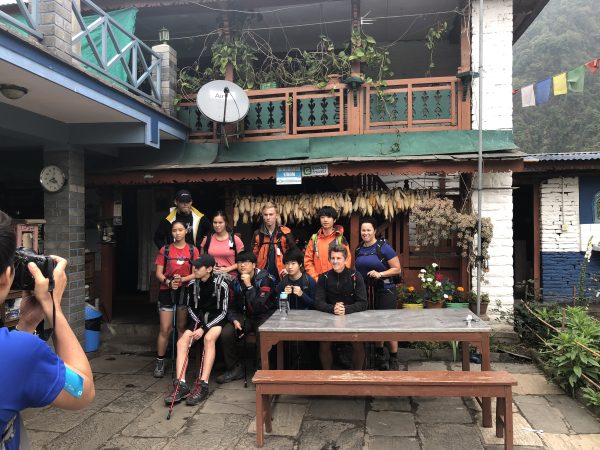
On June 16, 2026, Nepal Sanctuary Treks organized a meaningful CAS Program Nepal for students and teachers from an international school. The program combined outdoor adventure, environmental stewardship, sustainability education, organic farming, and community engagement. Through this CAS experience Nepal, students connected classroom learning with real-world action while exploring responsible tourism and environmental conservation.
The Managing Director led the program, and the Nepal Sanctuary Treks team supported every stage of the experience. Together, they created an engaging learning journey that aligned with the three CAS strands: Creativity, Activity, and Service.
Day Hike and Environmental Service in Shivapuri National Park
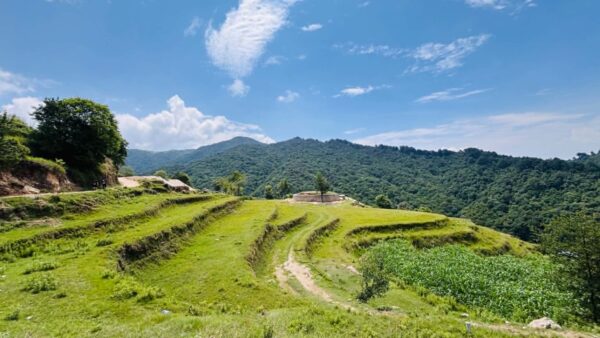
Students began the day with 2 hours scenic drive from Kathmandu to Mulkharka, followed by a guided hike through Shivapuri Nagarjun National Park, a key watershed and biodiversity area near the Kathmandu Valley.
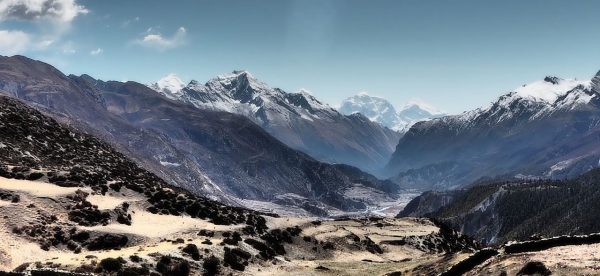
The trail from Mulkharka–Prabesh Hotel passed through Thulo Chaur, the Nagmati River valley, and Hille before reaching Prakriti Resort. Students walked through dense oak and rhododendron forests, terraced landscapes, Tamang village and open viewpoints across the mid-hills.
They crossed small streams and followed sections beside the Nagmati River, where the constant sound of flowing water created a calm natural atmosphere throughout the hike. Along the route, they observed native plants, birds, and changing forest ecosystems.
Students also participated in a trail clean-up activity. Nepal Sanctuary Treks provides gloves, reusable eco garbage bags, and litter pickers to the participants.
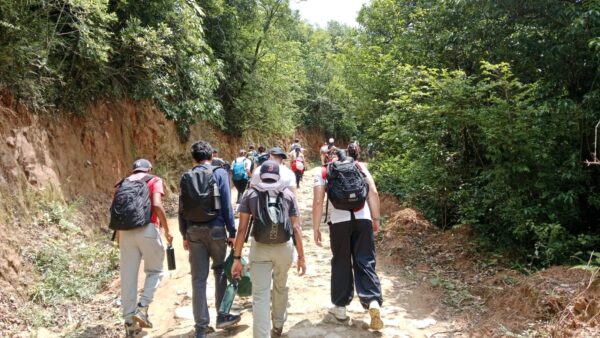
They crossed small streams and followed sections beside the Nagmati River, where the constant sound of flowing water created a calm natural atmosphere throughout the hike. Along the route, they observed native plants, birds, and changing forest ecosystems.
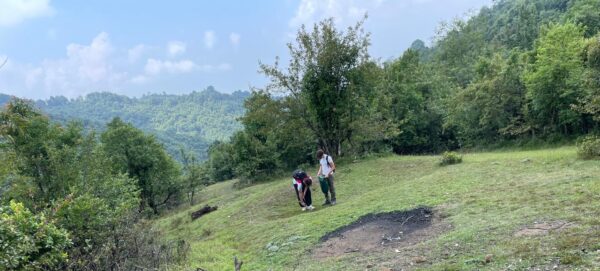
Students also participated in a trail clean-up activity. Nepal Sanctuary Treks provides gloves, reusable eco garbage bags, and litter pickers to the participants.
Environmental Impact
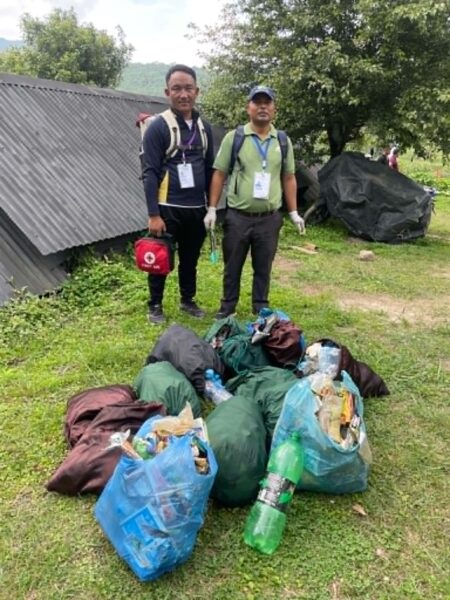
The clean-up reduced pollution pressure on forest and water systems within Shivapuri Nagarjun National Park. The group collected approximately 30 kilograms of waste, contributing directly to trail restoration and environmental protection. All collected waste was handed over to Prakriti Resort and Organic Farm for proper segregation and recycling, preventing further environmental contamination.
Nepal Sanctuary Treks further reduced environmental impact by providing refillable filtered water jars instead of single-use plastic bottles. With approximately 50 participants, the initiative helped eliminate the need for around 50 plastic bottles during the hike.

Through this experience, students saw how collective action and responsible tourism can create measurable environmental benefits in protected natural areas.
A Regenerative Tourism Experience with Everest View
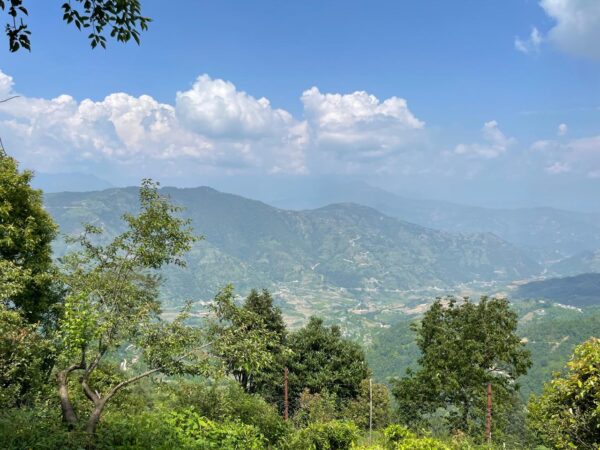
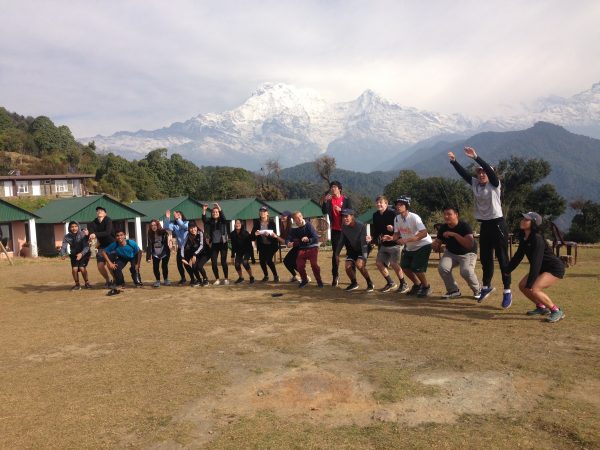
After completing a 3-hour hike, students reached Prakriti Resort and Organic Farm, perched at an altitude of about 2,000 meters. On a clear day, they enjoyed distant views of Mount Everest.
The Travelife-certified eco-resort showcased how regenerative tourism in Nepal can generate positive environmental and social impacts. During the visit, students explored organic farming systems, waste reduction initiatives, renewable practices, and community-based sustainability models. They learned how tourism businesses can actively restore natural resources while supporting local communities.
Farm-to-Table Organic Dining Experience
The group enjoyed a farm-to-table dining experience prepared with fresh organic produce grown on the resort’s farm.
Through this experience, students learned how sustainable agriculture supports healthy food systems while reducing transportation emissions. They also discovered how local sourcing strengthens eco-tourism Nepal and benefits surrounding communities.
Organic Waste, Vermicomposting, and Circular Farming
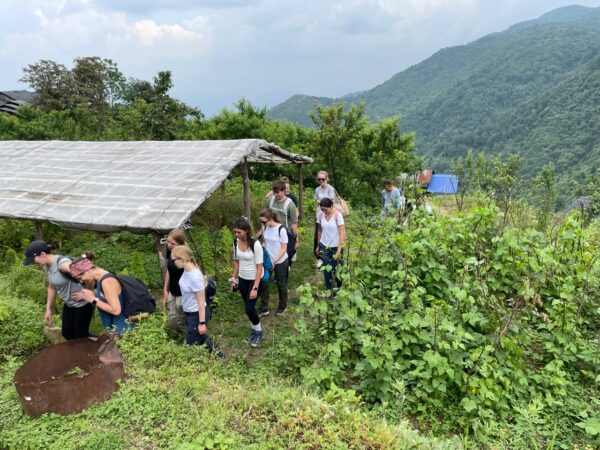
Students explored the resort’s zero-landfill waste management system. Staff members compost organic waste and convert it into nutrient-rich fertilizer for farming activities.
They also demonstrated vermicomposting techniques, where earthworms transform food waste into valuable compost. In addition, the resort uses food scraps to feed livestock and applies fireplace ash to improve soil fertility.
These practices showed students how sustainable tourism Nepal can support circular farming systems and reduce waste generation.
Water, Carp Fish Farming, and Integrated Farming Systems
Students visited a multipurpose pond that stores irrigation water and supports agricultural activities across the farm.
They also observed carp fish farming and learned how fish production contributes to food security and ecological balance. The integrated farming system demonstrated how water resources can simultaneously support agriculture, aquaculture, and regenerative land management.
Livestock, Tea Farming, and Self-Sustained Systems
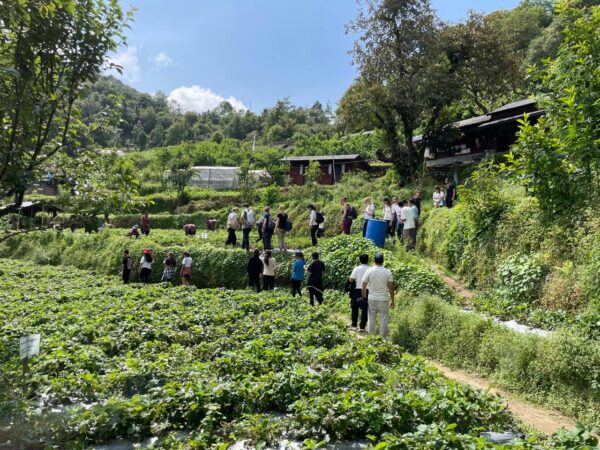
Students observed cow and buffalo farming operations and learned how livestock contribute to milk production, organic manure, and circular farming systems.
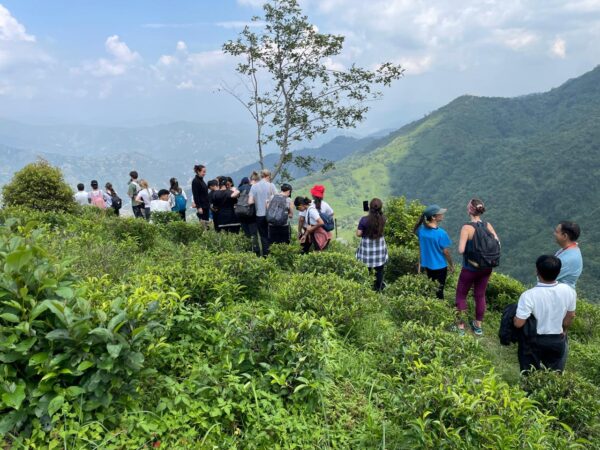
They also explored tea cultivation areas and discovered how tea farming supports biodiversity, agroforestry, and rural livelihoods. These examples highlighted the connection between sustainable agriculture and long-term environmental stewardship.
Plastic Reduction, Water Systems, and Sustainability Practices
The resort eliminates single-use plastics through several practical initiatives. These include refillable water systems, bamboo toothbrushes, eco-friendly toiletries, biodegradable corn-starch bags, reusable containers, and chemical-free cleaning products.
Students also observed advanced water management systems. The resort treats greywater and reuses it for irrigation, while septic systems safely process backwater.
Together, these initiatives demonstrate how businesses can reduce waste while conserving natural resources.
Water Management
Students learned how the resort manages wastewater through separate treatment systems.
The resort sends black water to septic tanks for treatment. Meanwhile, staff treat greywater and reuse it for irrigation across the property. The resort also uses plant-based, chemical-free cleaning products to minimize environmental impact.
These systems help conserve water resources and support sustainable land management.
Tea Farming
Students visited tea cultivation areas and explored the environmental and economic benefits of tea farming.
They learned how tea plantations support biodiversity, improve land use, and create employment opportunities for local communities.
Light Pollution Reduction for Eco-Tourism
Students observed how the resort reduces light pollution through thoughtful design and energy-efficient technology.
The property uses low-level pathway lighting, warm LED fixtures with natural covers, and motion sensors in gardens, candlelight in selected areas, and energy-efficient lighting systems.
These measures help protect nocturnal wildlife while creating a more natural environment for visitors.
Reflection and Appreciation
At the end of the program, students participated in a reflection session and shared insights from their experience. They discussed environmental challenges, sustainability solutions, and the role individuals can play in creating positive change.
Nepal Sanctuary Treks awarded Certificates of Appreciation to all students in recognition of their participation and environmental contribution.
Afterward, the group returned to Kathmandu, concluding a meaningful day of learning, service, and exploration.
Three Pillars of Sustainability
During this CAS Program Nepal, students explored the key pillars of sustainability and their role in sustainable development.
- Environmental Sustainability: Regenerative farming, biodiversity conservation, and responsible resource management.
- Socio-Cultural Sustainability: Community engagement, knowledge sharing, and preservation of local traditions.
- Economic Sustainability: Responsible tourism that supports local livelihoods and employment.
How This CAS Program Nepal Supports Creativity, Activity, and Service
This CAS experience Nepal successfully integrated all three CAS strands through experiential learning, environmental service, and sustainability education.
Activity
The hiking experience fulfilled the Activity strand by encouraging physical effort, teamwork, and outdoor exploration.
Students:
- Completed a 3-hours hike across varied terrain and Tamang village
- Built endurance, resilience, and teamwork skills
- Connected with nature through a real-world outdoor experience
Through this student trekking Nepal experience, participants challenged themselves physically while gaining a deeper appreciation for the natural environment.
Service
The trail clean-up initiative fulfilled the Service strand through direct environmental action and measurable impact.
Students:
- Collected waste along hiking trails and surrounding forest areas
- Removed approximately 30 kilograms of garbage
- Helped protect ecosystems within Shivapuri Nagarjun National Park
- Practiced responsible tourism and environmental stewardship
By working together, students demonstrated how small actions can create meaningful change. Their collective effort improved the trail environment and reinforced the importance of protecting natural spaces for future visitors.
Creativity
The Creativity strand emerged through sustainability learning, critical thinking, reflection, and discussion.
Students:
- Explored regenerative tourism Nepal and sustainable farming practices
- Participated in discussions about sustainability and responsible travel
- Developed new perspectives on tourism, conservation, and community development
These experiences encouraged students to think creatively about how individuals and organizations can contribute to a more sustainable future.
Inspiring Responsible Global Citizens
This CAS Program Nepal gave students a unique opportunity to connect classroom learning with real-world action. By combining a Shivapuri National Park hike, environmental service, sustainability education, and regenerative tourism Nepal, the program encouraged students to become responsible travelers and active global citizens.
Through initiatives like this, Nepal Sanctuary Treks continues to promote sustainable tourism Nepal and create meaningful educational travel Nepal experiences that support environmental conservation, community engagement, and sustainable development.
Plan Your Sustainable Journey in Nepal
Partner with Nepal Sanctuary Treks, a Travelife Certified company, and experience authentic eco-tourism Nepal, responsible trekking, and regenerative tourism Nepal designed for schools, universities, and travelers seeking meaningful, sustainable adventures.
This ensures every journey supports responsible tourism, environmental conservation, and community wellbeing in Nepal.
For more information contact Nepal Sanctuary Treks to design your personalized sustainable travel experience in Nepal.