Trip Facts

icon-calendar
Trip Duration 22 Days
icon-meter
Trip Difficulty Strenuous
icon-mountain
Maximum Altitude 5,135m/16,847ft
icon-season
Best Season To Visit March-May/September-December
icon-group
Average Group Size 2

Trip Overview

Tsum Valley Trek – The Sacred “Valley of Happiness” in Nepal

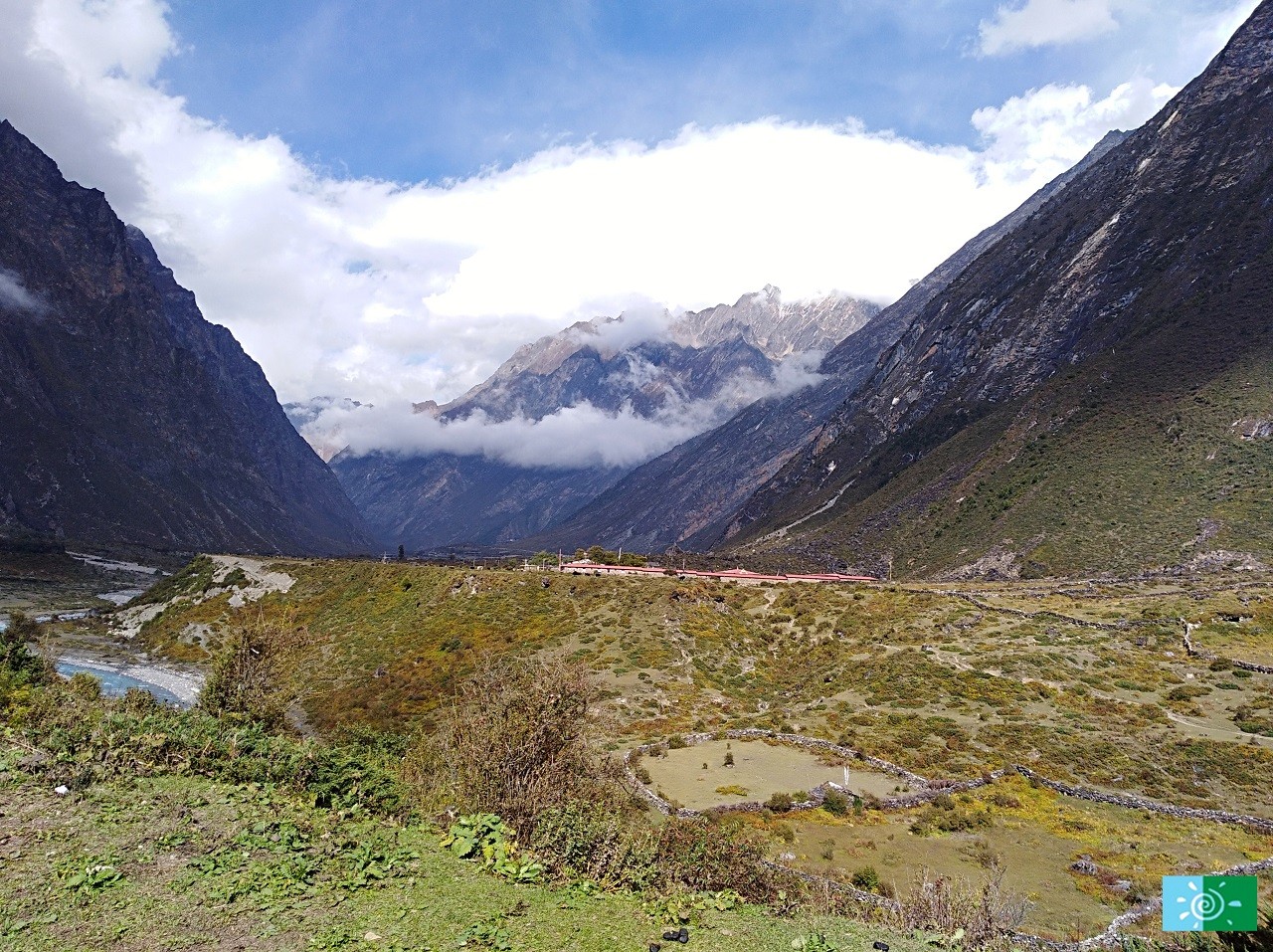
Tsum Valley, known as “Beyul Kyimolung” or the “Valley of Happiness,” is a sacred and remote Himalayan region in northern Gorkha, Nepal. Authorities opened the valley to outsiders only in 2008.

Many people call it a hidden treasure of Nepal. It preserves ancient Tibetan culture, pristine landscapes, and strong spiritual traditions. This makes it a peaceful off-the-beaten-path trekking destination.

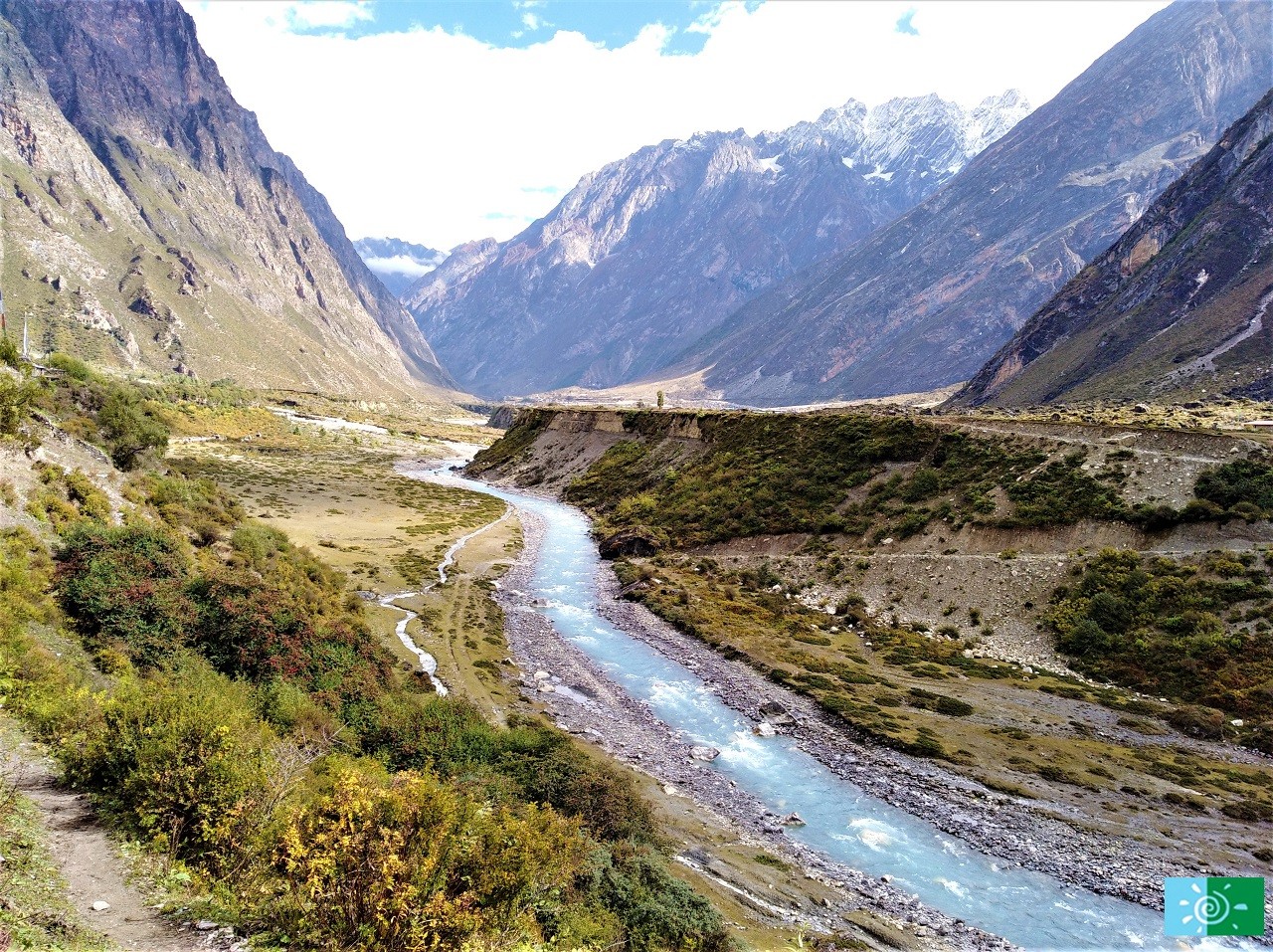
Located in the Manaslu Conservation Area, the valley covers 54,417 hectares (544 km²). It lies between 1,600 and 6,705 meters above sea level and is surrounded by majestic Himalayan peaks.

The valley supports rich biodiversity. It provides habitat for blue sheep, musk deer, Himalayan thar, and snow leopard. It also contains around 2,000 plant species, including 50 medicinal plants. The region supports 110 bird species and 33 mammal species.

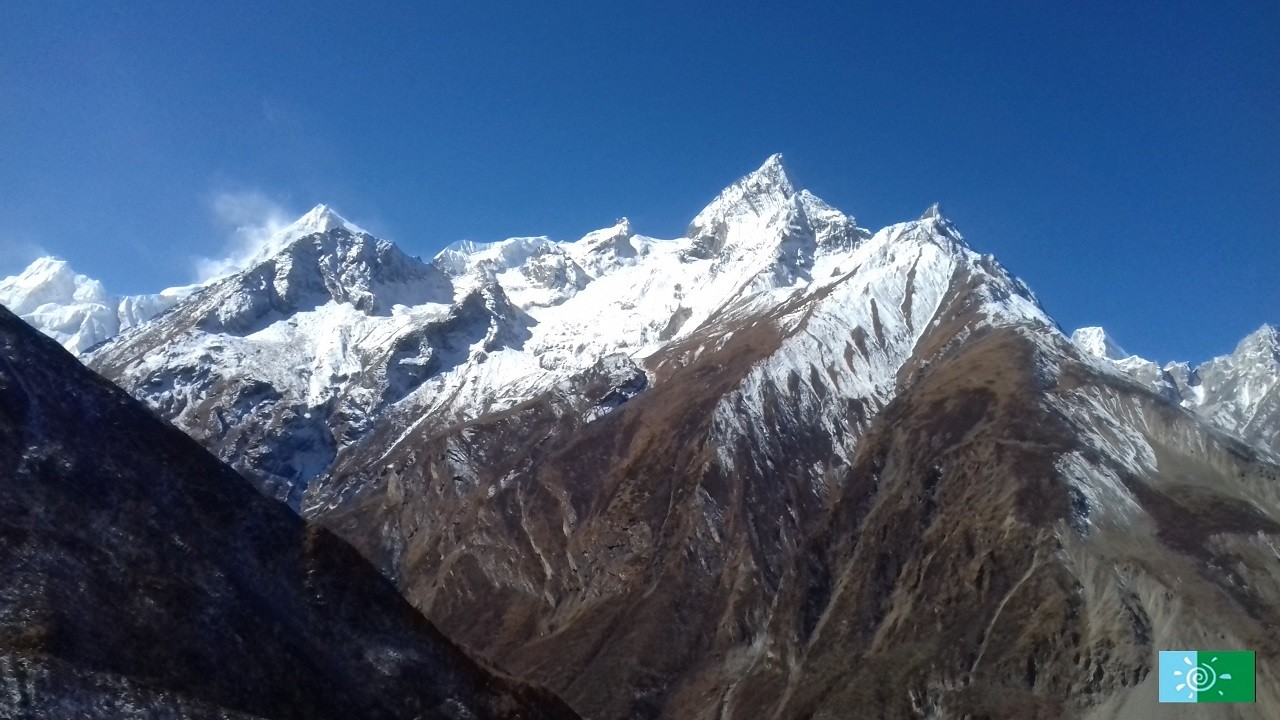
The name “Tsum” comes from the Tibetan word Tsombo, meaning vivid. The valley lies east of Mount Manaslu along the Tibetan border. Trekkers enjoy panoramic views of the Ganesh Himal, Sringi Himal, and Boudha Himal ranges.

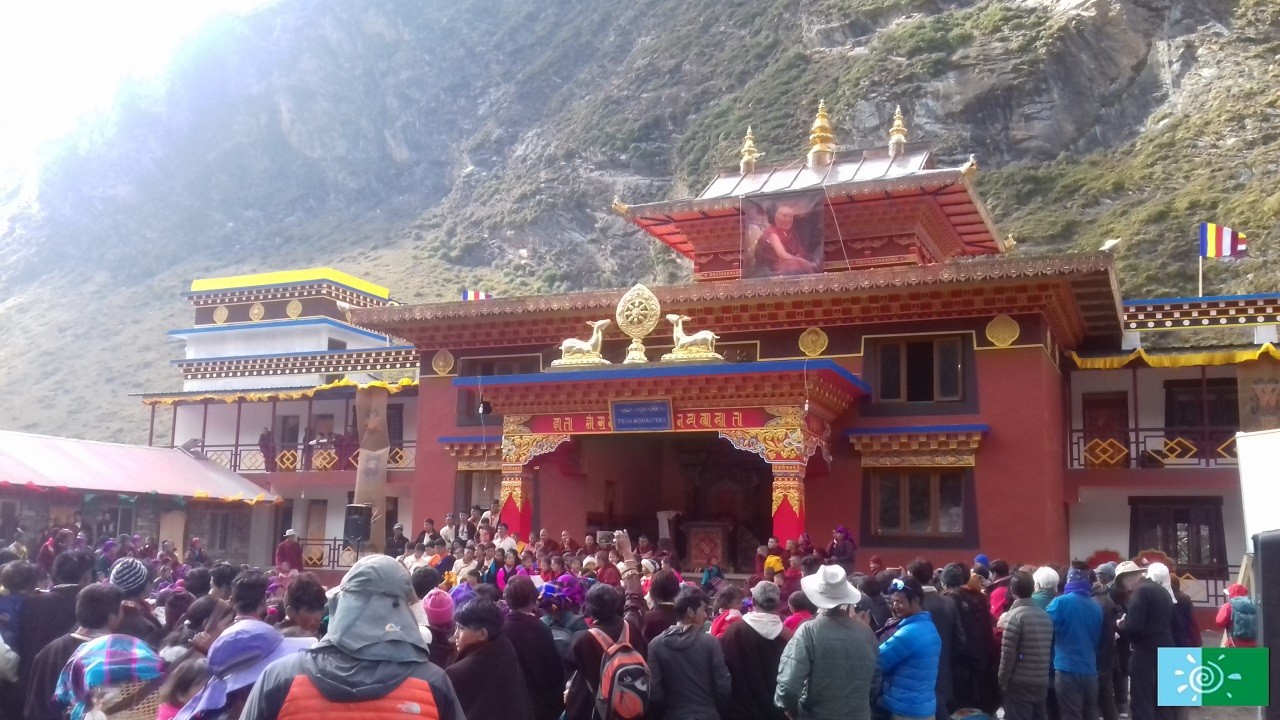
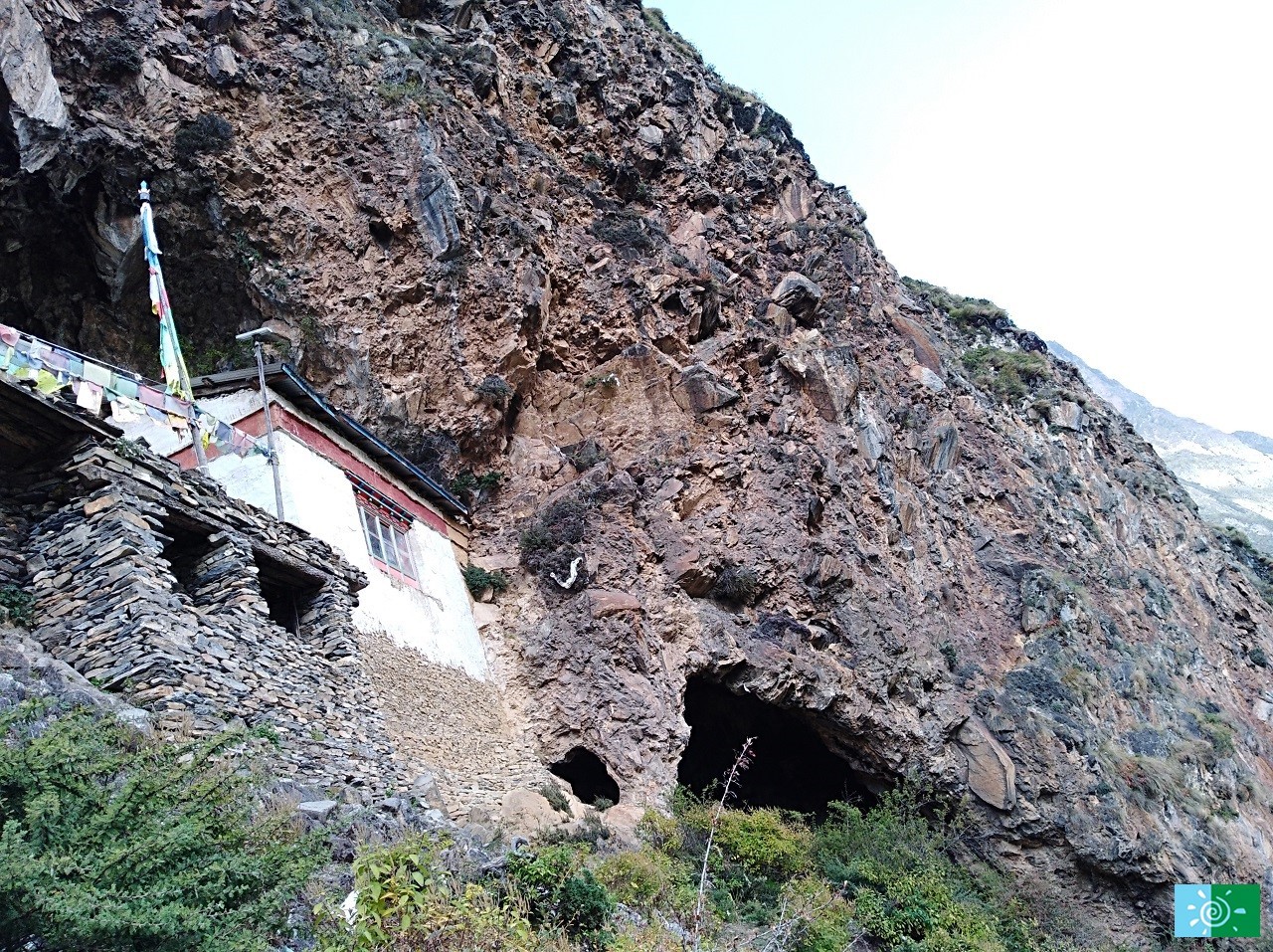
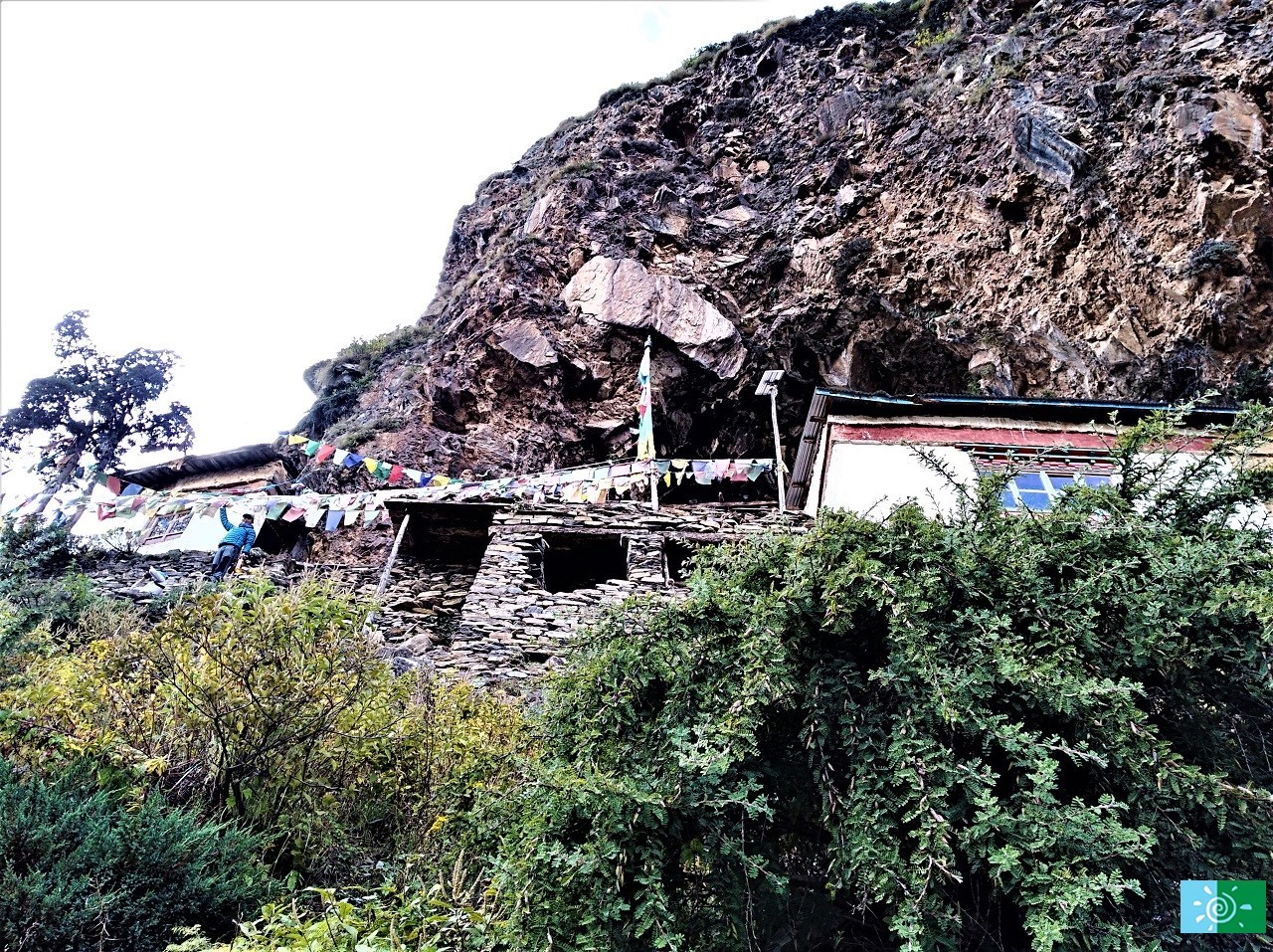
Tsum Valley preserves ancient art, culture, and religion. Mani walls and chortens line the trails, while sacred monasteries such as Mu Gompa, Rachen Gompa, Dephu Doma Nunnery Gompa, and Milarepa Gompa reflect its spiritual heritage.

The Tsumba people live in the valley and speak Tsumke (Tsumba), a Tibetan-influenced dialect. In 1920, they declared the valley “Shyagya,” a non-violent zone based on Buddhist principles, which still guides their daily life.

Local belief holds that surrounding mountains are abodes of gods. People also believe that the Buddhist saint Milarepa meditated in the valley’s caves.

Tsum Valley is considered a beyul, a sacred hidden refuge for spiritual practice. Tradition states that Guru Rinpoche blessed the valley in the 8th century while spreading Buddhism in the region.

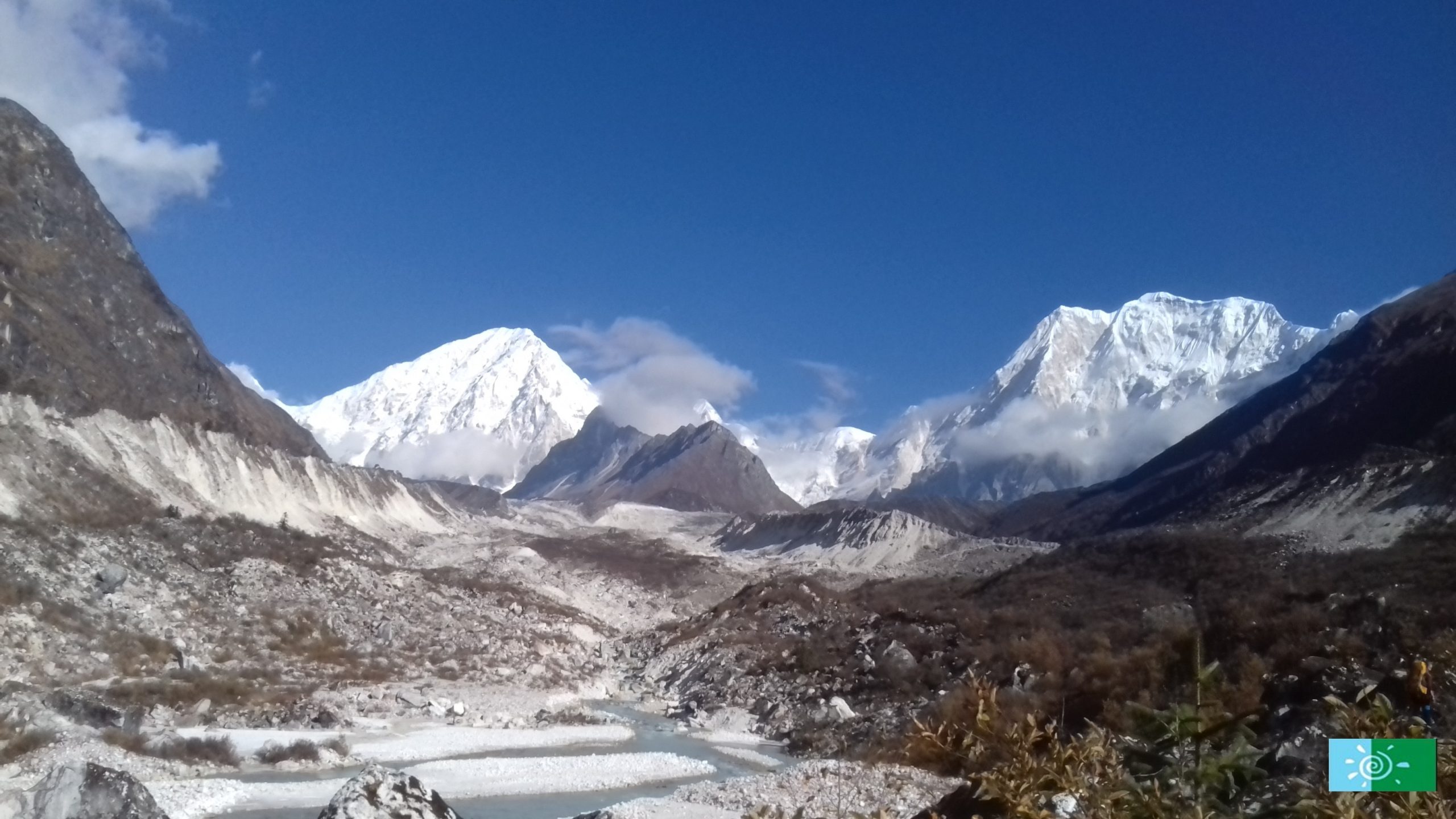
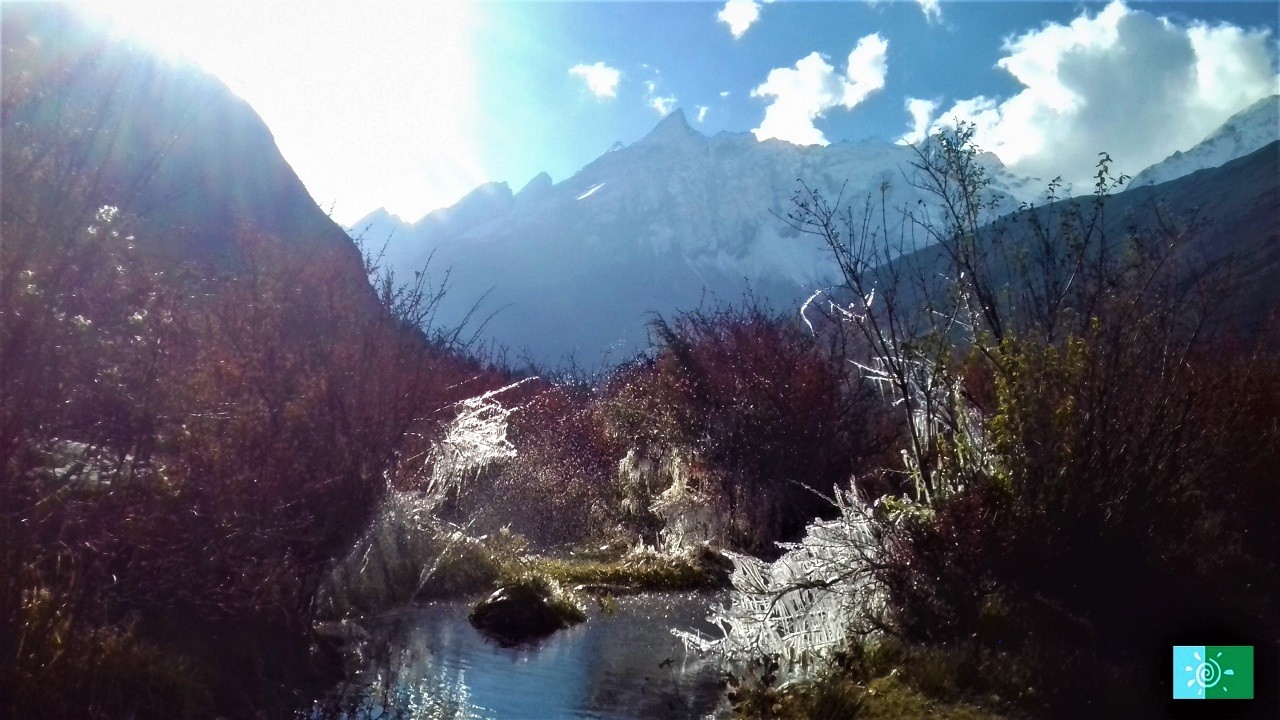
Buddhist monasteries continue to preserve Tibetan culture in the valley. Prayer flags and Mani walls mark the trekking trails with spiritual meaning. The route passes through forests of pine, juniper, and rhododendron before opening to views of Lamjung Himal, Ganesh Himal, and Mount Manaslu (8,163 m).

Why Choose Nepal Sanctuary Treks for the Tsum Valley Trek?

With over 27 years of experience in Himalayan trekking, we design Tsum Valley Trek itinerary with safety, sustainability, and authentic cultural immersion at its core.

Our Manaslu Circuit Trek itinerary is fully customizable to suit your personal pace, fitness level, and interests. We specialize in both teahouse treks and camping treks along the Great Himalayan Trail, offering flexibility for trekkers of all kinds.

Our experienced Sherpa guides bring invaluable knowledge and insights into the rich local culture while ensuring your safety throughout the Tsum Valley Trek With years of experience, our professional team knows the Tsum Valley Trek and surrounding regions intimately, ensuring a memorable and well-guided adventure.

We focus on small group sizes to provide personalized attention and maintain strict safety protocols. Our long-standing partnerships with trusted suppliers ensure carefully selected accommodations and reliable transportation throughout Tsum Valley Trek.

As a Travelife Certified company, we are committed to promoting sustainable and eco-friendly travel. When you choose Nepal Sanctuary Treks for your Tsum Valley Trek, you support local communities, help minimize environmental impact, and practice responsible tourism. Your safety, comfort, and unforgettable experience are our top priorities.

This is a sample itinerary of the Tsum Valley Trek. We shall customize the program as per your needs and preferences.

Read our Reviews | Contact Us for Custom Treks

Note: Below trekking hours, altitudes and distances are approximate, and absolutely for the general idea only.

Trip Itinerary

Day 01: Arrive at Kathmandu Airport

Altitude above sea level: 1,302 m / 4,269 ft.

Driving Time: Approx. 30 minutes, depending on traffic conditions.

Accommodation: Hotel Tibet or similar

Upon your arrival at Tribhuvan International Airport in Kathmandu, you will be warmly welcomed by our representative, who will be holding a “Nepal Sanctuary Treks” sign outside the terminal to greet you.

You will be transferred to your hotel in a private vehicle. After checking in and freshening up, our representative will meet you to give a detailed briefing on the upcoming itinerary, along with important safety guidelines and hygiene practices to ensure a smooth and enjoyable trek.

Day 02: Cultural Introductory Tour and Trek Preparation

Altitude above sea level: 1,302 m / 4,269 ft.

Tour Duration:  Approx. 8 hours

Accommodation: Hotel Tibet or similar

Meal: Breakfast

9:00 AM: Guided Cultural Tour of Kathmandu Valley

Start your day with a guided cultural tour around Kathmandu Valley. Explore the vibrant Kathmandu with our expert guides, who will share insights into the area’s rich history.

Kathmandu Durbar Square

Visit Kathmandu Durbar Square (Hanuman Dhoka Durbar), a royal historical complex filled with temples, palaces, and shrines from the 15th century. Highlights include Kumari Ghar (the home of the living goddess) and Kasthamandap, an architectural marvel built from a single tree.

Swayambhunath (Monkey Temple)

Next, head to Swayambhunath, the Monkey Temple, a sacred site for both Hinduism and Buddhism. Admire the stunning white dome and golden spire, while soaking in the serene atmosphere filled with incense and prayer wheels.

PM: Boudhanath Stupa

Visit the massive Boudhanath Stupa, a UNESCO World Heritage Site. It’s a spiritual center for Tibetan culture, surrounded by prayer flags, monks, and devotees chanting ‘Om Mani Padme Hum’.

Pashupatinath Temple

Conclude your tour at the Pashupatinath Temple, one of the most sacred Hindu temples, located along the Bagmati River. Here, you can witness profound spiritual rituals, including the moving sight of open-air cremations, which hold deep cultural significance. After immersing yourself in this sacred experience, you will transfer back to your hotel.

Day 03: Drive to Macha Khola

Altitude above sea level: 900 m/2,952 ft. (Macha Khola)

Driving duration: 9–10 hrs. Approx. 

Accommodation: Tea House Lodge

Meal: Breakfast, Lunch, and Dinner

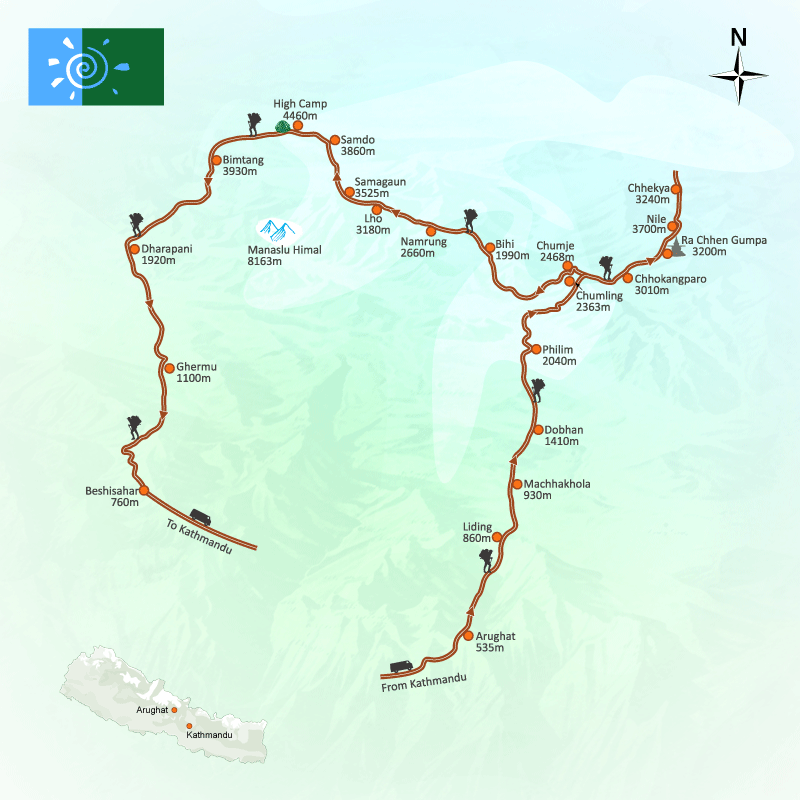
Start your adventure early in the morning with a private vehicle journey from Kathmandu, heading west along the picturesque Kathmandu–Pokhara Highway. This full-day drive takes you through charming mountain villages, terraced rice fields, and lush green hillsides, offering stunning views of rural Nepal.

You’ll veer north at Dhading to reach Arughat Bazaar, following the Budi Gandaki River upstream toward Macha Khola, a remote village in the Manaslu trekking region. Although the final stretch of the road gets rough and dusty, the journey rewards you with dramatic landscapes and occasional glimpses of the Annapurna, Manaslu, Ganesh Himal, and Langtang Himal ranges — perfect for landscape photography and cultural immersion.

This scenic drive is a visual feast and the perfect start to your Manaslu Circuit Trek or any off-the-beaten-path trek in Nepal.

Day 04: Trek to Jagat

Altitude above sea level: 1,440 m/4,724ft. Jagat

Hiking duration: 6-7 hrs. Approx.

Accommodation: Tea House Lodge

Meal: Breakfast, Lunch, and Dinner

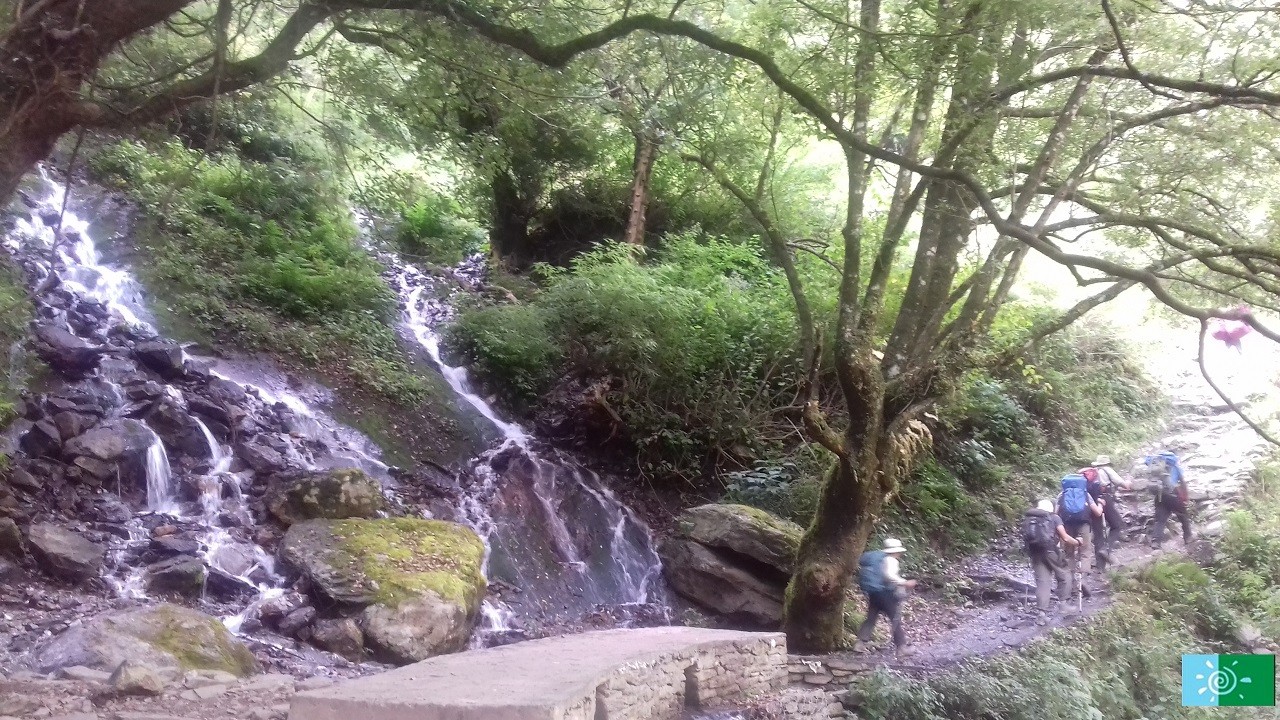
After breakfast in Machha Khola , the trail winds through river gorges and forested hills, following the Budi Gandaki River. You’ll pass Khorlabesi (970 m / 3,182 ft.) with its small natural hot spring, then cross ridges and suspension bridges toward Dobhan (1,070 m / 3,510 ft.).

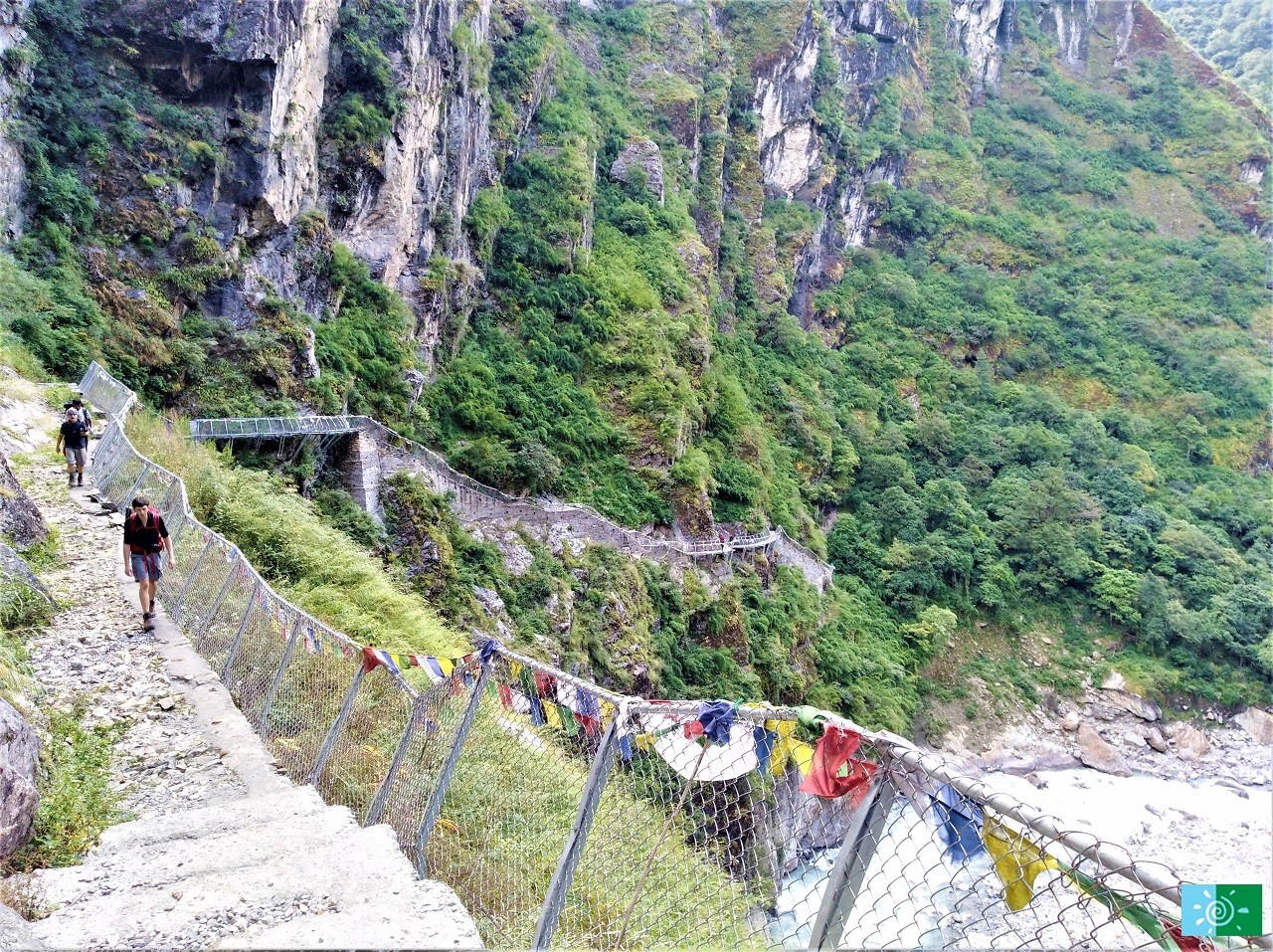
The path continues through Yaru Khola and Tharo Bharyang (1,190 m / 3,904 ft.), featuring stone staircases and river crossings. Finally, after a scenic ridge climb, you’ll reach Jagat, the gateway to the Manaslu Conservation Area.

A diverse trekking day with hot springs, river valleys, and traditional Himalayan villages.

Day 05: Trek to Lokpa

Altitude above sea level: 2,240 m / 7,349 ft. – Lokpa

Hiking duration: Approximately 6 hours (17.5 km / 10.89 mi)

Ascent: 890 m / 2,923 ft.

Descent: 286 m / 938 ft.

Accommodation: Tea House Lodge

Meals: Breakfast, Lunch, and Dinner

Your trek begins with a permit check at the Jagat police post, after which you ascend a rocky ridge toward Salleri. From there, the trail descends to Sirdibas, gradually opening into a wider valley as you approach Ghatta Khola.

You’ll continue along the riverbed, crossing a suspension bridge to reach Philim, a large and vibrant Gurung village. A gentle uphill climb then brings you to Ekle Bhatti, where the trail divides: one path leads toward Manaslu, while the other takes you into the Tsum Valley.

Heading north, you arrive at Lokpa, the first village of the remote and mystical Tsum Valley, nestled among dense pine forests and surrounded by serene mountain scenery.

Day 06: Trek to Chumling

Altitude above sea level: 2,386 m / 7,828 ft. – Chumling

Hiking duration: Approximately 4–5 hours (13.3 km / 8.27 mi)

Ascent: 502 m / 1,647 ft.

Descent: 220 m / 722 ft.

Accommodation: Tea House Lodge

Meals: Breakfast, Lunch, and Dinner

After breakfast in Lokpa, you’ll descend into the river valley before beginning a gradual climb toward Gumling. The trail winds through a peaceful forest, with no villages or tea houses along the way.

After several ups and downs, you’ll cross a suspension bridge, where the trail splits: one path leads to Ripchet, while the other takes you to Chumling. Follow the Chumling route, passing a small mani wall before arriving at the village.

Chumling greets you with quiet charm, a handful of tea houses, and your first authentic glimpse of life in the remote Tsum Valley.

Day 07: Trek to Chhokang Paro

Altitude above sea level: 3,031 m / 9,944 ft. – Chhokang Paro

Hiking duration: Approximately 5–6 hours (10.6 km / 6.62 mi)

Ascent: 645 m / 2,116 ft.

Descent: 180 m / 594 ft.

Accommodation: Tea House Lodge

Meals: Breakfast, Lunch, and Dinner

After breakfast, this day of trekking is considered challenging due to the long uphill stretches. The trail begins by crossing a suspension bridge over the Sarpu Khola (river), followed by a continuous and sometimes steep climb toward Gho village. From Gho, it takes a couple more hours of uphill hiking to reach the flat plateau where the twin villages of Chhokang Paro are situated.

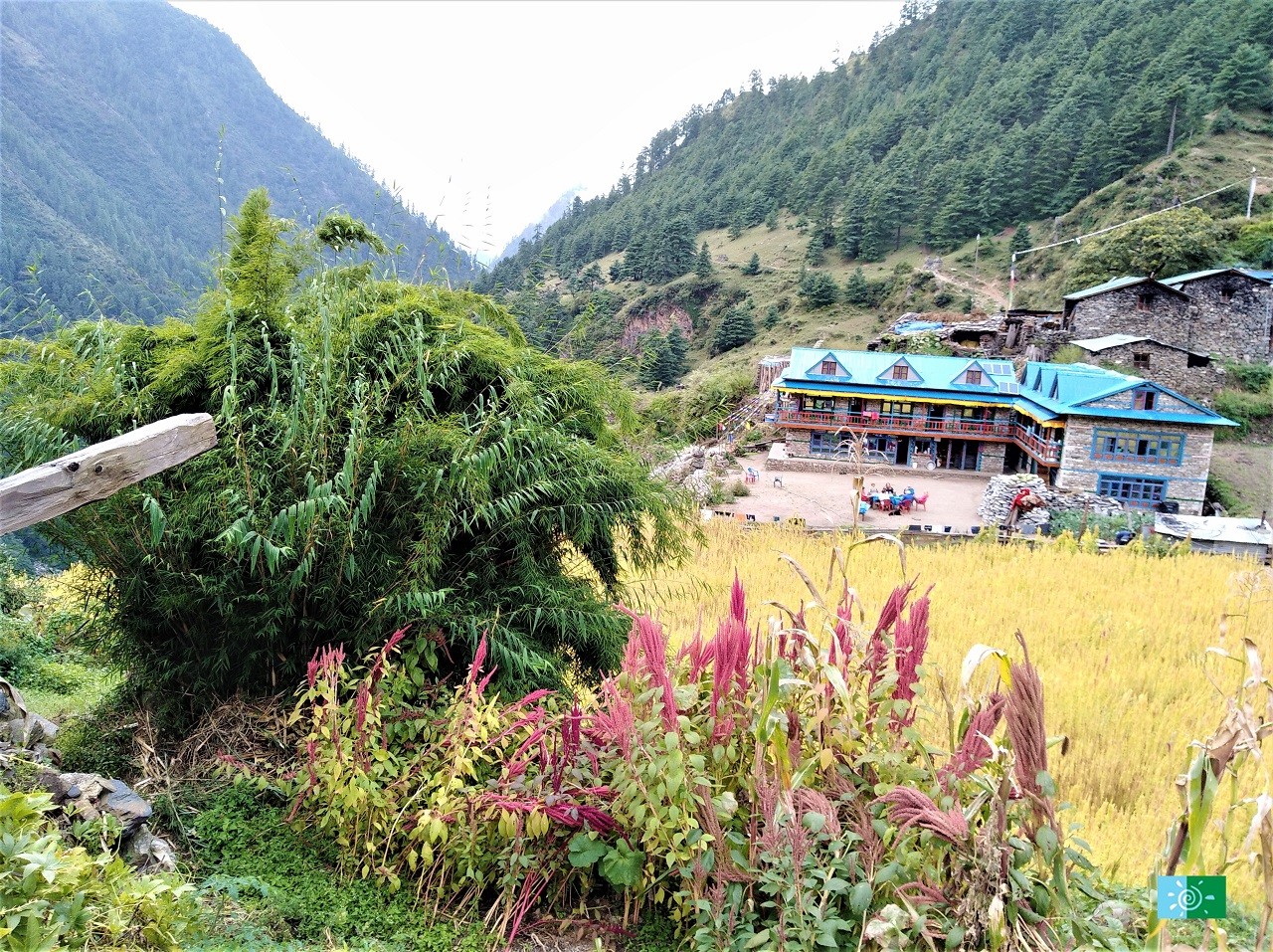
Along the way, you’ll pass through dense pine and rhododendron forests as well as cultivated farmlands dotted with traditional Tibetan-style houses. The trek also offers spectacular views of the Ganesh Himal range and Shringi Himal throughout the day.

Day 08: Trek to Chhule

Altitude above sea level: 3,250 m / 10,663 ft – Chhule

Hiking duration: Approximately 4–5 hours (8 km / 5 mi)

Ascent: 314 m / 1,030 ft

Descent: 40 m / 131 ft

Accommodation: Tea House Lodge

Meals: Breakfast, Lunch, and Dinner

After breakfast, the trail follows the Shiar Khola (Syar River) through a widening valley with strong Tibetan Buddhist influence. You pass several small traditional villages, including Lamagaon, Phurbe, and Pangdun. Along the way, you can visit the sacred Piren Phu (Milarepa) Cave, an important meditation site. The path winds between cultivated fields and dry stone walls and remains relatively easy, with no major climbs. As you continue north toward the Tibetan border, the landscape becomes increasingly arid and open.

Day 09: Trek to Mu Gompa- Descent to Chhokang Paro

Altitude above sea level: 3,700 m / 12,139 ft. – Mu Gompa
Hiking duration: Approximately 3 hours (7 km / 4.3 mi)
Ascent: 355 m / 1,165 ft.
Descent: 669 m / 2,195 ft.
Accommodation: Tea House Lodge
Meals: Breakfast, Lunch, and Dinner

After breakfast, follow the trail up to Mu Gompa and visit the monastery. Mu Gompa was established by Drupa Rinpoche, a Bhutanese lama who meditated in nearby caves before the monastery was founded. Situated at 3,700 m and surrounded by high mountains, it is one of the most important spiritual sites in the Tsum Valley. After exploring the monastery, descend to Nile for lunch, then continue down to Chhokang Paro in the afternoon. The local nunnery here is well worth visiting for its beautiful Buddhist thangka murals.

Day 10: Trek to Lhokpa

Altitude above sea level: 2,240 m / 7,349 ft. -Lhokpa
Hiking duration: 6–7 hours (13 km / 8 mi)
Descent: 791 m / 2,596 ft.
Accommodation: Tea House Lodge
Meals: Breakfast, Lunch, and Dinner

After breakfast, you retrace the main trail out of the Tsum Valley. The route winds through narrow river gorges and dense pine and rhododendron forests. You pass the traditional villages of Gho and the Domje area before continuing toward Lokpa. Early in the trek, you enjoy clear views of the Ganesh Himal range. Lokpa, set between the Budi Gandaki and Siyar Khola rivers, marks the entry and exit point of the restricted Tsum Valley region.

Day 11: Trek to Ghap

Altitude above sea level: 2,100 m / 6,890 ft.- Ghap
Hiking duration: Approximately 7 hours (14 km / 8.7 mi)
Ascent: 600 m / 1,969 ft.
Descent: 750 m / 2,461 ft.
Accommodation: Tea House Lodge
Meals: Breakfast, Lunch, and Dinner

After breakfast, you descend steeply from Lokpa to cross the Budhi Gandaki on a suspension bridge, then climb through a narrow gorge. The trail passes through dense bamboo and rhododendron forests, crossing several streams and the Serang Khola. Some sections are steep, rocky, and slippery, requiring careful footing. You rejoin the main Manaslu Circuit trail at Deng, and as you continue toward Ghap, you enjoy impressive views of Sringi Himal.


Day 12: Trek to Lho

Altitude above sea level: 3,180 m / 10,433 ft.-Lho
Hiking duration: Approximately 7–8 hours (15 km / 9.3 mi)
Ascent: 1,015 m / 3,330 ft.
Accommodation: Tea House Lodge
Meals: Breakfast, Lunch, and Dinner

After breakfast, the trail follows the Budhi Gandaki River and climbs steeply through dense forests of blue pine, oak, and rhododendron. After passing Lhi village, the path becomes a vertical ascent. You pass through key villages, including Namrung (a checkpoint), Lihi, and Sho. From Namrung onward, the air grows crisper, and spectacular mountain views emerge. Lho village offers breathtaking views of Mount Manaslu’s twin summits (8,163 m) and nearby peaks such as Syaula Himal and Ganesh Himal.

Day 13: Trek to Samagaon

Altitude above sea level: 3,450 m / 11,319 ft. – Samagaon
Hiking duration: Approximately 3–4 hours (8 km / 5 mi)
Ascent: 350 m / 1,145 ft.
Descent: 45 m / 148 ft.
Accommodation: Tea House Lodge
Meals: Breakfast, Lunch, and Dinner

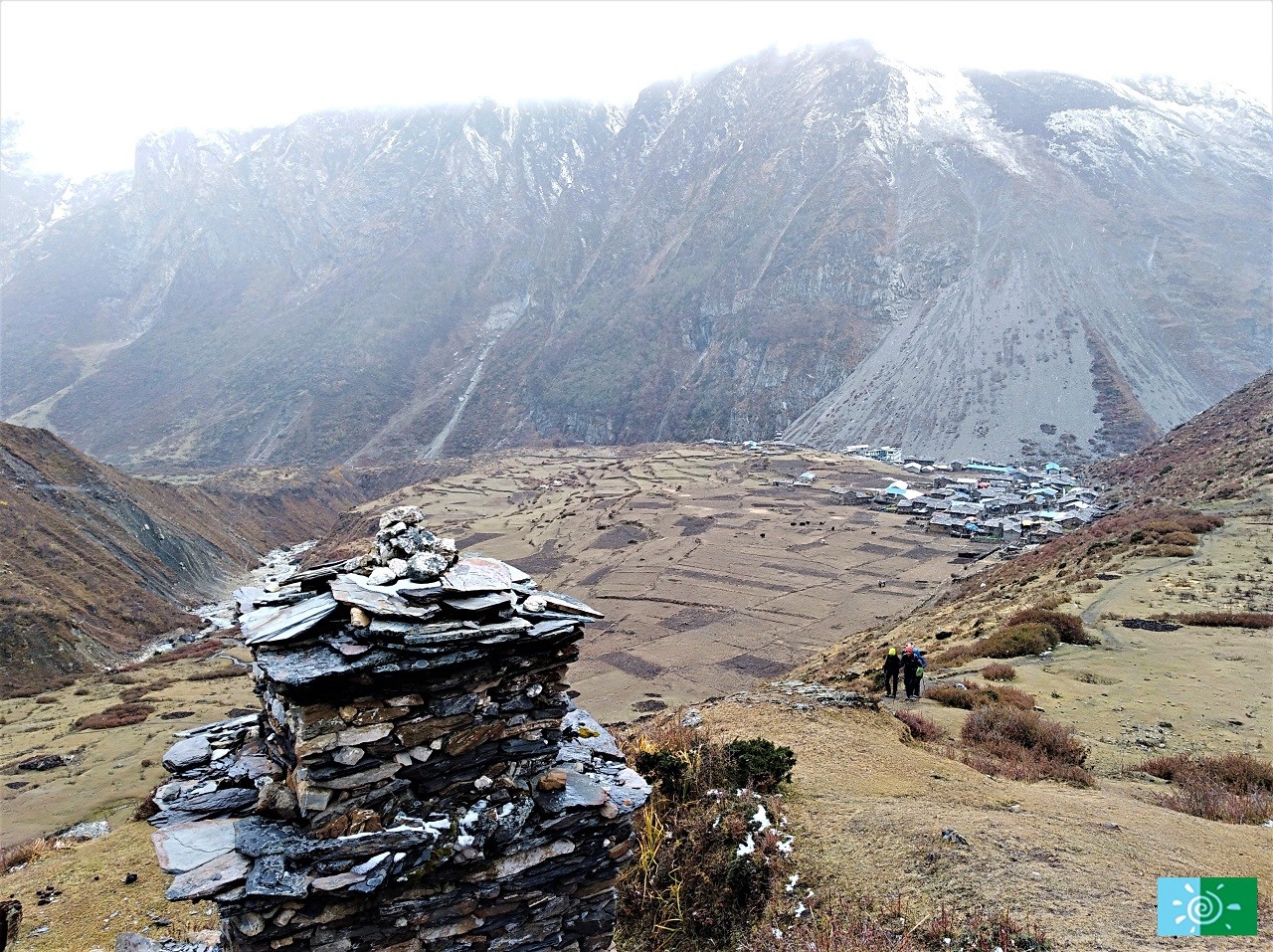
The trail is well-marked and mostly straightforward, rising from forested areas into open, high-alpine yak pastures. You pass through Shyala village, which offers a 360-degree panorama of Himal Chuli, Peak 29 (Ngadi Chuli), and the Manaslu massif. As you near Samagaon, the largest and most important village in the Nubri Valley with strong Tibetan cultural influence, views of Mount Manaslu become even more dramatic. Trekkers usually spend the night in Samagaon and often take an acclimatization hike the next day, such as to Pungyen Gompa or Manaslu Base Camp.

Day 14: Rest day in Samagaon

Altitude above sea level: 3,450 m / 11,319 ft. – Samgoan
Accommodation: Tea House Lodge
Meals: Breakfast, Lunch, and Dinner

Today is an essential acclimatization day in Samagaon. Start your morning with a warm breakfast at the tea house. You can choose to rest and relax or explore the surrounding area.

For active trekkers, there are exciting day hike options. One hike leads to a small hill near Sama village, offering breathtaking views and fresh mountain air.

Discover thousands of mani stones etched with Buddhist prayers and meet Sherpa women dressed in traditional clothing and jewelry. You may also visit the ancient Pungyen Gompa monastery. From the ridge, enjoy a panoramic view of the glacier.

Alternatively, take a scenic walk toward Manaslu Base Camp. Along the way, pass the stunning and frozen Birendra Lake. Whichever option you choose, the day helps your body adjust to higher altitude. Enjoy the peaceful ambiance and immerse yourself in Sherpa culture.

Day 15: Trek to Samdo

Altitude above sea level: 3,860 m / 12,660 ft. – Samdo
Hiking Duration: Approximately 3 to 4 hours, (7 km / 4.3 mi)
Ascent: 390 m / 1,280 ft.
Descent: 50 m / 164 ft.
Accommodation: Tea House Lodge
Meals: Breakfast, Lunch, and Dinner

After a hearty breakfast, begin your scenic trek to Samdo. Descend towards the Budhi Gandaki River and follow the trail. Cross a bridge over a side stream and spot countless mani walls.

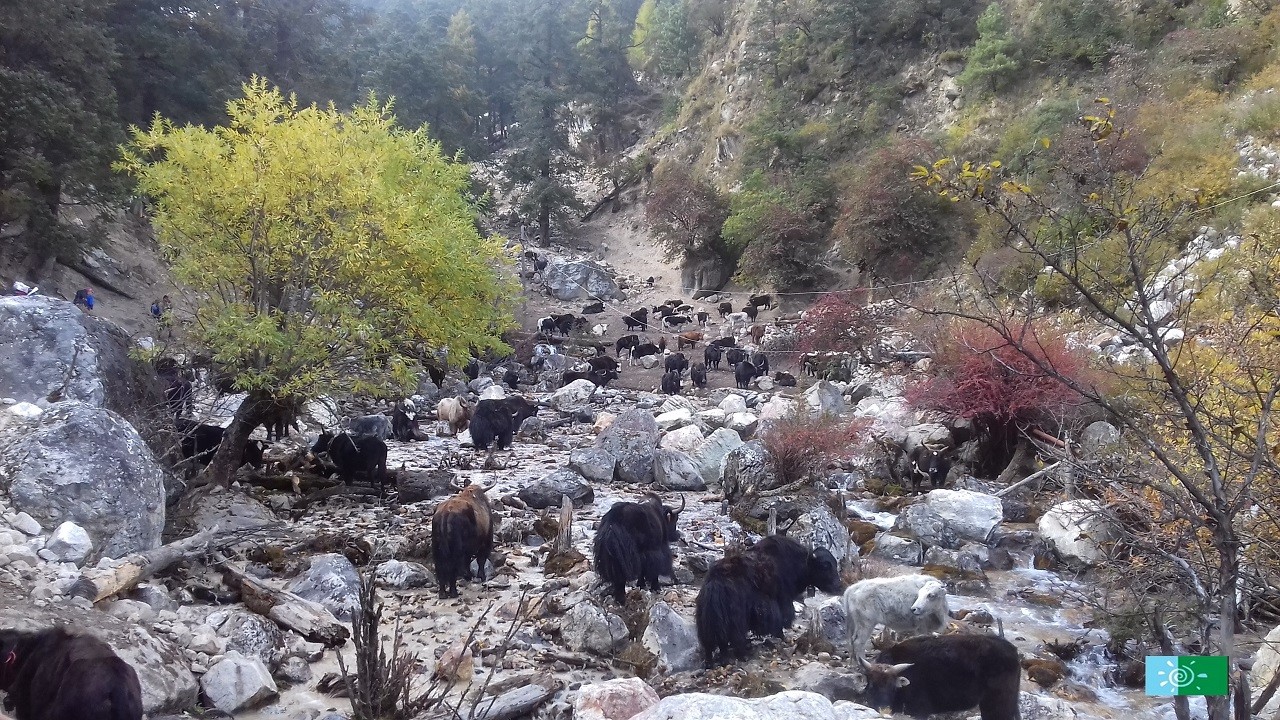
As the valley opens up, stunning mountain views come into sight. Marvel at Manaslu North, Nike Peak, and the majestic Samdo Peak. This section of the trail nears the Tibetan border, offering alpine charm. Along the way, mountain goats and grazing yaks might appear.

Continue along a gentle ridge lined with juniper and birch forests. You’ll reach Kermo Kharka, a peaceful spot with stone herder huts. From here, descend to the Budhi Gandaki and cross a wooden bridge.

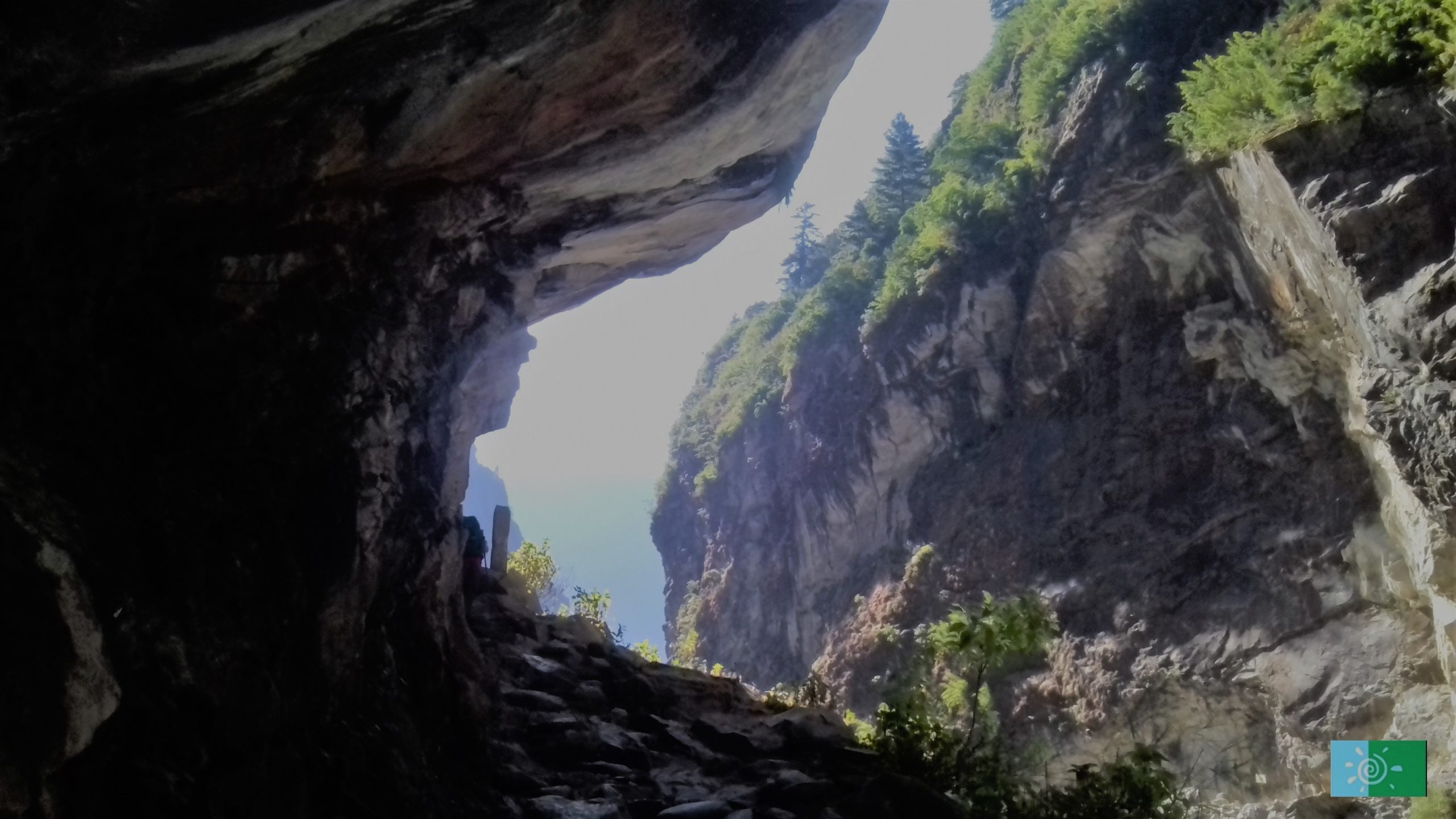
Then ascend steeply onto a cliff nestled between river confluences. Pass through a stone arch and continue onward to the village of Samdo. Enjoy the alpine beauty and the tranquil atmosphere of this high-altitude settlement.


Day 16: Acclimatization and rest day at Samdo

Altitude above sea level: 3,860 m / 12,660 ft.-Samdo
Accommodation: Tea House Lodge
Meals: Breakfast, Lunch, and Dinner

Today is an important acclimatization day to help your body adjust to the high altitude.

You may choose to rest in Samdo or explore the surrounding trails.

For adventure seekers, hike toward the Gya La Pass (5,300 m / 17,388 ft), a traditional trade route to Tibet. This trail offers incredible views of Manaslu and the Tibetan plateau.

Alternatively, walk up the valley behind Samdo to a lesser-used trade route. Enjoy panoramic views of Simrang, Hiunchuli, Ngadi, Larkya Peak, Cheo, and Kang Guru.

Along the way, pass several seasonal yak herder shelters known as doksas. Keep your eyes peeled for Himalayan birds such as the Lophophorus, Lammergeyer, and Himalayan Griffin.

Day 17: Trek to Larkya Phedi

Altitude above sea level: 4,460 m / 14,632 ft, Larkya Phedi
Hiking Duration: Approximately 3 to 4 hours, (5 km / 3.1 mi)
Ascent: 640 m / 2,100 ft.
Descent: 40 m / 131 ft.
Accommodation: Tea House Lodge
Meals: Breakfast, Lunch, and Dinner

After breakfast, begin your short but scenic trek to Larkya Phedi.

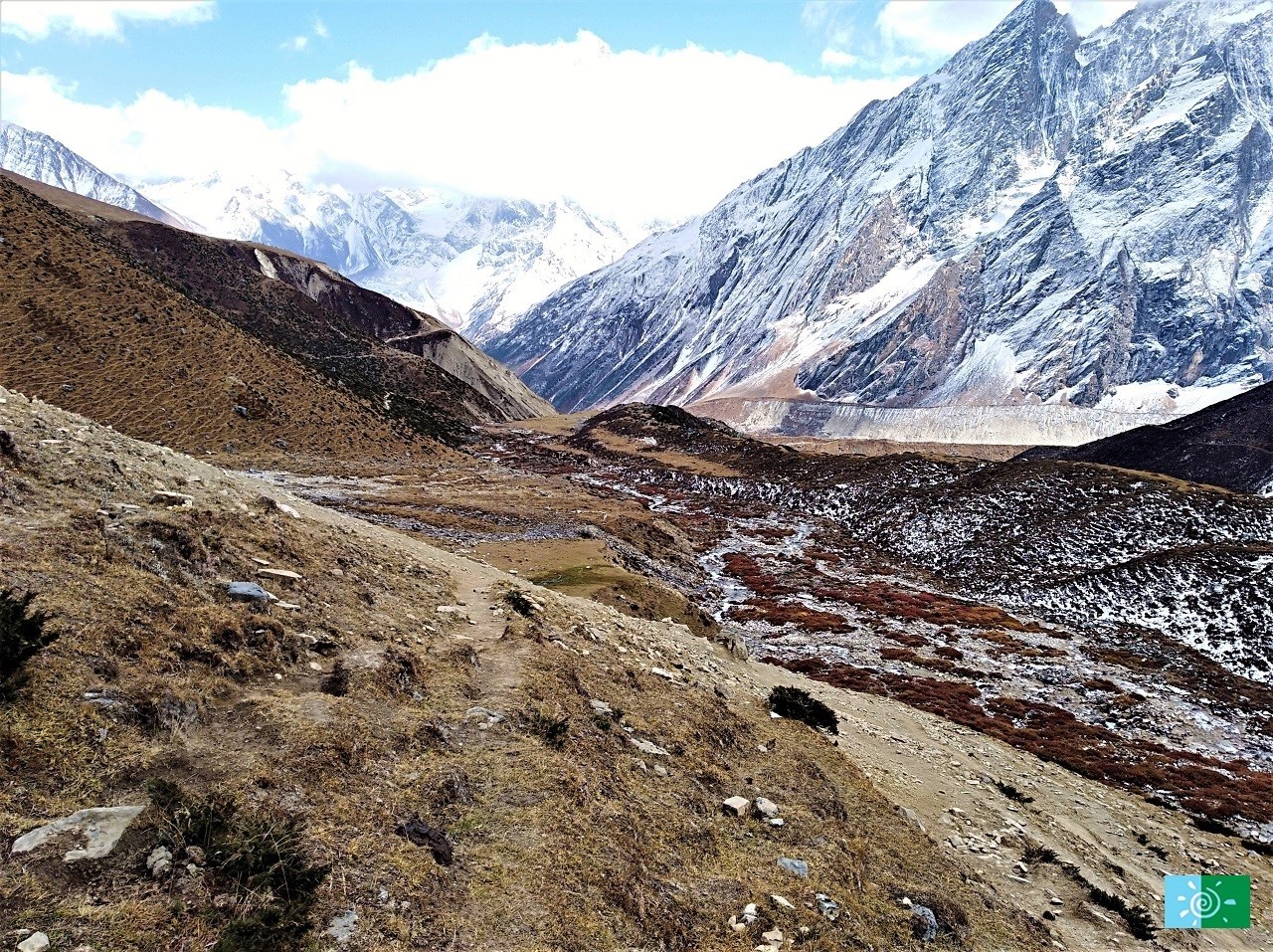
First, pass the seasonal Tibetan market known as Larke Bazaar. Then descend toward the Budhi Gandaki River and cross a wooden bridge. From here, ascend steadily, crossing two glacial streams along the way. Enjoy spectacular views of the Larkya Glacier as you hike.

Next, follow the trail through the peaceful Salka Khola Valley. Ascend further to reach Dharamsala, also called Larkya Phedi. Along the route, admire Samdo Peak towering behind you. To your left, spot the Manaslu summit climbing route.

The landscape here is dramatic and truly unforgettable. Finally, settle into your teahouse and rest before tomorrow’s high pass adventure.

Day 18: Trek to Bimtang

Altitude above sea level: 3,590 m / 11,778 ft. – Bhimtang
Hiking Duration: Approximately 8 to 9 hours, (14 km / 8.7 mi)
Ascent: 580 m / 1,903 ft.
Descent: 345 m / 1,132 ft.
Accommodation: Tea House Lodge
Meals: Breakfast, Lunch, and Dinner

After breakfast, set out on one of the most challenging days of the trek.

Begin your gradual ascent to a small valley north of the Larkya Glacier. Take in mesmerizing views of Cho Danda and Larkya Peak along the way. Continue across glacial moraines as the trail steadily climbs toward the pass.

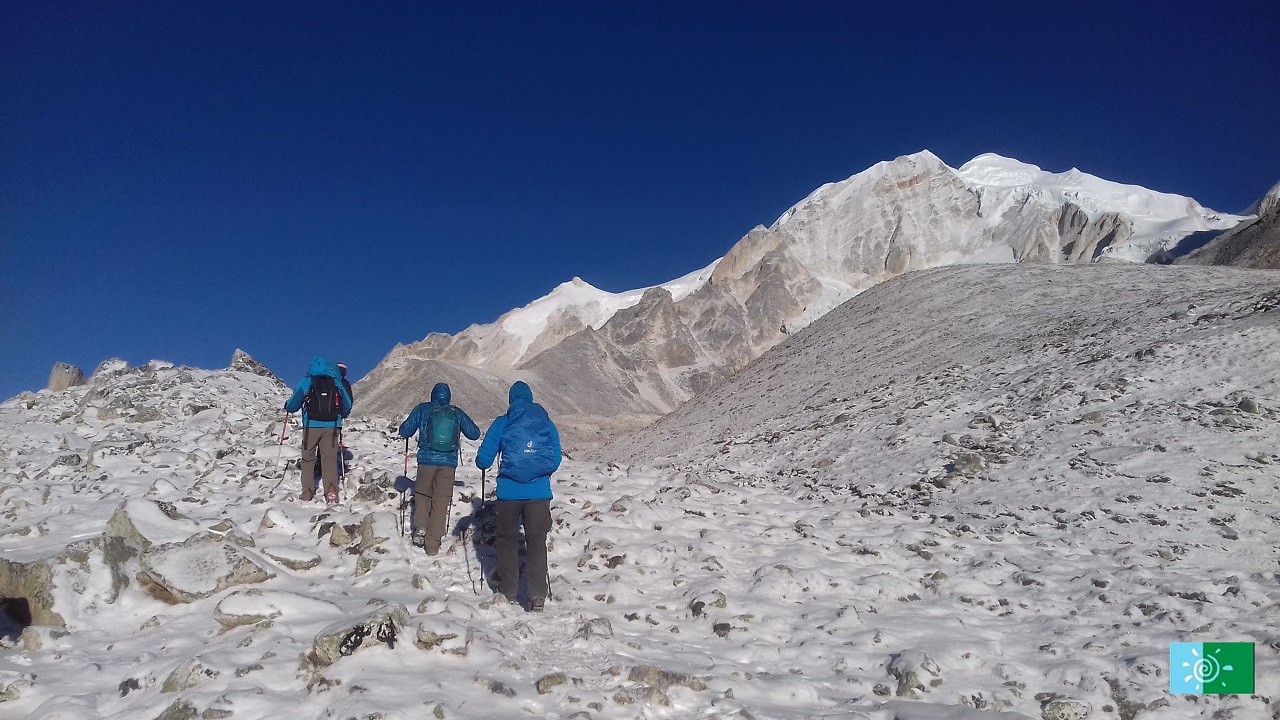
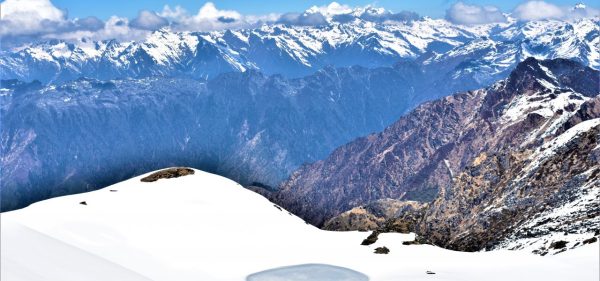
The final ascent becomes steeper, but the mountain views are incredibly rewarding. At Larkya La Pass (5,135 m / 16,847 ft.), marvel at peaks like Himlung, Cheo Himal, and Annapurna II. Spend a moment soaking in the stunning panoramic landscape.

Then, begin your descent from the high pass into misty alpine pastures. Manaslu towers in the distance, making the descent even more spectacular. The trail winds down through rocky terrain and into greener valleys.

Finally, arrive at Bhimtang, a tranquil village surrounded by peaks and meadows. Settle into your lodge and rest after a long but unforgettable day.


Day 19: Trek to Tilche

Altitude above sea level: 1,900 m / 6,233 ft.-Tilche
Hiking Duration: Approximately 6 to 7 hours, (16 km / 9.9 mi)
Descent: 1,390 m / 4,560 ft. 
Accommodation: Tea House Lodge
Meals: Breakfast, Lunch, and Dinner

Begin the day with a downhill hike alongside the Budhi Gandaki River. Cross a wooden bridge and enter a lush rhododendron forest. The trail follows a narrow valley, rich in flora and scenic beauty.

Reach Karche, the highest cultivated land in the valley. Continue along the riverbank, enjoying views of quiet villages and terraced fields. Pass through the peaceful village of Gho, a perfect rest stop. From Gho, trek further to reach Tilche, a charming Gurung settlement.

Tilche welcomes you with a warm atmosphere and traditional architecture. Enjoy your evening with hearty food and reflections on the journey so far.

Day 20: Drive to Bandipur

Altitude above sea level: 1,030 m / 3,379 ft. -Bandipur
Driving Duration: Approximately 5-6 hours
Accommodation: The Old Inn or similar
Meals: Breakfast and Lunch

Enjoy a relaxing breakfast before leaving the mountains behind. Begin your scenic drive towards Bandipur, a hilltop town rich in culture.

Bandipur is a hidden gem nestled in central Nepal. The cobbled streets are lined with traditional wooden Newari houses.

Wander through Bandipur Bazaar and admire its timeless charm. Be inspired by the artistic buildings and local lifestyle. Locals live simply but radiate warmth and happiness.

Day 21: Drive back to Kathmandu

Altitude above sea level: 1,302 m / 4,272 ft.- Kathmandu
Driving Duration: 4–5 hours (approx.)
Accommodation: Hotel Tibet or similar
Meals: Breakfast

After a hearty breakfast, begin your drive back to Kathmandu. Enjoy scenic views as you descend from the hills.

Upon arrival, our representative will transfer you to your hotel. Take time to relax or explore the city at your own pace.

Reflect on your incredible journey through the Himalayas.

Day 22: Final departure

Meal: Breakfast

As your unforgettable journey comes to an end, it’s time to fly back home, cherishing all the incredible memories of Nepal. A representative from Nepal Sanctuary Treks will transfer you to Tribhuvan International Airport (TIA). Please make sure to check in 3 hours prior to your scheduled flight for a smooth departure.

Price Included

What's Included

  • Private airport transfers,
  • Private transfer to/from trek point
  • Guided Kathmandu Sightseeing tour with entrance fees
  • 3 nights in Hotel Tibet or similar with breakfast
  • 1 night in The Old Inn or similar in Bandipur with breakfast
  • Tea house lodge during the trek on full board
  • Conservation fee & Restricted Area permit,
  • Staff insurance on the trek,
  • Trek guide & porter/s
  • Duffel bag
  • Map

What's not Included

  • Additional tours and meals that are not mentioned,
  • Beverages
  • Personal equipment
  • Visa fee: US$ 30 for 15 days and US$ 50 for 30 days and US$125 for 90 days for multiple entries
  • Insurance (for cancellation, accident, health, emergency evacuation and loss, theft of or damage to baggage and personal effects), Liability insurance
  • Tips

Trip Important Notes

What to Pack for the Tsum Valley Trek: Full Gear and Clothing List

Footwear:

  • Walking boots. A pair of water-repellent boots with ankle support.
  • Walking socks.
  • Trainers or trail shoes. Can be used in and around the lodge in the afternoons/evenings.

Clothing:

  • Waterproof jacket and trousers (Gore-Tex or similar).
  • Trekking trousers.
  • Long sleeve shirts (not cotton).
  • Mid to heavyweight fleece.
  • Sleeveless or body warmer type fleece.
  • Thermals or base layer for top & bottom (merino wool or synthetic).
  • Fleece pants.
  • Medium weight down jacket (e.g.: Nuptse jacket by The North Face).

Hand wear:

  • Fleece gloves.
  • Warms mittens and/or gloves.

Headwear:

  • Wool or fleece hat.
  • Sun hat.
  • Bandana or scarf.
  • Head torch. Bring extra batteries.
  • Sunglasses.

For crossing the passes

  • Trekking poles
  • Yaktrax 
  • Gaiters

Personal Equipment:

  • Day pack (you’ll need during the day, such as warm clothes, a jacket, a camera, water bottles, snacks, and a personal first aid kit. Keep your daypack under 5 kg. A porter will transport the rest of your personal gear in a duffel or kit bag, which should not exceed 15 kg per trekker. Clearly mark your bag to help identify it easily.)
  • Stuff sacks for keeping your gear dry and organized.
  • Water bottles (Nalgene wide-mouth bottles are the best).
  • Sunscreen and lip salve with a high SPF.
  • Water purification tablets (Aqua Tab, Chlorine dioxide).
  • Favourite snack food.
  • Sleeping bag ( available for rental in Kathmandu approx.@ US$1.5/day)
  • Camera with spare batteries and memory cards.
  • Insurance certificate.
  • Flash Light
  • Earplugs (optional).
  • Hand sanitizer 
  • Face Mask
  • Spare cash for extra expenses like hot shower, boiled water, gadget charging during trek

Traveling:

  • Bring a small combination padlock to secure the bag.
  • Travel clothes. You will need casual clothing for air travel days and time spent in Kathmandu.
  • Toiletry bags include toilet paper, soap, towel, toothbrush, etc.
  • Quick dry towel

Personal first aid kit: Note: Nepal Sanctuary Treks provides a comprehensive group first aid kit, but please bring personal medications and other items you might use regularly.

Tsum Valley Trek Temperature

The temperatures below represent the peak trekking seasons (Spring and Autumn). Tsum Valley is generally slightly warmer than the neighboring Manaslu Circuit, but high-altitude nights remain freezing.

Elevation Zone Daytime Temp (°C) Nighttime Temp (°C) Daytime Temp (°F) Nighttime Temp (°F)
Lower Footprint (700m – 1,500m) 18°C to 26°C 8°C to 12°C 64°F to 79°F 46°F to 54°F
Middle Valley (1,500m – 3,000m) 12°C to 18°C 2°C to 8°C 54°F to 64°F 36°F to 46°F
High Altitude (3,000m – 4,000m) 5°C to 12°C -5°C to 2°C 41°F to 54°F 23°F to 36°F
Upper Tsum (Mu Gompa, 3,700m+) 0°C to 8°C -10°C to -15°C 32°F to 46°F 14°F to 5°F

Packing Recommendation: For the Upper Tsum Valley (Mu Gompa), a 15°C (5°F) rated sleeping bag is recommended for Autumn and Spring treks to ensure comfort during the sub-zero nights.

Tsum Valley Trek Accommodation

The Tsum Valley Trek is mostly a teahouse trek, with basic lodges available at nearly every overnight stop. 

Accommodations are usually small, family-run lodges made of stone and timber, while higher in the valley, near places like Mu Gompa, simpler teahouses or homestays are common. 

Rooms are basic, typically twin-sharing with foam mattresses, pillows, and blankets, so bringing a sleeping bag is recommended for extra warmth and hygiene. 

Most lodges have shared bathrooms, either Asian-style squat toilets or basic Western-style toilets, often located outside the sleeping rooms. 

A common dining area with a wood-burning stove provides a cozy spot for meals and warmth. Some lodges also offer hot bucket showers for an extra fee, though these services become less reliable and more expensive at higher elevations.

The highest lodge before the pass (Dharmasala/Larkya Phedi) is very basic with limited bedding.

Tsum Valley Trek Food Guide: Meals, Teahouse Dining & Local Cuisine

Meals on the Tsum Valley Trek are simple, hearty, and designed to keep trekkers energized. Local teahouses serve a mix of Nepali and Tibetan food, with dal bhat as the main staple. It includes rice, lentil soup, vegetable curry, and pickles, and it remains the most reliable trekking meal.

Breakfast options in Tsum Valley teahouses include Tibetan bread with honey, jam, or eggs, along with porridge and pancakes.

Common snacks include momos, noodle soups like thukpa and thenthuk, fried rice, and potato dishes prepared in different styles such as fried, boiled, mashed, or curried.

Teahouses also serve hot drinks like black tea, milk tea, lemon tea, and ginger tea, which help with warmth and hydration during the trek.

Trekkers should try local food whenever possible to experience authentic Himalayan cuisine in Nepal’s Tsum Valley.

Most lodges provide common dining areas, where trekkers sit together around a wood-burning stove. These spaces act as the social center of each teahouse, offering warmth, comfort, and a shared dining experience during cold mountain evenings.

To stay healthy, avoid meat dishes, use hand sanitizer before meals, and pay separately for items not included in the set menu.

Tsum Valley Trek Electricity Guide: Charging, Power Supply & Travel Tips

Electricity on the Tsum Valley Trek is limited and often unreliable, especially in higher regions. Lower villages like Machha Khola and Jagat usually have stable Tsum Valley Trek electricity and charging facilities, while higher areas such as Mu Gompa rely mainly on solar power, which can be inconsistent or unavailable during bad weather.

Teahouses typically charge around NPR 200–500 (USD 1–5) per device for charging. Most plug points are located in common areas of Tsum Valley teahouses, not inside private rooms, so trekkers often share sockets with others.

Nepal uses plug types C, D, and M, so a universal travel adapter for Nepal trekking is essential. Trekkers should also carry a power bank or solar charger to manage frequent power cuts and limited charging access.

During peak trekking season, charging outlets become crowded, and cold temperatures drain batteries quickly in the Himalayas. For this reason, a high-capacity power bank and a headlamp with spare batteries are essential for the Tsum Valley trekking experience in Nepal.

Tsum Valley Trek Communication Guide: Mobile Network and Internet Access

Communication on the Tsum Valley Trek is limited and often unreliable, especially in the upper valley. Lower villages such as Arughat, Machha Khola, and Jagat provide intermittent mobile signal through Nepal Telecom (NTC), which offers the most reliable mobile network in Tsum Valley Trek Nepal.

As trekkers move higher through Lokpa, Chumling, Chhokangparo, Nile, and Mu Gompa, mobile coverage becomes weak or disappears completely. This makes Tsum Valley Trek communication and connectivity very challenging in remote Himalayan areas.

Wi-Fi access remains very rare in the Tsum Valley region. Some lower-village teahouses offer slow internet for a fee, but trekkers should not rely on stable internet in Tsum Valley Trek Nepal during the journey.

Trekkers should buy an NTC SIM card in Kathmandu or Pokhara before starting the trek to improve chances of coverage. However, they should expect frequent signal loss in higher altitudes and remote sections of the Tsum Valley trekking route Nepal.

Trekkers should also carry a power bank because limited electricity and cold weather drain batteries quickly. For safety, they should prepare for emergency communication in remote Himalayan trekking Nepal where network access is not guaranteed.

Tsum Valley and Manaslu Circuit Trek Difficulty and Physical Fitness Guide

The Tsum Valley and Manaslu Circuit Trek is a strenuous trekking route that suits well-prepared and physically fit trekkers. The full journey usually takes 18 to 24 days, and trekkers walk 6 to 8 hours per day. Some days feel longer, with up to 10 hours of trekking, especially during the crossing of Larkya La Pass at 5,160 meters. This section makes the Manaslu Circuit Trek difficulty level significantly higher.

Trekkers walk on rugged and varied terrain throughout the route. The trail includes steep ascents and descents, rocky mountain paths, narrow cliffside sections, and long suspension bridges. At higher elevations, trekkers may also face snow or ice, which increases the Tsum Valley Trek difficulty and Manaslu Circuit trekking challenge.

The region remains remote and less developed compared to popular trekking routes in Nepal. Facilities stay basic, communication remains limited, and access to medical services stays minimal. These conditions increase both the physical and mental demands of the Tsum Valley and Manaslu trekking experience in Nepal.

Trekkers need a good level of physical fitness for this trek. Strong cardiovascular endurance, leg strength, and core stability help manage long trekking days. Trekkers also benefit from the ability to carry a light backpack over multiple consecutive days.

The trek does not require technical climbing skills, but mental resilience plays an important role. Previous high altitude trekking experience helps, although fit beginners can complete the Manaslu Circuit and Tsum Valley Trek Nepal with proper training, preparation, and gradual acclimatization.


Faqs

Where in Tribhuvan airport I will be paying my visa fee?  I’ve already completed the application online but I’m unclear where I make my payment at the airport.  

Since you completed the process online, you will receive a submission receipt with a barcode. Please print this receipt and bring it with you when you visit the visa fees collection counter. Make sure about the type of visa you will need (15 days, 30 days, or 90 days) and make the payment accordingly. We recommend you bring the exact amount in US currency of the current visa fee while paying at the visa counter.

Next, you should head to the Immigration Desk, taking along your online application form, payment receipts, and your passport. Hand over these documents to the immigration officer to initiate the visa processing procedure.

Do I have a porter for the trek?

Porter for the trek services are included to make your journey easier and more comfortable. Keep your daypack under 5 kg with essentials like warm clothes, water, snacks, and a first-aid kit. Porters carry up to 15 kg in a labeled duffel bag.

Contact us for more information.

How much weight do I have to carry or how much will my porter carry?

You can bring as much as clothes you want but extra luggage is not required for the trek, you can leave your extra luggage in Kathmandu or Pokhara’s hotel. For the trek you can carry enough clothes you require in your backpack or carry only the camera, water bottle few clothes etc in your backpack. The potter can carry your extra duffle bag clothes which can weigh up to  30kg. However the local domestic flights (Lukla, Jomsom, Juphal, Simikot) allows maximum of 15kg per person including carry-on baggage.

Are there any health risks or altitude sickness concerns on the trek?

Altitude sickness can be a serious risk for trekkers at high elevations, so it’s important to acclimatize properly. Start slowly to give your body time to adjust, and stay hydrated, as dehydration can worsen symptoms. Watch for signs of altitude sickness, like headaches, nausea, and dizziness. Consulting a healthcare professional before your Nepal trek can provide helpful advice for a safer experience. The team at Nepal Sanctuary Treks carries a portable altitude chamber (PAC), an oximeter, and the Lake Louise form during the trek. They monitor each traveler’s condition and track their progress. Additionally, the expert team at Nepal Sanctuary Treks carefully designs itineraries that include acclimatization days, allowing trekkers to gradually adjust to the changing altitude. These carefully planned rest days are strategically placed throughout the trek to help minimize the risk of altitude sickness. . Read more on Altitude Sickness

Are there any specific dietary requirements for the meals provided during the trek?

Dietary requirements should be noted on the pre-trip form from Nepal Sanctuary Treks. Based on your information, we will tailor meals during the trek to accommodate any allergies or preferences.

Can I rent or buy trekking equipment in Nepal?

Yes, you can rent or purchase trekking gear in Kathmandu or Pokhara, including items like sleeping bags, down jackets, and trekking poles. Make sure to check the quality and condition of rented equipment. For instance, sleeping bags are available for rent at rates ranging from USD 1 to USD 1.50 per day. For more information, please contact [email protected].

Do hotels and lodges provide safe drinking water?

Most trekking lodges offer filtered or bottled water, but using a reusable bottle helps reduce plastic waste. Always treat water on the trail with tablets like Aqua Tabs, Katadyn Micropur, or Chlorine Dioxide. Some teahouses provide boiled water, but tablets are safest. Mix with drink powders if the taste is strong.

How can travelers acquire SIM cards in Nepal for their mobile phones upon arrival at Kathmandu International Airport?

Both Ncell and NTC telecom companies provide free prepaid SIM cards to international travelers upon arrival at the airport. You can obtain them with a copy of your passport and a passport-sized photo.

How do Nepal Sanctuary Treks guides keep clients safe during treks?

Monitoring Health: Guides use oximeters to check clients’ oxygen levels daily, carry a first aid kit, and utilize the Lake Louise Form to monitor altitude sickness.

Communication: They are equipped with local SIM cards and satellite phones for continuous updates.

Emergency Response: In emergencies, they promptly notify the Kathmandu office and CIWEC clinic and are prepared to arrange critical support, including helicopter evacuations for severe medical issues.

Why should I trek with Nepal Sanctuary Treks (NST)?

For over two decades, Nepal Sanctuary Treks has been crafting sustainable and bespoke trekking adventures in Nepal. Our deep knowledge of the region allows us to meticulously tailor itineraries to guest’s specific desires, ensuring a transformative journey. Committed to sustainability, our efforts are recognized by the prestigious Travelife Certified Award. Nepal Sanctuary Treks actively empowers local communities by supporting female-owned businesses and promoting girls’ education. Learn more


Do I need travel insurance covered while trekking/traveling in Nepal?

Travel insurance is compulsory for all our travelers and should be taken out at the time of booking.  We recommend that you take out insurance as soon as your booking is confirmed. The insurance must comprise medical coverage, helicopter rescue, and ambulance services.  Read more about Travel Insurance

Ask Our Travel Expert

Affiliations & Recommendations

Tsum Valley Trek (GHT)