Trip Facts

icon-calendar
Trip Duration 26 Days
icon-meter
Trip Difficulty Strenuous
icon-mountain
Maximum Altitude 5,595 m / 18,356 ft.
icon-season
Best Season To Visit March-November
icon-group
Average Group Size 2-15 pax

Trip Overview

Naar to Upper Mustang Trek: Ultimate High-Altitude Adventure in Nepal

The Naar to Upper Mustang Trek is an epic and challenging journey through one of Nepal’s most remote and culturally rich regions. This 26-day Naar to Upper Mustang Trek links the hidden Nar Phu Valley with the mysterious Upper Mustang, , near the Tibetan border.

Starting from the isolated village of Nar, trekkers follow rugged mountain trails and cross the demanding Teri La Pass (5,595 m / 18,356 ft.), one of the highest trekking passes in Nepal. The Naar to Upper Mustang Trek offers a truly off-the-beaten-path experience, combining adventure with cultural discovery.

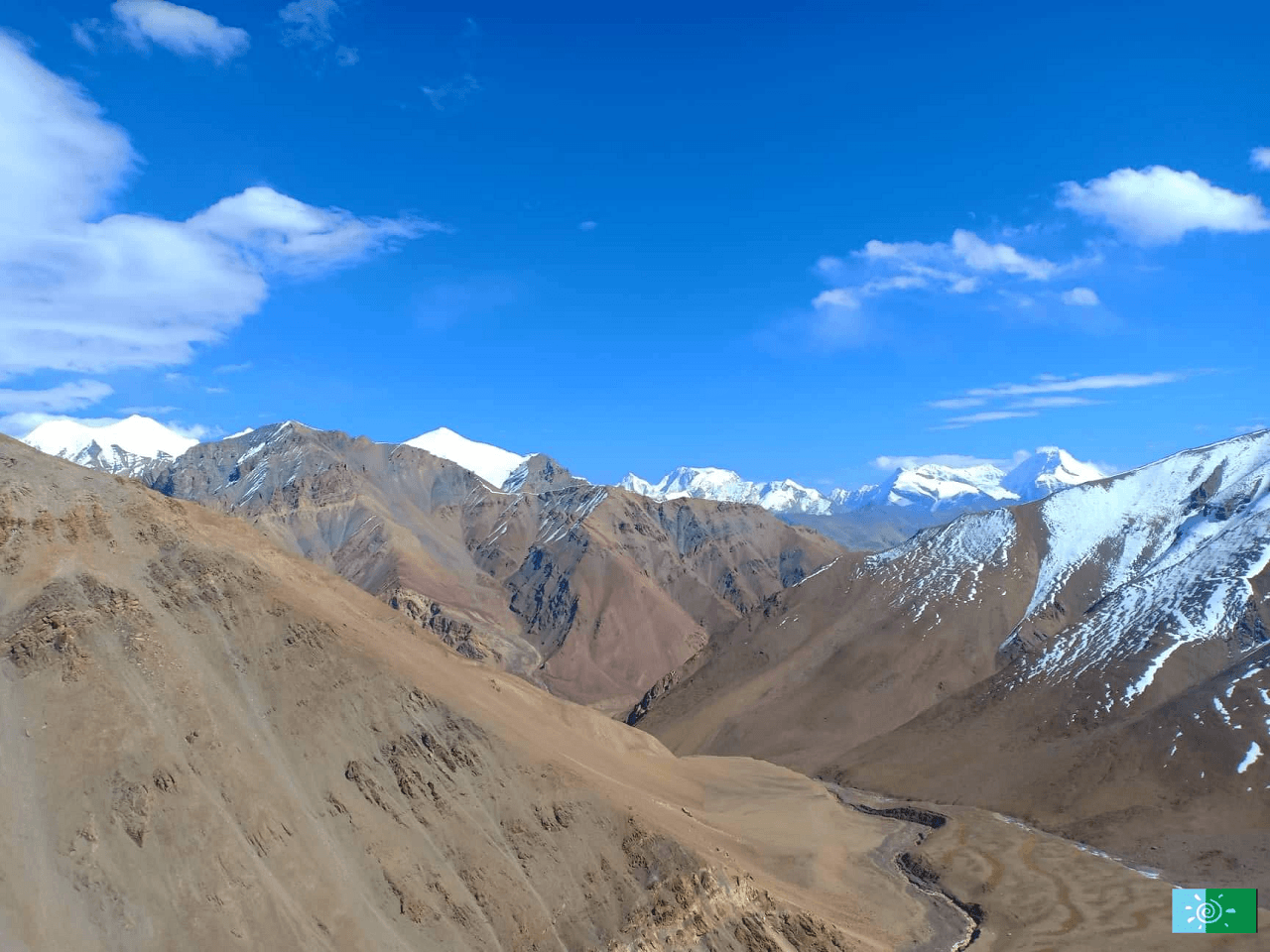
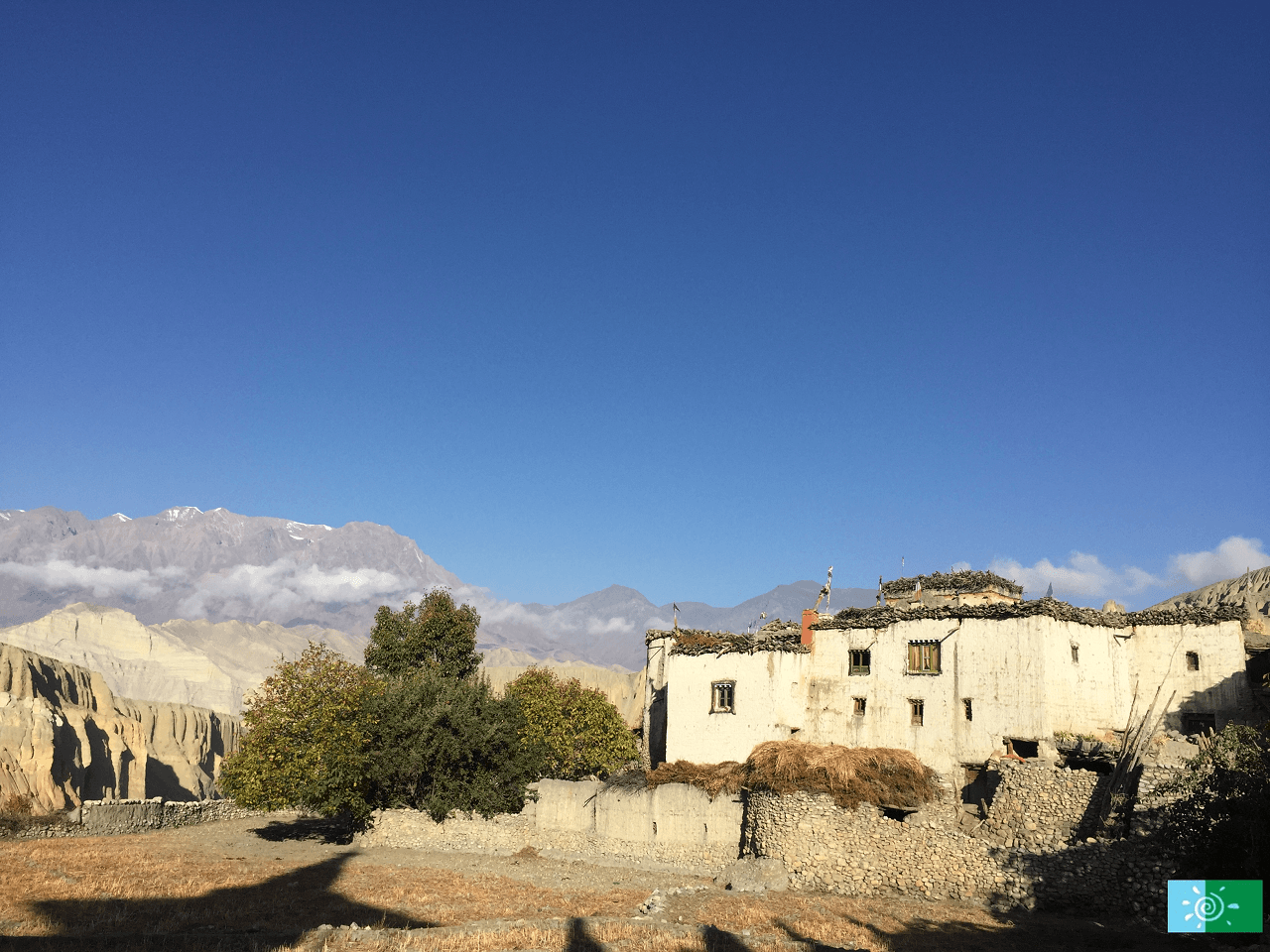
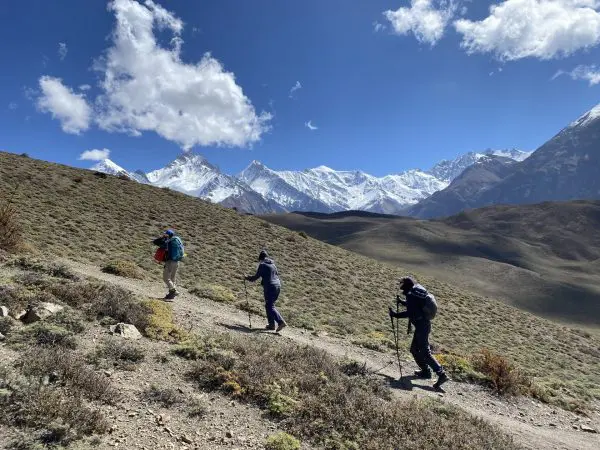
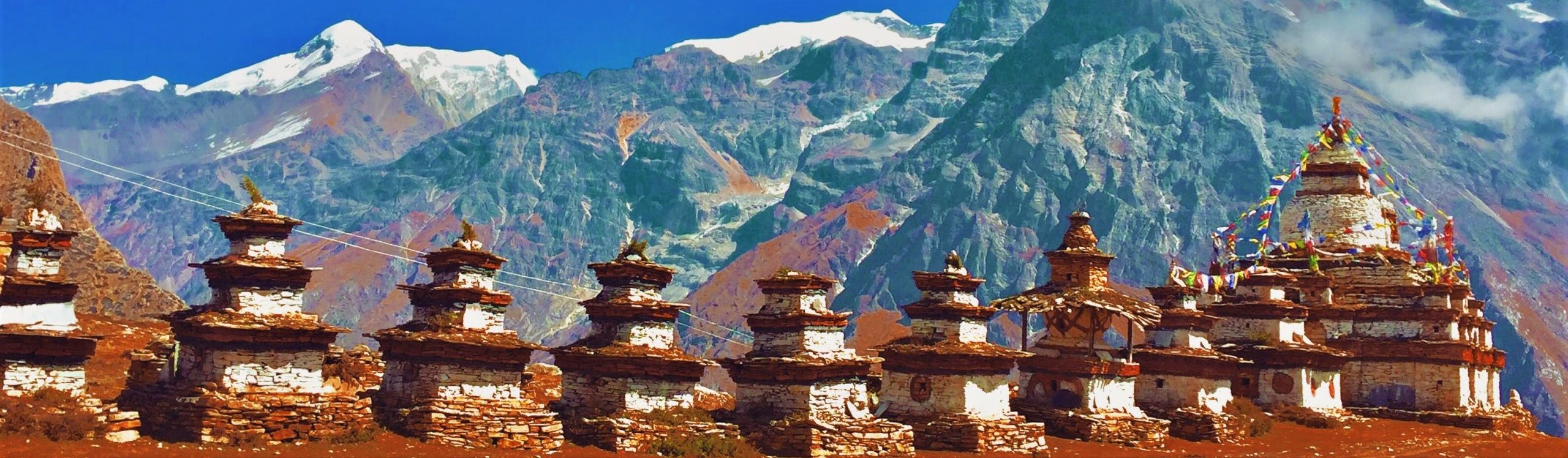
This trek provides breathtaking panoramic views of the Himalayas, including Annapurna, Dhaulagiri, Manaslu, and the Tibetan Plateau. Along the route, trekkers encounter diverse landscapes, including lush alpine valleys, vibrant yak pastures, arid desert plateaus, and deep red canyons. The trail also passes ancient cliffside caves, centuries-old monasteries, and traditional Tibetan villages, all defining the unique charm of the Naar to Upper Mustang Trek.

Cultural Highlights of the Naar to Upper Mustang Trek

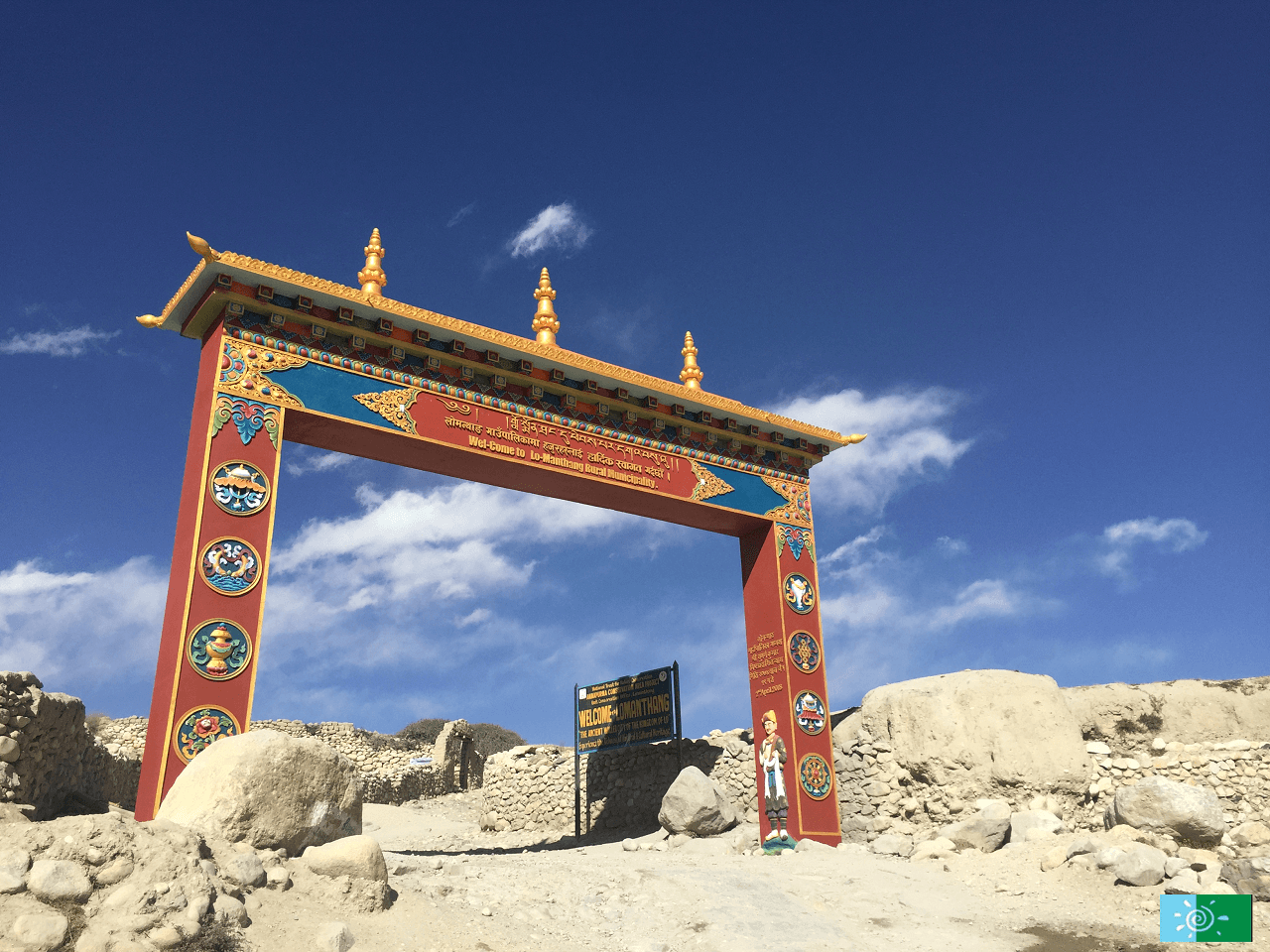
One of the cultural treasures of the Naar to Upper Mustang Trek is Lo Manthang, the walled capital of the former Kingdom of Lo. Lo Manthang reflects centuries of Tibetan Buddhist heritage, with ancient palaces and gompas (monasteries). Visitors enjoy authentic Mustangi hospitality and can witness traditional festivals and rituals preserved over generations.

Permit and Group Requirements for Naar to Upper Mustang Trek

The Naar to Upper Mustang Trek passes through a restricted area, so solo trekking is prohibited. A minimum of two trekkers is required. Trekkers must secure the Annapurna Conservation Area Permit (ACAP) and a special restricted area permit from Nepal Immigration to enter Upper Mustang.

Why Choose Nepal Sanctuary Treks for the Naar to Upper Mustang Trek?

With over 27 years of experience, Nepal Sanctuary Treks specializes in trekking adventures across Nepal, including the Great Himalayan Trail. We organize both camping and teahouse lodge treks, tailoring the Naar to Upper Mustang Trek to your personal preferences, fitness level, and schedule.

As a Travelife Certified company,  we prioritize sustainable and responsible travel. Our operations benefit the environment and local communities, while our professional guides ensure your safety and comfort throughout the Naar to Upper Mustang Trek.

We are committed to gender equality by empowering women-led businesses, promoting girls’ education, and hiring female tour guides.

Choosing Nepal Sanctuary Treks for your Naar to Upper Mustang Trek means not only experiencing a breathtaking Himalayan adventure but also supporting responsible tourism and sustainable practices.

Customizable Naar to Upper Mustang Trek

Discover the stunning Naar to Upper Mustang Trek in Nepal’s Annapurna region. Contact our expert to create a fully customized Naar to Upper Mustang  Trek itinerary.

This is a sample itinerary for the Naar to Upper Mustang Trek and can be tailored to your preferences, fitness level, and travel style. We design each trek to ensure an unforgettable Himalayan adventure.

Note: Below Naar to Upper Mustang Trek’s  hours, altitudes and distances are approximate, and absolutely for the general idea only.
Trip Itinerary

Day 01: Arrive at Kathmandu airport

Altitude above sea level: 1,302 m / 4,269 ft.
Driving Time: Approximately 30 minutes (depending on traffic)
Accommodation: Hotel Tibet or similar

Upon arrival at Tribhuvan International Airport in Kathmandu, you will be warmly welcomed by our representative holding a “Nepal Sanctuary Treks” placard.

You will then be transferred to your hotel in a private vehicle. After checking in and freshening up, our representative will meet you to provide a detailed briefing on your upcoming itinerary, along with important safety guidelines and hygiene practices to ensure a smooth and enjoyable trek.

Day 02: Cultural Introductory Tour and Trek preparation

Altitude above sea level: 1,302 m / 4,269 ft.
Tour Duration: Approximately 8 hours
Accommodation: Hotel Tibet or similar
Meals : Breakfast

9:00 AM – Guided Cultural Tour of Kathmandu Valley
Start your day with a guided cultural tour of Kathmandu Valley, exploring the city with expert guides who will share insights into its rich history and heritage.

Kathmandu Durbar Square
Visit Kathmandu Durbar Square (Hanuman Dhoka Durbar), a royal historical complex filled with temples, palaces, and shrines dating back to the 15th century. Highlights include Kumari Ghar, the residence of the living goddess, and Kasthamandap, an architectural marvel constructed from a single tree.

Swayambhunath (Monkey Temple)
Next, head to Swayambhunath, also known as the Monkey Temple, a sacred site for both Hinduism and Buddhism. Admire the striking white dome and golden spire while soaking in the serene atmosphere of incense, prayer wheels, and panoramic city views.

Boudhanath Stupa
In the afternoon, visit the massive Boudhanath Stupa, a UNESCO World Heritage Site and spiritual center of Tibetan culture. Witness colorful prayer flags fluttering in the wind, monks performing rituals, and devotees chanting “Om Mani Padme Hum.”

Pashupatinath Temple
Conclude your tour at Pashupatinath Temple, one of Hinduism’s most sacred sites, situated along the Bagmati River. Here, observe profound spiritual rituals, including the moving sight of open-air cremations, which hold deep cultural and religious significance.

After this immersive experience, you will return to your hotel.

Day 03: Drive to Dharapani

Altitude above sea level: 1,900 m / 6,232 ft – Dharapani
Driving duration: Approx. 8–9 hours
Accommodation: Tea House / Lodge
Meals: Breakfast, Lunch, and Dinner

After breakfast, trek toward Dumre (400 m / 1,312 ft, 4½ hrs) through lush Middle Hills, passing Hindu villages, terraced farms, and rivers from the northern ice fields. Continue north into the Marsyangdi River Valley, reaching Besi Sahar (760 m / 2,493 ft, 2 hrs) and Syange (1,080 m / 3,543 ft) via minor roads.

The trail climbs through a canyon to Jagat (1,330 m / 4,364 ft), then passes Chamje (1,410 m / 4,626 ft) to Tal village, known for its waterfall and scenic riverbanks. Finish with a 30-minute drive to Dharapani for an overnight stay at a lodge or campsite.

Day 04:  Trek to Koto

Altitude above sea level: 2,600 m / 8,530 ft. – Koto
Hiking Duration: Approx. 5–6 hours (14 km / 8.7 mi)
Ascent: 862 m / 2,828 ft.
Descent: 144 m / 472 ft.
Accommodation: Camping
Meals: Breakfast, Lunch, and Dinner

After breakfast, trek along a trail with both uphill and downhill sections, enjoying stunning mountain views. The Marsyangdi River curves to reveal Annapurna II, and the path passes Bagarchhap village, known for its Tibetan-style houses and colorful prayer flags.

Continue through oak and pine forests into the alpine zone, then descend a gorge with steep stone steps that provide breathtaking views of the Manaslu massif. Follow the river to Ratamang before arriving in Koto for your overnight stay.

Day 05: Trek to Chhongche Cave Camp

Altitude above sea level: 2,960 m / 9,711 ft.-Chhongche Cave Camp
Hiking Duration: Approx. 4 hours (9 km / 5.6 mi)
Ascent: 600 m / 1,969 ft.
Descent: 260 m / 853 ft.
Accommodation: Camping
Meals: Breakfast, Lunch, and Dinner

After breakfast, you begin trekking along a well-marked trail through dense pine forests, enjoying fresh mountain air and scenic views. The valley narrows into a dramatic gorge with a rushing river below. The path skirts pine-covered ridges, crosses the Naar Khola River via a bridge, and descends slightly. A quick 5-minute detour leads to a natural hot spring, a relaxing spot despite the slippery path. After about four hours, you arrive at a small clearing in the pine forest, where a few tea houses provide a comfortable campsite for the night.

Day 06: Trek to Meta

Altitude above sea level: 3,560 m / 11,680 ft. – Meta
Hiking Duration: Approx. 5–6 hours (8 km / 5 mi)
Ascent: 820 m / 2,690 ft.
Descent: 185 m / 607 ft.
Accommodation: Camping
Meals: Breakfast, Lunch, and Dinner

After breakfast, begin trekking with stunning views of Mt. Manaslu (8,163 m / 26,781 ft.) and Peak 29 (7,161 m / 23,503 ft). The trail winds through lush green forests along the serene Soti Khola River. Today, you enter the restricted Naar Phu Valley region. The ascent continues steadily until reaching Singenge for a short rest, after which the trail steepens toward Meta. Along the way, you are rewarded with spectacular panoramic views of Annapurna II (7,937 m / 26,040 ft.) stretching across the horizon.

Day 07: Trek to Naar

Altitude above sea level: 4,110 m / 13,484 ft. – Naar
Hiking Duration: Approx. 5–6 hours (8 km / 5 mi)
Ascent: 550 m / 1,804 ft.
Descent: 70 m / 230 ft.
Accommodation: Camping
Meals: Breakfast, Lunch, and Dinner

After an early breakfast, begin trekking to Naar village by descending a trail and crossing a river. The route includes both uphill and downhill sections before reaching a Gompa (Buddhist monastery). Take time to visit the monastery, then continue with a steep climb up to Naar.

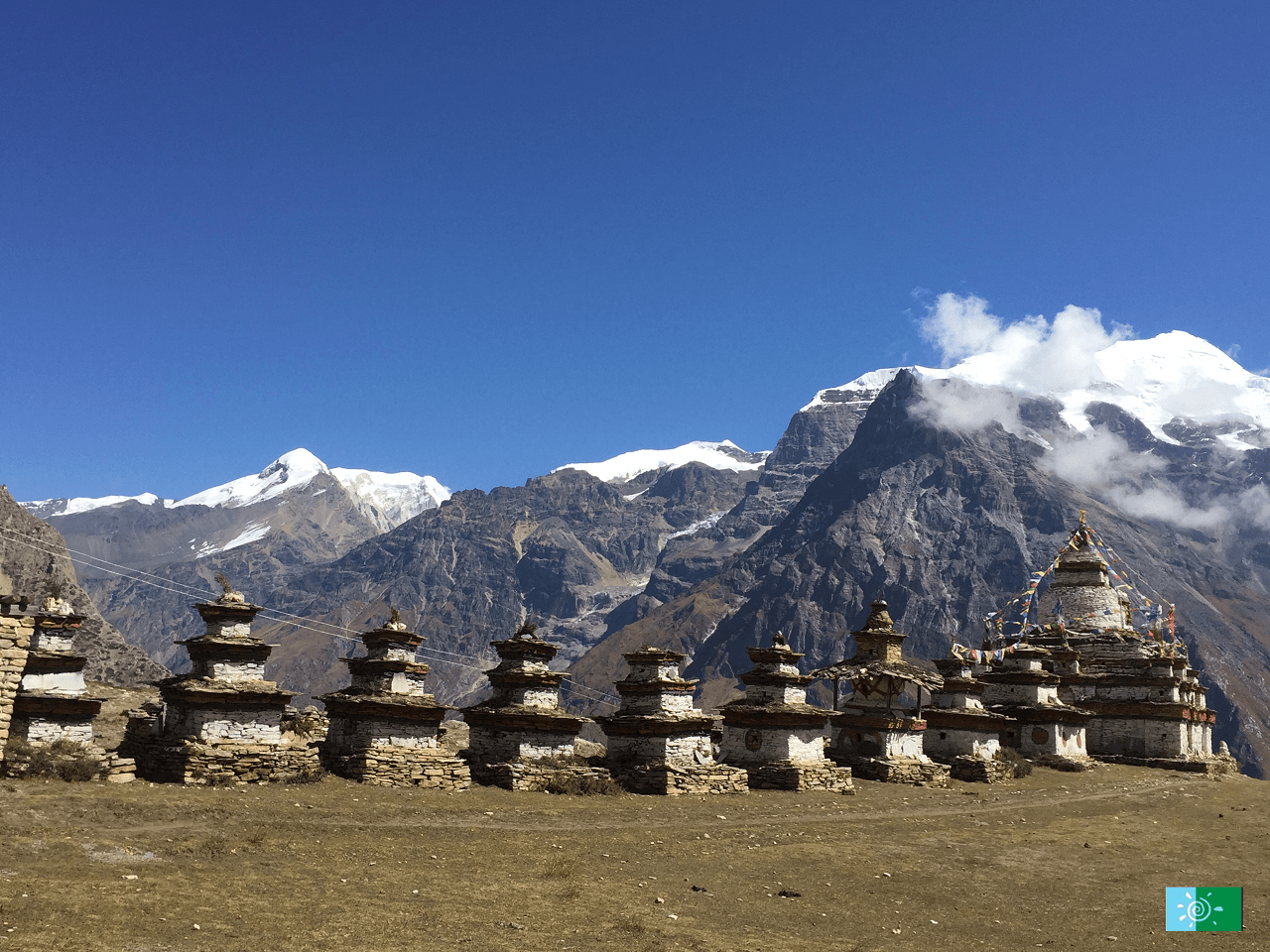
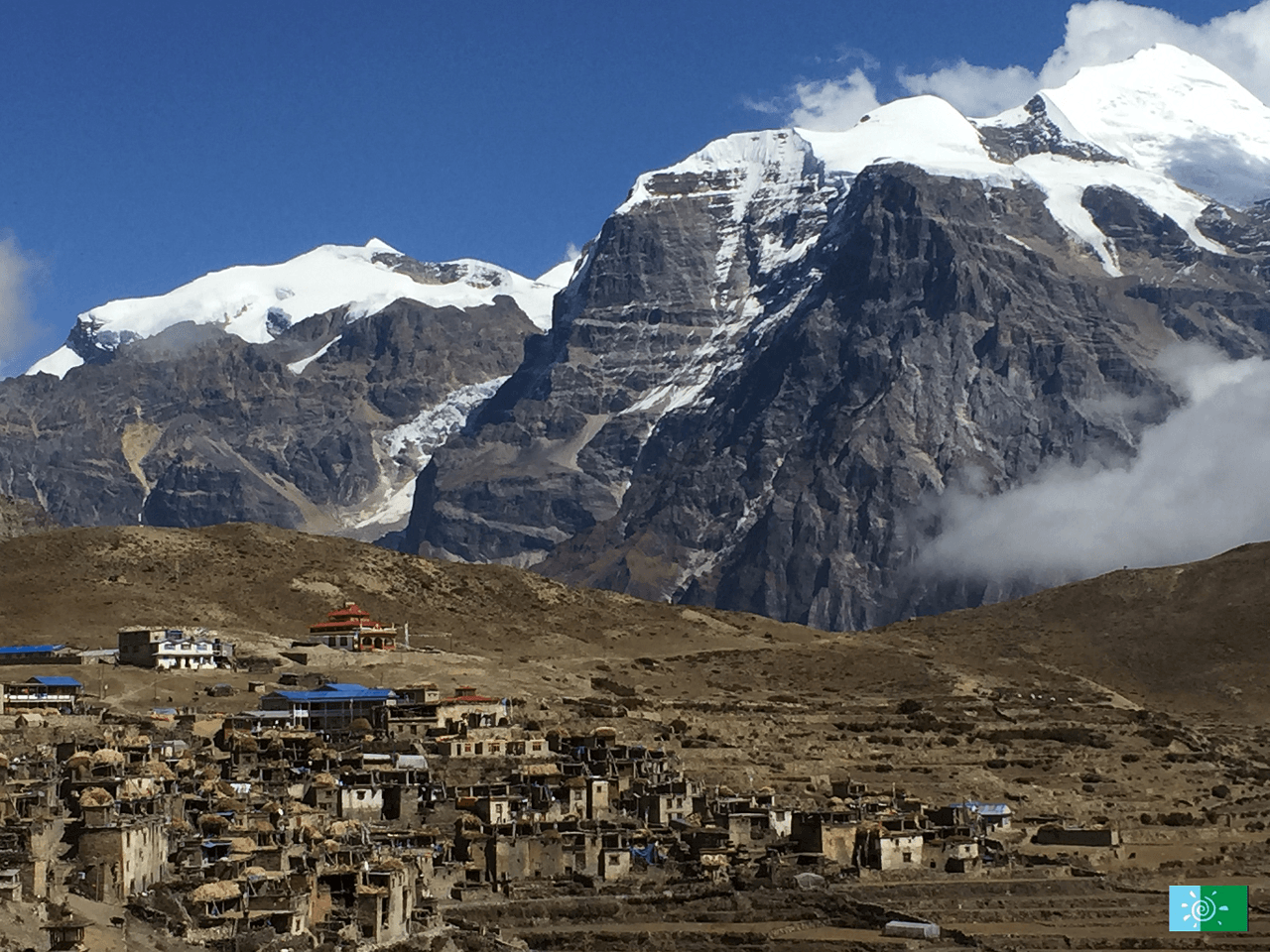
Naar sits above the tree line, offering views of traditional houses and numerous Chortens (Buddhist stupas). The village is framed by majestic peaks such as Kanguru Himal and Pisang Peak. Trails from Naar also connect to Manang via the challenging Kang La Pass, making it a key point in the region.

Day 08: Acclimatization day at Naar Village

Accommodation: Camping
Meals: Breakfast, Lunch, and Dinner

After breakfast, trek toward Kang La Base Camp to acclimatize and adjust to the high-altitude environment. Along the way, you may spot blue sheep grazing peacefully on the pasturelands. From the base camp, enjoy panoramic views of Pisang Peak, Kanguru Himal, and Himlung Himal.

After taking in the stunning scenery, return to camp for lunch. Spend the afternoon leisurely exploring the charming Naar village and its surroundings.

Day 09: Trek to Lapse Khola Camp

Altitude above sea level: 4,500 m / 14,764 ft. – Lapse Khola Camp
Hiking Duration: 7–8 hours (17 km / 10.5 mi)
Ascent: 950 m / 3,117 ft.
Descent: 700 m / 2,297 ft.
Accommodation: Camping
Meals: Breakfast, Lunch, Dinner

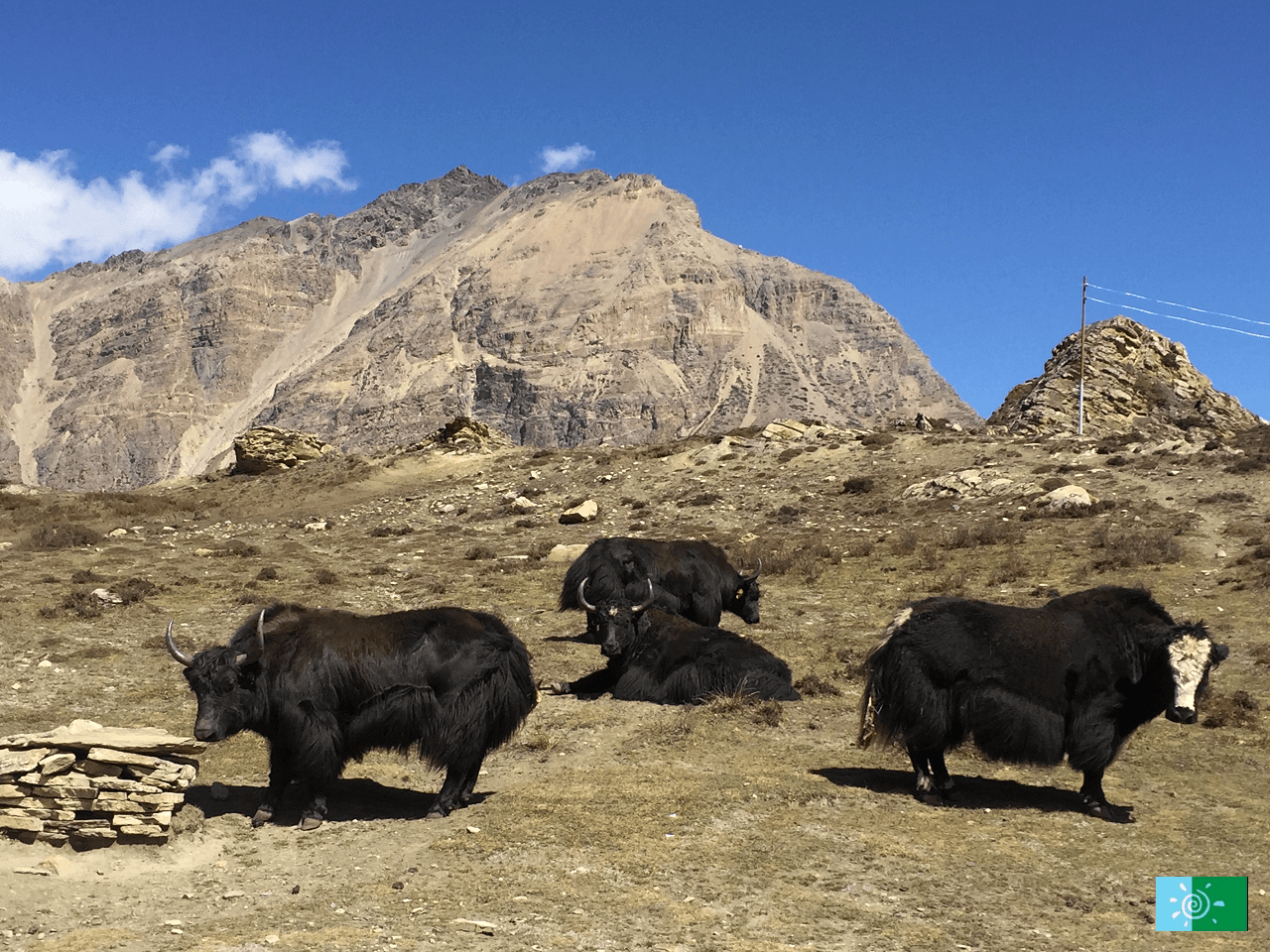
After breakfast, begin your Annapurna trekking adventure toward Lapse Khola Camp. Follow scenic trails along the Lapse Khola River, cross a traditional Himalayan bridge, and ascend to Chaungseng Kharka, a high-altitude yak pastureland. Stop for lunch here before continuing above the tree line, where breathtaking Himalayan views and expansive panoramic landscapes await.

The trail undulates along ridges, descends past yak grazing areas, and follows the river to a grassy campsite perched above Lapse Khola. This high-altitude trek offers spectacular vistas of the Annapurna region, making it ideal for nature lovers, adventure seekers, and photographers capturing the majestic Himalayan scenery.

Day 10: Trek to Lungre

Altitude above sea level: 4,600 m / 15,092 ft. – Lungre
Hiking Duration: 6–7 hours approx. (11 km / 7 mi)
Ascent: 500 m / 1,640 ft.
Accommodation: Camping
Meals: Breakfast, Lunch, and Dinner

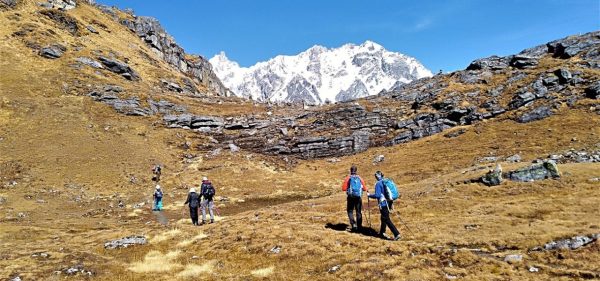
After breakfast, trek from Lapse Khola Camp to Lungre, a challenging route deep in the upper Nar Phu Valley above the tree line. Cross exposed alpine pastures (kharkas), rocky terrain, and scree while enjoying panoramic Himalayan views. The trail undulates above the river gorge, crossing several spurs, and serves as an important final stage of acclimatization before attempting the formidable Teri La Pass.

Day 11: Trek to Teri La Base Camp

Altitude above sea level: 4,900 m / 16,076 ft – Teri La Base Camp
Hiking Duration: Approx. 5–6 hours (10 km / 6.2 mi)
Ascent: 563 m / 1,847 ft
Accommodation: Camping
Meals: Breakfast, Lunch, and Dinner

After a hearty breakfast, begin your climb along the left side of the valley until the trail flattens. Cross the valley through sparse alpine vegetation, enjoying spectacular views of the Lapse Khola below and Teri La ahead. Watch for eagles soaring overhead and along the valley walls.

After about two hours, pass a small camp as the Lapse Khola valley turns northward. The trail then veers west, leaving the valley behind, before reaching Teri La Base Camp, where you will set up camp for the night.

Day 12: Trek to Teri La High Camp

Altitude above sea level: 5,200 m / 17,060 ft. – Teri La High Camp
Hiking Duration: Approx. 3 hours (8 km / 5 mi)
Ascent: 470 m / 1,542 ft.
Accommodation: Camping
Meals: Breakfast, Lunch, and Dinner

After breakfast, hike about 300 m (984 ft) uphill from Teri La Base Camp along a gentle side valley. The trail gradually ascends over easy terrain for approximately three hours until the valley opens up. At Teri La High Camp, enjoy stunning panoramic Himalayan views. Spend the afternoon resting and preparing for the challenging Teri La Pass crossing the following day.

Day 13: Trek to Papshu Khola Camp via Teri La Pass

Altitude above sea level: Papshu Khola Camp (4,730 m / 15,518 ft) – Teri La Pass (5,595 m / 18,356 ft)
Hiking Duration: Approx. 8–9 hours (22 km / 13.6 mi)
Ascent: 500 m / 1,640 ft.
Descent: 900 m / 2,953 ft.
Accommodation: Camping
Meals: Breakfast, Lunch, and Dinner

After a hearty breakfast, begin the ascent to Teri La Pass, one of Nepal’s highest and most spectacular mountain passes. From the summit, enjoy breathtaking panoramic views of Annapurna, Chulu Himal, Teri La Peak, and Purtun Himal. Once you’ve taken in the stunning scenery, descend toward Papshu Khola Camp, where you will spend the night camping amid pristine Himalayan surroundings.

Day 14: Trek to Yak Pa

Altitude above sea level: 4,300 m / 14,108 ft.– Yak Pa
Hiking Duration: Approx. 6–7 hours (13 km / 8 mi)
Ascent: 305 m / 1,001 ft.
Descent: 464 m / 1,522 ft.
Accommodation: Camping
Meals: Breakfast, Lunch, and Dinner

After breakfast, you leave Papshu Khola Camp and begin your ascent along the trail toward Yak Pa. This stretch leads you into the arid Mustang region, famously known as “The Last Hidden Buddhist Kingdom.”

The trail first descends to the river near Yakpa Kharka before climbing a rocky ridge. Next, you descend into the Samena Khola Valley, cross the river, and finally arrive at the campsite in the old Kampa Village of Yak Pa. Nestled in the Upper Kali Gandaki Valley, Yak Pa features charming Tibetan-style houses that reflect the area’s rich cultural heritage.

Day 15: Trek to Tangge

Altitude above sea level: 3,300 m / 10,827 ft.-Tangge
Hiking Duration: Approx. 8 hours (14 km / 8.7 mi)
Ascent: 150 m / 492 ft.
Descent: 1,000 m / 3,280 ft.
Accommodation: Camping
Meals: Breakfast, Lunch, and Dinner

After a hearty breakfast, you begin your ascent on the trail to Tangge, a small village with just about twenty houses. Along the way, you’ll spot flocks of sheep and goats, large mastiffs guarding the area, and the largest chorten in Mustang. Although most of the day’s hike is downhill, the trek starts with a steep, exposed uphill section.

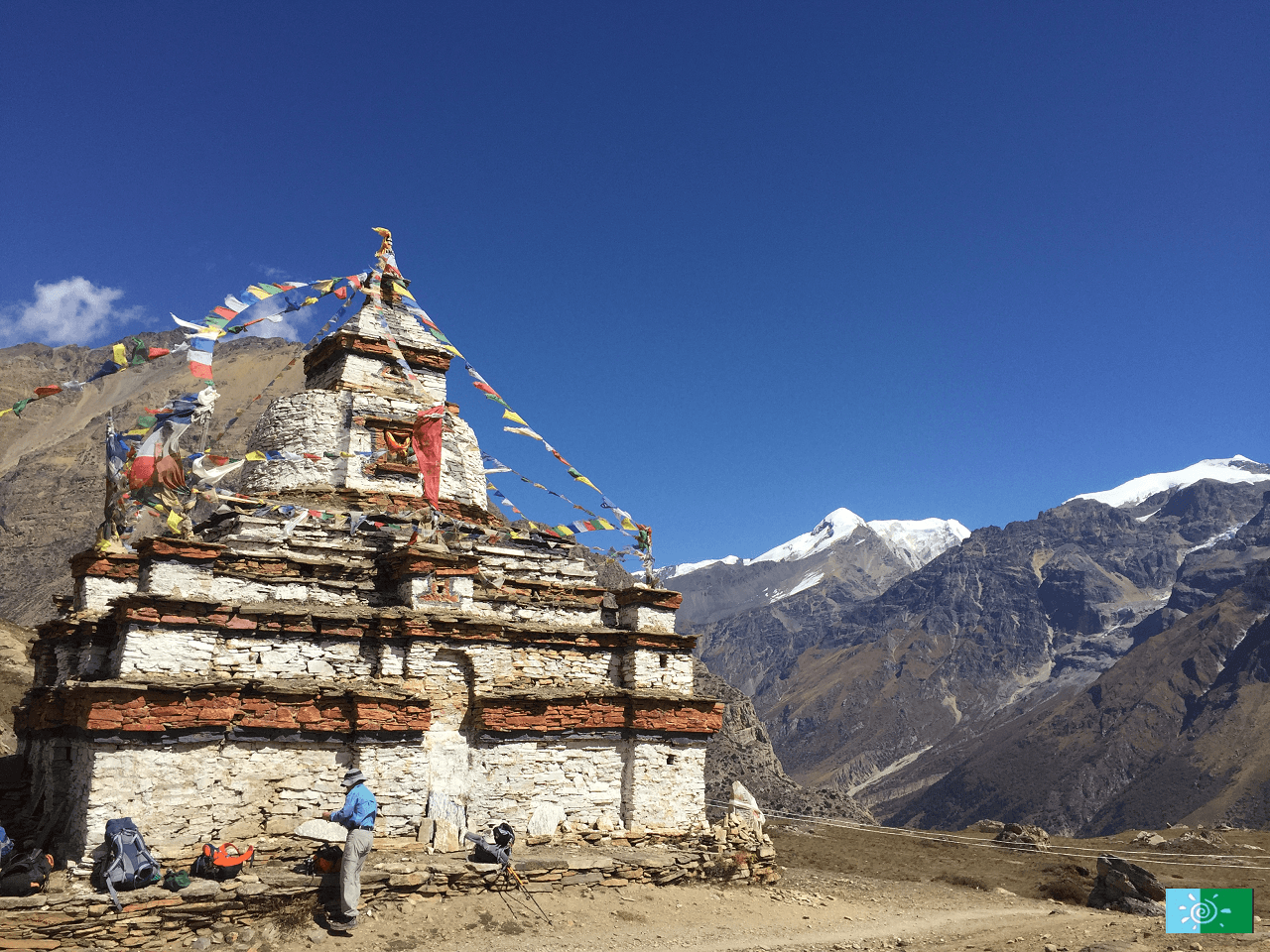
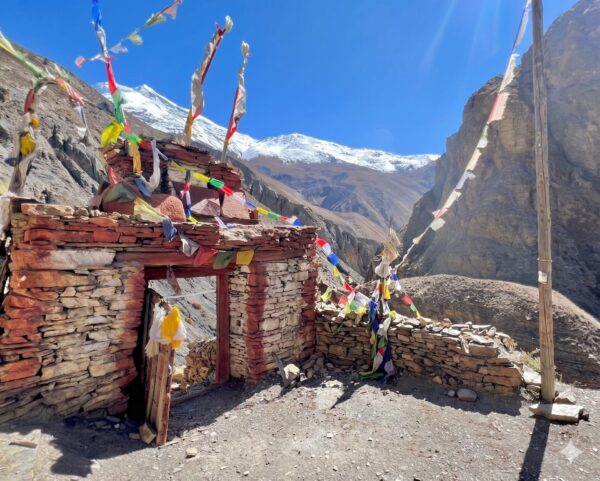
From the top, enjoy stunning panoramic views of the Annapurna and Dhaulagiri mountain ranges, as well as expansive vistas of the northern high plateau. Following this, you’ll descend for a long stretch to reach the peaceful village of Tangge. Tangge (also spelled Tangya or Tange) is a fascinating village known for its traditional Tibetan architecture (stone and mud houses) and a very long mani (prayer) wall. It provides a great opportunity to gain insight into local life and culture.

Day 16: Rest day and explore Tangge village

Accommodation: Camping
Meals: Breakfast, Lunch, and Dinner

Today is a well-deserved rest day after several days of trekking. Tangge offers a unique chance to immerse yourself in authentic local life in this remote trans-Himalayan village. Take this opportunity to explore the village, interact with locals, and soak in the peaceful mountain atmosphere.

Day 17: Trek to Yara village

Altitude above sea level: 3,600 m / 11,811 ft. – Yara Village
Hiking Duration: Approx. 5–6 hours (14 km / 8.7 mi)
Ascent: 782 m / 2,566 ft.
Descent: 312 m / 1,024 ft.
Accommodation: Camping
Meals: Breakfast, Lunch, and Dinner

After breakfast, the trail begins with a short ascent before leveling out for a couple of hours. It then descends to the Dhechyang Khola, known for its apple farm and shaligram fossils. After crossing a suspension bridge, the trail ascends briefly before flattening out with views of Ghara village, then descends to Yara.

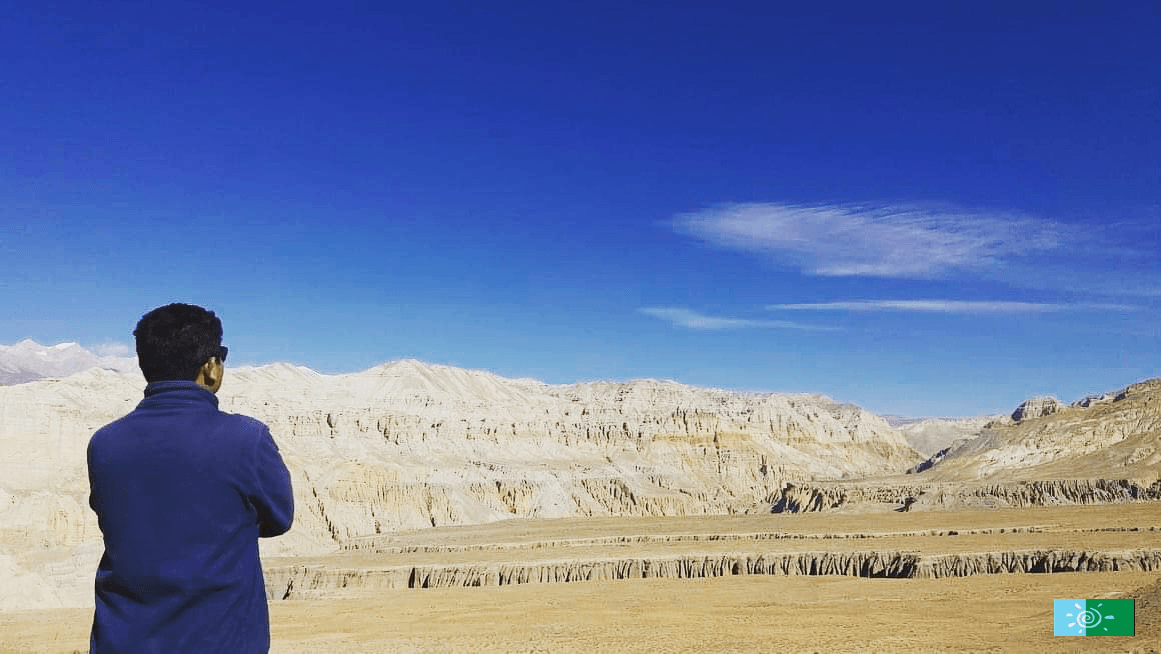
The route passes dramatic red cliffs and barren canyons, showcasing Mustang’s wilderness. Yara, with its traditional mud-brick houses, is also a gateway for side trips to cultural sites like the ancient Luri Gompa cave monastery.

Day 18: Trek to Lo Manthang

Altitude above sea level: 3,820 m / 12,533 ft. – Lo Manthang
Hiking Duration: Approx. 6–7 hours (17 km / 10.5 mi)
Ascent: 650 m / 2,133 ft.
Descent: 835 m / 2,739 ft.
Accommodation: Camping
Meals: Breakfast, Lunch, and Dinner

After breakfast, the trek begins with an ascent out of Yara valley toward a ridge with panoramic views. You will cross several passes, including Lo La Pass (3,950 m / 12,959 ft).

The trail then descends steeply into a canyon to the village of Dhi (3,360 m / 11,023 ft), a common lunch spot at the confluence of two rivers. From Dhi, you cross the river and follow a trail along the left bank, ascending through barren terrain toward Lo Manthang. The final climb brings you to a pass with the first views of the magnificent walled city below.

Day 19: Explore Lo Manthang

Accommodation: Camping
Meals: Breakfast, Lunch, and Dinner

After a hearty breakfast, spend the day fully exploring the ancient walled city of Lo Manthang, the cultural heart of Upper Mustang. Inside the medieval walls, you’ll find four significant monasteries: the striking red Jampa Lhakhang, built in 1387 and home to an impressive 50-foot tall clay statue of Jamba (the Future Buddha); the 15th-century Thubchen Gompa; Chhoede Gompa, the residence of the Khempo; and Choprang Gompa.

Alternatively, you can embark on a fascinating tour of Lo Manthang starting with a 2-hour visit to the Namgyal Gompa. This hilltop monastery serves as a local courthouse and holds high religious, social, and legal importance. Next, visit Tingkhar village, located northwest of Lo Manthang, home to about 40 traditional households. Don’t miss Champa Lhakang, where you can admire a large Buddha statue and exquisite Mandala paintings.

For an adventurous option, trek to the mysterious Chhosar caves, also known as the Jhong or Sky Caves. These multi-level cliffside caves remain an archaeological enigma—believed to have served as burial sites, hidden refuges, meditation chambers, and later, monasteries. Exploring these ancient caves offers a unique glimpse into Upper Mustang’s rich spiritual history.

Day 20: Trek to Ghemi

Altitude above sea level: 3,500 m / 11,483 ft. – Ghemi
Hiking Duration: Approx. 7–8 hours (17 km / 10.5 mi)
Ascent: 900 m / 2,953 ft.
Descent: 850 m / 2,789 ft.
Accommodation: Camping
Meals: Breakfast, Lunch, and Dinner

After breakfast, begin your trek to the village of Ghemi, a peaceful settlement with traditional homes, cozy lodges, and cultivated fields. The trail offers stunning valley views, including ochre, blue, and steel-grey cliffs, and passes tri-colored chortens and Mustang’s longest Mani wall.

The route includes a steep descent, a bridge crossing, and a final ascent into Ghemi. Explore the village, stroll past sacred Mani walls and prayer wheels, and visit the historic Ghar Gumba Monastery.

Day 21: Drive to Jomsom

Altitude above sea level: 2,743 m / 8,999 ft.-Jomsom
Driving duration: Approx. 7 hours
Accommodation: Camping
Meals: Breakfast, Lunch, and Dinner

After a hearty breakfast, embark on a scenic drive to Jomsom. The route takes you through charming villages like Chele and Chussang, then continues onward via Tangbe. Upon arrival in Jomsom, you’ll have time to explore the vibrant local market area, perfect for discovering traditional handicrafts and experiencing authentic Mustang culture before dinner.

Day 22: Flight to Pokhara- Kathmandu

Flight Duration: Jomsom to Pokhara (25 minutes), Pokhara to Kathmandu (25-30 minutes)
Accommodation: Hotel Tibet or similar
Meals: Breakfast

After an early breakfast, take a short walk to the nearby airport in Jomsom. Enjoy a final breathtaking view of the Himalayan peaks before boarding your flight to Pokhara. From there, you’ll catch a connecting flight to Kathmandu. Upon arrival, check in at your hotel and enjoy a leisurely afternoon. Use this time to rest or explore Kathmandu’s bustling markets to shop for exquisite locally made handicrafts and unique souvenirs.

Day 23: Buffer Day

Accommodation: Hotel Tibet or similar
Meals: Breakfast

This day is kept as a buffer in case of bad weather in Jomsom that might delay your flight. If the weather is clear, enjoy a relaxing day at the hotel or explore the local surroundings before your onward journey.

Day 24: Final Departure 

Meal: Breakfast

As your unforgettable journey comes to an end, it’s time to fly back home, cherishing all the incredible memories of Nepal. A representative from Nepal Sanctuary Treks will transfer you to Tribhuvan International Airport (TIA). Please make sure to check in 3 hours prior to your scheduled flight for a smooth departure.

Price Included

What's Included

  • Private airport transfers,
  • Private transfer to/from trek point
  • Guided Kathmandu sightseeing tour with entrance fees
  • Internal flight: Jomsom-Pokhara-Kathmandu
  • 4 nights in Hotel Tibet or similar in Kathmandu with breakfast,
  •  Tented camp during trek on full board
  • Trek Permits, Conservation Fee and Restricted area fee
  • Staff insurance on the trek,
  • Trek guide, assistant guide, cook & porter/s
  • Duffel bag
  • Map

What's not Included

  • Lunch and Dinner in Kathmandu (approx. US$ 20 per day)
  • Beverages,
  • Personal equipment,
  • Personal bills,
  • International airfare
  • Excess baggage beyond 15 kilos including day pack
  • Visa fee: US$ 30 for 15 days and US$ 50 for 30 days and US$125 for 90 days for multiple entries
  • Insurance (for cancellation, accident, health, emergency evacuation and loss, theft of or damage to baggage and personal effects), liability insurance
  • Tips


Trip Important Notes

Naar to Upper Mustang Trek Packing List

Footwear:

  • Walking boots. A pair of water-repellent boots with ankle support.
  • Multiple pairs of thick wool or synthetic trekking socks
  • Trainers or trail shoes. Can be used in and around the lodge in the afternoons/evenings.

Clothing:

  • Waterproof jacket and trousers (Gore-Tex or similar).
  • Trekking trousers.
  • Soft Shell Trousers.
  • Long sleeve shirts (not cotton).
  • Mid to heavyweight fleece.
  • Sleeveless or body warmer type fleece.
  • Thermals or base layer for top & bottom (merino wool or synthetic).
  • Fleece pants.
  • Medium weight down jacket (e.g.: Nuptse jacket by The North Face).

Hand wear:

  • Insulated, waterproof gloves/mittens and liner gloves

Headwear:

  • Wool or fleece hat.
  • Sun hat.
  • Bandana or scarf.
  • Head torch. Bring extra batteries.
  • Sunglasses.

For crossing passes:

  • Trekking poles
  • Gaiters
  • Yaktrax

Personal Equipment:

  • Day pack (you’ll need during the day, such as warm clothes, a jacket, a camera, water bottles, snacks, and a personal first aid kit. Keep your daypack under 5 kg. A porter will transport the rest of your personal gear in a duffel or kit bag, which should not exceed 15 kg per trekker. Clearly mark your bag to help identify it easily.)
  • Stuff sacks for keeping your gear dry and organized.
  • Water bottles (Nalgene wide-mouth bottles are the best).
  • Sunscreen and lip salve with a high SPF.
  • Water purification tablets (Aqua Tab,Katadyn Micropur, Chlorine dioxide).
  • Favourite snack food.
  • Pee bottle (Recommended for nights. Men can use a water bottle; women can use a SheWee.)
  • Camera with spare batteries and memory cards.
  • Insurance certificate.
  • Sleeping bag
  • Flash Light
  • Earplugs (optional).
  • Hand sanitizer 
  • Face Mask
  • Spare cash for extra expenses like hot shower, boiled water, gadget charging during trek

Traveling:

  • Bring a small combination padlock to secure the bag.
  • Sleeping bag
  • Travel clothes. You will need casual clothing for air travel days and time spent in Kathmandu.
  • Toiletry bags include toilet paper, soap, towel, toothbrush, etc.
  • Quick dry towel

Personal first aid kit: Note: Nepal Sanctuary Treks provides a comprehensive group first aid kit, but please bring personal medications and other items you might use regularly.

Naar to Upper Mustang Trek – Seasonal & Altitude Temperature Guide

Temperature by Trek Phase

Trek Stage Altitude Daytime Temp Nighttime Temp Notes
Low Elevations 2,000–2,500 m 8–15°C 0–5°C Warm days, cool nights, ideal for acclimatization
Mid-Altitude Camps 3,000–4,000 m 5–10°C -5 to -10°C Winds pick up in afternoons; pack layers
High-Altitude Camps (Teri La) 4,900 m 0–5°C -15 to -20°C Nights below freezing; thermal gear essential
Upper Mustang (Lo Manthang) 3,800–4,000 m 5–10°C -10 to -15°C Cold nights, sunny days; stay hydrated

Seasonal Weather Trends

Season Daytime Temp Nighttime Temp Conditions
Spring (Mar–May) 5–15°C -5 to 5°C Clear skies, blooming wildflowers, ideal for trekking
Autumn (Sep–Nov) 5–15°C -5 to 5°C Stable weather, great visibility, perfect for photography
Winter (Dec–Feb) 0–10°C -15 to -25°C Heavy snowfall, very cold nights, many guesthouses close

Camping at Naar to Mustang Trek

Experience the Naar to Mustang Trek as a fully camping-based adventure. Nepal Sanctuary Trek organizes complete camping arrangements, including high-quality tents, comfortable bedding, experienced guides, reliable porters, and professional kitchen staff. Enjoy hassle-free trekking while we handle all your camping needs. Read More

Typical Day on a Camping Trek

On our camping treks, you get your personal tent, plus access to a mess tent, kitchen tent, and toilet tent(s). Our trek crew handles all camp setup and dismantling, while the cook and kitchen helpers prepare every meal.

The day starts with wake-up tea delivered to your tent, followed by warm water for washing. Breakfast is served between 7:30 and 8:00 am. Before breakfast, place your main packed bag outside your tent so the crew and porters can organize the camp and arrange loads.

Morning trek: After breakfast, the trek begins, usually 3–4 hours of walking. Lunch follows around 12:30–1:00 pm, either freshly cooked at camp or packed for the trail.

Afternoon trek: After lunch, the journey continues for another 3–4 hours, although some days feature longer hikes depending on the route. By mid-afternoon, you arrive at camp, where tea or coffee with biscuits awaits. Your tent will already be prepared by the staff.

Evening routine: Dinner is served in the mess tent between 6:00 and 6:30 pm, starting with soup and followed by the main course. After dinner, trek leaders review the next day’s plan. Some guests socialize in the mess tent or play cards, but most rest in their tents. On days involving high passes or summits, the group departs camp earlier, following the same daily routine.

Meals on a Camping Trek

On a camping-style trek, we serve nutritious, hearty meals with generous portions to fuel your adventure.

Breakfast includes porridge or cereal, toast or chapatis, eggs, and hot drinks like tea or coffee.

Lunch is ready shortly after the group reaches a convenient spot along the trail. Our cook and kitchen staff move ahead in the morning to prepare fresh meals. After lunch, trekkers can rest before resuming the trek in the afternoon.

At camp, we offer hot drinks and biscuits to refresh you after the day’s hike. Dinner is a two-course meal served in the mess tent around 6:00–6:30 pm, starting with soup followed by a wholesome main dish.

We accommodate a range of dietary requirements, confirmed during booking, to ensure every trekker enjoys safe and satisfying meals.

Electricity on Naar to Upper Mustang Camping Trek

During a camping trek from Naar to Mustang, electricity is limited. Remote camping sites, especially on full-camping sections like Teri La Pass, have no power access, so trekkers must bring self-sufficient charging solutions.

On full-camping days in the wilderness, there are no outlets, so personal device charging is your responsibility. Bring high-capacity power banks and consider portable solar chargers as a supplementary option, though their effectiveness depends on sunlight.

Nepal uses Type C and Type D plugs, so a universal adapter is recommended. While electricity is generally more reliable than on other remote treks, power outages can still occur, especially during cloudy weather affecting solar panels. To stay prepared, carry a high-capacity power bank and a headlamp with spare batteries.

Communication on the Naar to Upper Mustang Trek

Communication along the Naar to Mustang trek, including the Nar Phu Valley, is more limited than on the standard Annapurna Circuit due to the area’s remoteness.

Mobile coverage: Nepal Telecom (NTC/Namaste) is the most reliable provider, offering 2G or 3G in major villages like Naar and Phu, and up to 4G in Mustang towns such as Lo Manthang and Muktinath. Ncell coverage is sparse, mainly available in lower regions below Meta and in Mustang hubs like Jomsom and Kagbeni. Expect no signal for several days when crossing high passes such as Teri La Pass (5,595 m) or Thorong La Pass.

For safety and logistics, our trekking crew carries a Thuraya satellite phone, used for daily planning, weather updates, and emergency medical evacuations.

Naar to Upper Mustang Trek Difficulty and Physical Fitness

The Naar to Mustang trek is strenuous and recommended only for experienced high-altitude trekkers. Most days take you above 4,000 m, with Teri La Pass (5,595 m) posing a significant risk of altitude sickness.

The trail is rugged, featuring steep ascents, descents, and narrow exposed paths. The route is extremely remote, with few settlements and limited medical support, requiring self-sufficiency and guidance from an experienced trek leader.

Weather conditions can be harsh, with extreme cold, snow, and strong winds—particularly in December. Trekking days are long, often 6–9 hours, demanding stamina, mental resilience, and careful acclimatization.

Proper physical preparation, including cardio, strength, and endurance training, is essential for safely completing this high-altitude adventure.

Ask Our Travel Expert

Affiliations & Recommendations

Naar to Upper Mustang Trek