Trip Facts

icon-calendar
Trip Duration 14 Days
icon-meter
Trip Difficulty Strenuous
icon-mountain
Maximum Altitude 5,416m /17,769 ft.
icon-season
Best Season To Visit March to May, Mid-September to November
icon-group
Average Group Size Min. 2 pax

Trip Overview

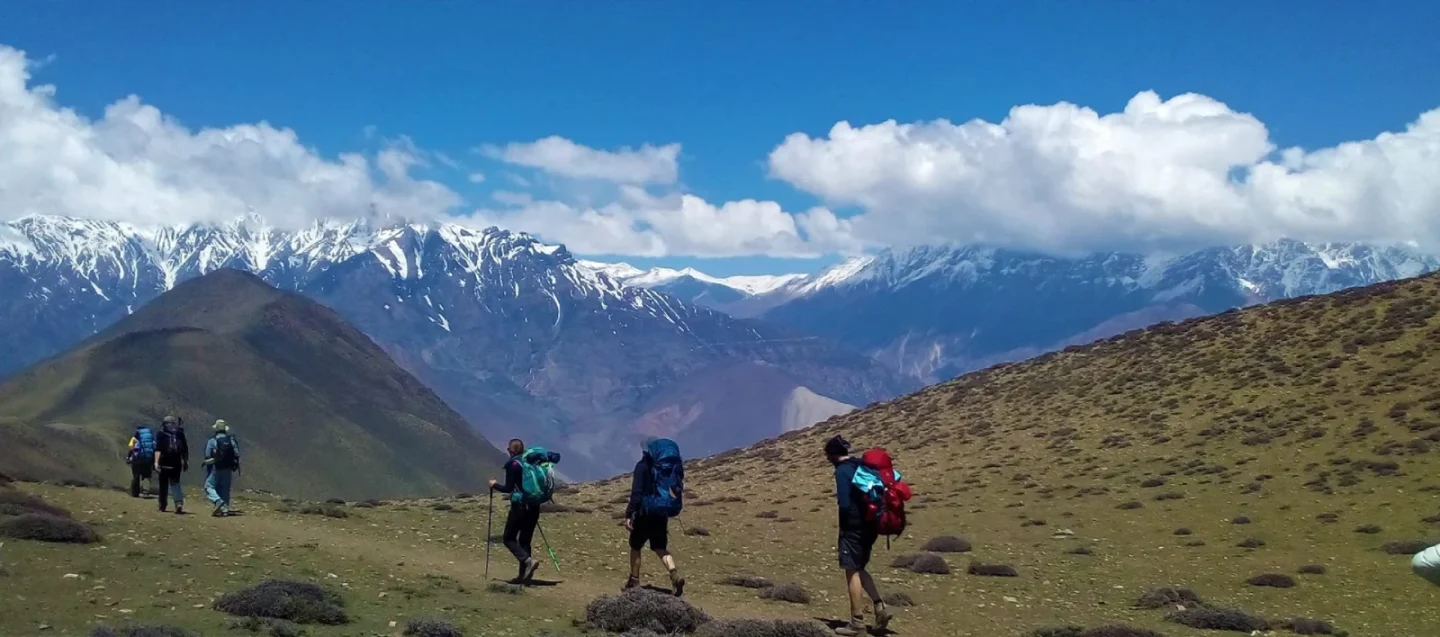
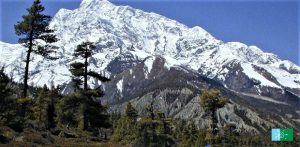
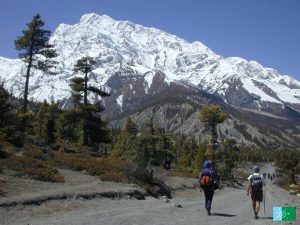
The Annapurna Circuit Trek is one of the most spectacular and unforgettable trekking adventures in Nepal. Since opening to foreign trekkers in 1977, this classic Annapurna trekking route has attracted adventurers worldwide. The trek offers dramatic landscapes, including deep gorges, high mountain passes, ancient Buddhist temples, and rustic villages. Along the Annapurna Circuit trail, trekkers enjoy breathtaking views of the Annapurna Massif and Dhaulagiri, making it a top choice for nature lovers and culture seekers alike.

Highlights of the Annapurna Circuit Trek in Nepal

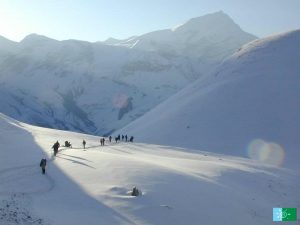
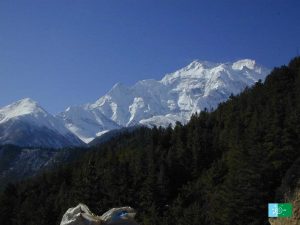
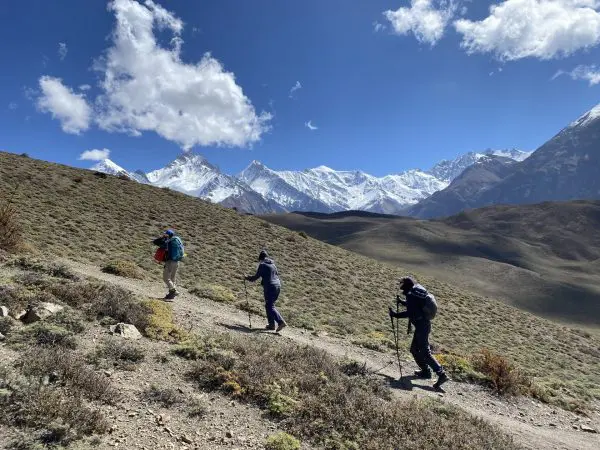
The highlight of the Annapurna Circuit Trek is crossing the iconic Thorong La Pass, which stands at 5,416 meters (17,769 feet). This challenging pass rewards trekkers with stunning views of peaks such as Annapurna I-IV, Annapurna South, Gangapurna, Nilgiri, Machhapuchhre, and Dhaulagiri. The trek covers diverse landscapes from lush valleys to rugged highlands, making it a thrilling and unique experience.

Annapurna Circuit Trek Route and Cultural Experience

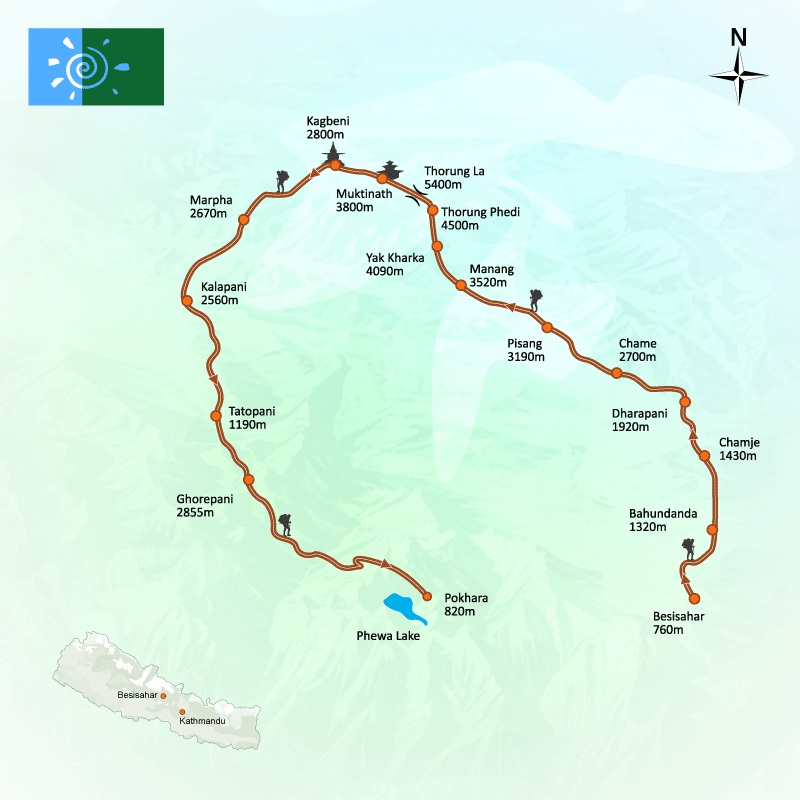
The Annapurna Circuit Trek follows a circular route around the Annapurna Massif in Nepal’s Annapurna region. Starting in the Marsyangdi Valley, the trail climbs north of the main Himalayan range toward Thorong La Pass. After crossing the pass, the trail descends onto a high-altitude plateau and continues south along the Kali Gandaki Valley, the world’s deepest gorge. Along the way, trekkers encounter local Gurung, Magar, and Thakali communities, offering a rich cultural experience.

Why Choose Nepal Sanctuary Treks for Your Annapurna Circuit Trek?

With Nepal Sanctuary Treks, your Annapurna Circuit Trek is fully customized. As a Travelife Certified Company, we are committed to sustainable tourism and supporting local communities. Our focus is on both adventure and cultural immersion, ensuring a unique and enriching experience. Your trek also supports local communities through stays in community lodges, promoting responsible tourism that benefits both you and the people of Nepal. Our experienced team, who knows the Annapurna Circuit Trek well, will guide you every step of the way.

We focus on small group sizes and strict safety protocols, offering personalized care and attention. Our long-standing relationships with trusted suppliers ensure you have handpicked accommodations and reliable transportation during your Annapurna Circuit Trek.

Read Trip Advisor Review and Google Review

Ready for Your Next Adventure?

Explore the breathtaking Annapurna Circuit Trek in Nepal’s Annapurna region. Book your trek with Nepal Sanctuary Treks today. This is only a sample itinerary of Annapurna Circuit Trek. We shall tailor-made the program according to your preferences and requirements.

Note: Below Annapurna Circuit Trek’s hours, altitudes and distances are approximate, and absolutely for the general idea only.

Trip Itinerary

Day 01:  Arrive at Kathmandu airport

Altitude above sea level: 1,302 m / 4,269 ft.

Driving Time: Approx. 30 minutes, depending on traffic conditions.

Accommodation: Hotel Tibet or similar

Upon your arrival at Tribhuvan International Airport in Kathmandu,, you will be warmly welcomed by our representative, who will be holding a “Nepal Sanctuary Treks” sign outside the terminal to greet you.

You will be transferred to your hotel in a private vehicle. After checking in and freshening up, our representative will meet you to give a detailed briefing on the upcoming itinerary, along with important safety guidelines and hygiene practices to ensure a smooth and enjoyable trek.

Day 02: Cultural Introductory Tour and Trek Preparation

Altitude above sea level: 1,302 m / 4,272 ft. – Kathmandu
Accommodation: Hotel Tibet or similar
Meal: Breakfast
It’s also a spare day in case of bad weather in Lukla if we could not fly on the scheduled date and time, or we can organize a guided day tour in or around Kathmandu.

9:00 AM: Guided Cultural Tour of Kathmandu Valley
Start your day with a guided cultural tour around Kathmandu Valley. Explore the vibrant Kathmandu with our expert guides, who will share insights into the area’s rich history.

Kathmandu Durbar Square
Visit Kathmandu Durbar Square (Hanuman Dhoka Durbar), a historical royal complex with temples, palaces, and shrines dating back to the 15th century. Key attractions include Kumari Ghar (the house of the living goddess) and Kasthamandap, built from a single tree.

Swayambhunath (Monkey Temple)
Next, head to Swayambhunath, the Monkey Temple, a sacred site for both Hinduism and Buddhism. Admire the stunning white dome and golden spire, while soaking in the serene atmosphere filled with incense and prayer wheels.

PM: Boudhanath Stupa
Visit the massive Boudhanath Stupa, a UNESCO World Heritage Site. It’s a spiritual center for Tibetan culture, surrounded by prayer flags, monks, and devotees chanting ‘Om Mani Padme Hum’.

Pashupatinath Temple
Conclude your tour at the Pashupatinath Temple, one of the most sacred Hindu temples, located along the Bagmati River. Here, you can witness profound spiritual rituals, including the moving sight of open-air cremations, which hold deep cultural significance. After immersing yourself in this sacred experience, you will transfer back to your hotel.

Day 03: Drive to Dharapani

Altitude above sea level: (1,900 m / 6,232 ft.) Dharapani
Driving duration: Approx. 8–9 hours
Accommodation: Tea House / Lodge
Meals: Breakfast, Lunch, and Dinner

After breakfast, trek toward Dumre (400 m / 1,312 ft, 4½ hrs) through lush Middle Hills, passing Hindu villages, terraced farms, and rivers from the northern ice fields. Continue north into the Marsyangdi River Valley, reaching Besi Sahar (760 m / 2,493 ft, 2 hrs) and Syange (1,080 m / 3,543 ft) via minor roads.

The trail climbs through a canyon to Jagat (1,330 m / 4,364 ft), then passes Chamje (1,410 m / 4,626 ft) to Tal village, known for its waterfall and scenic riverbanks. Finish with a 30-minute drive to Dharapani for an overnight stay at a lodge or campsite.

Day 04: Drive to Chame

Altitude above sea level: (2,630 m/8,628 ft.) Chame

Driving duration: 5-6 hrs. approx.

Accommodation: Tea house Lodge

Meals: Breakfast, Lunch & Dinner

After breakfast, the trail leads westward as you climb steep, forested ridges, crossing a few landslides along the southern slopes of the valley. Along the way, trekkers can enjoy stunning views of Lamjung Himal, Annapurna II (7,937 m / 26,040 ft), and Annapurna IV, which gradually come into full view at a landmark mani wall just before reaching Chame, the headquarters of Manang District. The day ends with an overnight stay in Chame, offering a chance to rest and soak in the charming mountain village atmosphere.

Day 05: Trek to Pisang

Altitude above sea level: 3,190m/10,465ft – Pisang
Trekking duration: 5–6hrs. (14km/8.9mi)
Ascent: 665m/2,182ft.
Descent: 85m/279ft.
Accommodation: Tea House Lodge
Meals: Breakfast, Lunch & Dinner

After  a hearty breakfast, begin your scenic trek to Pisang, passing through vibrant apple orchards and absorbing spectacular Himalayan mountain views. Along the trail, you will encounter the iconic Paungda Danda rock, traditional prayer wheels, and dense pine forests. Trek through the picturesque Marsyangdi Valley, taking in panoramic views of Mount Manaslu and the surrounding lush apple farms. Stop at Bhratang to enjoy fresh apple juice and locally baked treats. The trail continues past the impressive rock formations near Paungda Danda, often called the Gateway to Heaven, before winding gently through fragrant pine forests and reaching the charming village of Upper Pisang, where you can relax and soak in the tranquil mountain ambiance.

Day 06: Trek to Manang

Altitude above sea level: 3,500m/11,482ft – Manang
Trekking duration: 6–7hrs (19km/11.7mi)
Ascent: 825m/2,707ft.
Descent: 653m/2,142ft.
Accommodation: Tea House Lodge
Meals: Breakfast, Lunch & Dinner

After breakfast, start your Manang trek along a scenic single-track trail with constant Annapurna views. You’ll pass chortens, Mani walls, prayer-flagged stupas, and other symbols of the region’s Buddhist heritage.

The trail climbs gradually, then rises steeply to Ghyaru, a village of flat-roofed homes, terraced fields, ancient gompas, and wide Himalayan views.

Continue toward Ngawal, reaching the day’s high point before descending into the village for lunch and brief exploration.

From Ngawal, follow a moderate descent to Braga and its well-known monastery and roadside stupa. After a short visit, continue to Manang Valley, where ancient monasteries, cave dwellings, yak meadows, and grand mountain scenery await. Signs for Ice Lake and Milarepa Cave mark the area’s blend of natural beauty, culture, and adventure.

Day 07: Rest and acclimatization day in Manang

Altitude above sea level: Gangapurna Lake 3,540m/11,614ft – Chongkor Viewpoint 3,900m/12,795ft
Accommodation: Teahouse Lodge
Meals: Breakfast, Lunch & Dinner

Today is dedicated to acclimatization as you prepare for higher altitudes in the coming days of your Manang trek. Spend the day exploring Manang village, experiencing the rich culture of the Manangi people, and enjoying the serene Himalayan environment.

After breakfast, embark on a short hike to Gangapurna Glacier, situated at 3,540m/11,614ft. The glacier feeds a stunning lake formed by the meltwater of Mt. Gangapurna (7,454m), Annapurna IV (7,525m), Khangsar Kang, and Glacier Dom. This pristine alpine lake, with its striking blue waters and icy surroundings, offers incredible photo opportunities against the backdrop of the Annapurna Himalayan range.

For further acclimatization, continue hiking above the lake to Chongkor Viewpoint. The 30–45 minute trek rewards you with panoramic vistas of Manang Valley, the Annapurna peaks, Braga village, and the trekking routes toward Tilicho Base Camp and Thorong La Pass.

As the day concludes, retrace your steps back to Manang to rest and prepare for the next stages of your Annapurna region trekking adventure.

Day 08: Trek to Yak Kharka

Altitude above sea level: 4,090m/13,418ft – Yak Kharka
Trekking duration: 3–4hrs (9.64km/5.99mi)
Ascent: 588m/1,929ft.
Descent: 90m/295ft.
Accommodation: Tea House Lodge
Meals: Breakfast, Lunch & Dinner

After a hearty breakfast, begin your Manang trek toward Yak Kharka, crossing a sparkling mountain stream and ascending to Tenki village, where panoramic views of Annapurna, Gangapurna, and Tilicho peaks greet you. Today, you may encounter abundant Himalayan wildlife, including yaks, mules, and soaring eagles.

Continue trekking northwest, leaving the Marshyangdi Valley behind and entering the scenic Jar Sang Khola Valley. The trail gradually climbs through alpine meadows and juniper forests, passing the small village of Gunsan with its traditional flat mud-roofed houses. You’ll also see pastures dotted with yaks and horses, set against the backdrop of snow-capped Himalayan peaks.

After leaving Gunsan, the trail levels out with gentle undulations, making for a relatively easy hike as you reach Yak Kharka, your destination for the day. This stage of the trek provides a perfect blend of Himalayan landscapes, cultural sights, and wildlife spotting, making it a highlight of the Annapurna region trekking experience.

Day 09: Trek to Thorong Phedi

Altitude above sea level: 4,490m/14,730ft.– Thorong Phedi
Trekking duration: 3–4hrs (7.21km/4.48mi)
Ascent: 498m/1,634ft.
Descent: 32m/105ft.
Accommodation: Tea House Lodge
Meals: Breakfast, Lunch & Dinner

After a hearty breakfast, begin your trek toward Thorong Phedi, the gateway and base for Thorong La Pass. This small but bustling settlement serves as an important resting point for trekkers and climbers preparing for the challenging pass ahead.

From Yak Kharka, ascend to a ridge before descending to cross the Marsyangdi River via a wooden bridge. Follow the mountain trail as it climbs briefly, then traverse a narrow path across an unstable scree slope, descending further until you reach Thorong Phedi.

Once at Thorong Phedi, trekkers have the option to hike up to Thorong High Camp for acclimatization or take a well-deserved rest. This stage of the Annapurna Circuit trek provides a crucial preparation point, combining breathtaking Himalayan views, challenging terrain, and cultural experiences in the heart of the Annapurna region.

Day 10: Trek to Thorong La – Muktinath

Altitude above sea level: Muktinath (3,800m/12,467ft.) – Thorong La Pass (5,416m/17,769ft.)
Trekking duration: 8–9hrs. (14.77km/9.18mi)
Ascent: 812m/2,664ft.
Descent: 1,616m/5,302ft.
Accommodation: Tea House Lodge
Meals: Breakfast, Lunch & Dinner

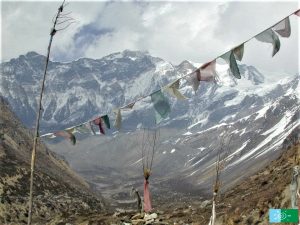
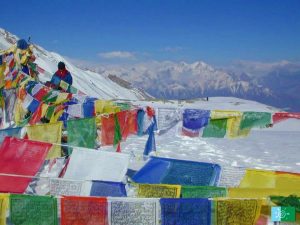
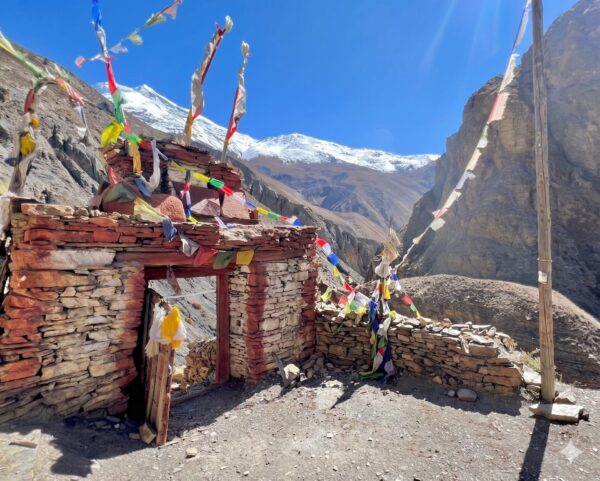
Today is the most challenging yet rewarding part of your Annapurna Circuit trek: crossing Thorong La Pass, one of the highest points on the journey. Start early in the morning to begin the steep ascent along a well-established trail used by locals for over a century. After approximately 4 hours of steady climbing, you’ll arrive at the chorten and prayer flags marking the pass.

From the top, soak in breathtaking panoramic views of the surrounding Himalayan peaks, stretching north toward Tibet, with the iconic Annapurna peaks visible in the distance. After enjoying the majestic scenery, begin your descent toward Muktinath, a sacred pilgrimage site for both Hindus and Buddhists.

For Buddhists, Muktinath is known as Chumig Gyatsa, meaning “A Hundred Waters” in Tibetan, while Hindus revere it for its sacred temples and natural springs. This stage of the trek perfectly blends high-altitude adventure, cultural heritage, and Himalayan vistas, making it a highlight of the Annapurna region trekking experience.

Day 11: Trek to Jomsom via Lubra

Altitude above sea level: 2,800m/9,186ft. – Jomsom
Trekking duration: 3–4hrs. (18.33km/11.39mi)
Ascent: 384m/1,260ft.
Descent: 1,308m/4,291ft.
Accommodation: Tea House Lodge
Meals: Breakfast, Lunch & Dinner

After a hearty breakfast, explore the sacred Muktinath Temple, a revered site for both Hindus and Buddhists. The temple complex features a Buddhist monastery, Hindu shrines, 108 sacred water spouts, and an eternal flame, offering a deep cultural and spiritual experience.

After visiting the temple, begin your descent through the Kali Gandaki River Valley, surrounded by stunning Himalayan landscapes. The trail gradually winds down to Jomsom, the district headquarters of Mustang. Along the way, enjoy views of the valley, traditional Mustang villages, and the unique desert-like terrain of the Upper Mustang region. This stage combines cultural exploration, scenic trekking, and the unique geography of the Annapurna region, making it a memorable part of your journey.

Day 12: Flight to Pokhara

Flight duration: 25 minutes approx.
Accommodation: Mount Kailash Resort or similar
Meals: Breakfast

After an early breakfast, transfer to Jomsom Airport for your short scenic flight to Pokhara, taking in one last glimpse of the spectacular Himalayan peaks from the air.

Upon arrival, check in at your hotel and enjoy a relaxing afternoon in Pokhara, a gateway to the Annapurna region.

Day 13: Flight to Kathmandu

Flight duration: 25 minutes approx.
Accommodation: Hotel Tibet or similar
Meals: Breakfast

After breakfast, take a short scenic flight from Pokhara to Kathmandu and enjoy stunning views of the Nepalese Himalayas. Once in Kathmandu, spend some leisure time relaxing or exploring the lively Kathmandu Valley. You can shop for locally made handicrafts and souvenirs, stroll through the city, or simply unwind at your hotel.

Day 14: Final Departure

Meal: Breakfast

As your unforgettable journey comes to an end, it’s time to fly back home, cherishing all the incredible memories of Nepal. A representative from Nepal Sanctuary Treks will transfer you to Tribhuvan International Airport (TIA). Please make sure to check in 3 hours prior to your scheduled flight for a smooth departure.

Price Included

What's Included

  • Private Airport Transfer
  • Internal flight Jomsom-Pokhara-Kathmandu
  • Private Transfer to Dharapani & Chame
  • 3 nights in Hotel Tibet or similar in Kathmandu with breakfast
  • 1 night in Mount Kailash Resort or similar in Pokhara with breakfast
  • Tea house lodge accommodation during trek on full board
  • Permits & Annapurna Conservation Fee
  • Staff insurance on the trek
  • Trek guide and porter
  • Duffel bag
  • Map
  • First aid kit suppliers

What's not Included

  • Lunch and Dinner in Kathmandu & Pokhara (approx. US$ 20 per day)
  • Beverages,
  • Personal equipment,
  • Personal bills,
  • International airfare
  • Excess baggage beyond 15 kilos, including day pack
  • Visa fee: US$ 30 for 15 days and US$ 50 for 30 days and US$125 for 90 days for multiple entries
  • Insurance (for cancellation, accident, health, emergency evacuation and loss, theft of or damage to baggage and personal effects), liability insurance
  • Tips

Trip Important Notes

Annapurna Circuit Trek Packing List

Footwear:

  • Walking boots. A pair of water-repellent boots with ankle support.
  • Walking socks.
  • Yaktrax
  • Trainers or trail shoes. Can be used in and around the lodge in the afternoons/evenings.

Clothing:

  • Waterproof jacket and trousers (Gore-Tex or similar).
  • Trekking trousers.
  • Long sleeve shirts (not cotton).
  • Mid to heavyweight fleece.
  • Sleeveless or body warmer type fleece.
  • Thermals or base layer for top & bottom (merino wool or synthetic).
  • Fleece pants.
  • Medium weight down jacket (e.g.: Nuptse jacket by The North Face).

Hand wear:

  • Fleece gloves.
  • Warms mittens and/or gloves.

Headwear:

  • Wool or fleece hat.
  • Sun hat.
  • Bandana or scarf.
  • Head torch. Bring extra batteries.
  • Sunglasses.

Personal Equipment:

  • Day pack (you’ll need during the day, such as warm clothes, a jacket, a camera, water bottles, snacks, and a personal first aid kit. Keep your daypack under 5 kg. A porter will transport the rest of your personal gear in a duffel or kit bag, which should not exceed 15 kg per trekker. Clearly mark your bag to help identify it easily.)
  • Stuff sacks for keeping your gear dry and organized.
  • Water bottles (Nalgene wide-mouth bottles are the best).
  • Sunscreen and lip salve with a high SPF.
  • Water purification tablets (Aqua Tab, Chlorine dioxide).
  • Favourite snack food.
  • Trekking poles (optional).
  • Camera with spare batteries and memory cards.
  • Insurance certificate.
  • Flash Light
  • Earplugs (optional).
  • Hand sanitizer 
  • Face Mask
  • Spare cash for extra expenses like hot shower, boiled water, gadget charging during trek

Traveling:

  • Bring a small combination padlock to secure the bag.
  • Travel clothes. You will need casual clothing for air travel days and time spent in Kathmandu.
  • Toiletry bags include toilet paper, soap, towel, toothbrush, etc.
  • Quick dry towel

Personal first aid kit: Note: Nepal Sanctuary Treks provides a comprehensive group first aid kit, but please bring personal medications and other items you might use regularly.

Annapurna Circuit Trek: Seasonal Temperatures

The Annapurna Circuit experiences significant seasonal and altitude-based temperature variations.

In spring (March to May), daytime temperatures range from 10°C to 25°C in lower regions (800–2,500 m) and -5°C to 10°C at higher elevations (above 4,000 m).

Summer and the monsoon season (June to August) bring warmer days of 18°C to 30°C in lower areas, with 2°C to 12°C at high altitudes, though afternoon rain can cool the trail.

Autumn (September to November) offers 12°C to 24°C in the lower region and -8°C to 10°C above 4,000 m, while winter (December to February) is coldest, with 5°C to 15°C in lower areas and -10°C to -25°C at high elevations.

Temperatures generally drop about 6.5°C for every 1,000 m of ascent, and nights above 4,000 m frequently fall below freezing regardless of the season.

Accommodation on the Annapurna Circuit Trek

Teahouses along the Annapurna Circuit offer basic rooms and meals. Most rooms are twin-sharing with two single beds and a blanket. Bringing a sleeping bag is recommended for extra warmth and hygiene.

Bathrooms are generally shared and often feature Asian-style squat toilets. At lower elevations, Western-style flush toilets and hot showers heated by gas or solar power are sometimes available for an additional $2–$4 USD.

At higher altitudes, such as Thorong Phedi and High Camp, squat toilets and cold water are standard, and hot showers may not be available. Teahouses provide a communal dining area with a fireplace or stove to keep guests warm.

Typical Day on a Teahouse Lodge Trek

Each day includes three meals. Mornings start by packing your overnight gear into your main bag before breakfast while porters set off early.

Trekking usually begins around 8 a.m. at a relaxed pace, allowing time to enjoy the scenery, take photos, and visit local villages. Lunch is served at a teahouse along the trail between 11 a.m. and noon.

Afternoon trekking resumes around 1 p.m., with most days ending at the lodge by mid-afternoon. Upon arrival, trekkers are offered a hot drink and biscuits.

Dinner consists of two courses, typically a soup followed by a main dish such as dal bhat, momos, or local specialties. After dinner, the trek leader provides a briefing on the next day’s itinerary.

Electricity on the Annapurna Circuit Trek

At lower elevations, most teahouses connect to the local hydroelectric grid, offering fairly stable electricity, and some rooms have private outlets.

Above Manang, teahouses rely mainly on solar power, so outlets are generally limited to communal dining areas and may be available only during daylight or specific evening hours.

Charging is rarely free at higher altitudes due to limited solar and battery capacity. Expect to pay $1–$5 USD (130–650 NPR) per device for a full charge or per hour, with prices increasing at higher elevations.

Nepal primarily uses Type C (two-pin) and Type D (three-pin) sockets, so carrying a universal adapter is recommended.

Outlets can be crowded during peak season, and cold temperatures drain batteries quickly. Bring a high-capacity power bank and a headlamp with spare batteries to stay powered throughout the trek.

Communication on the Annapurna Circuit Trek

Mobile networks and paid Wi-Fi become less reliable at higher altitudes, with no coverage at Thorong La Pass.

Buy a Nepalese SIM in Kathmandu or Pokhara before your trek. Nepal Telecom (NTC) offers the best coverage in remote areas, while Ncell works better in lower-altitude towns. Strong signals exist in Besisahar, Chame, Manang, Muktinath, and Jomsom, while coverage is weak or nonexistent above Manang and near Thorong La.

Most teahouses provide slow Wi-Fi, usually free at lower elevations but costing 200–500 NPR ($2–$5 USD) per day at higher stops.

Annapurna Circuit Trek: Difficulty and Physical Fitness

The Annapurna Circuit is a moderate to challenging trek. No technical climbing skills are required, but high altitudes and long trekking days over 12 to 21 days make it demanding. The highest point is Thorong La Pass at 5,416 m (17,769 ft).

The trek covers 160–230 km, with most days requiring 5 to 8 hours of walking. You will cross varied terrain, including subtropical forests, stone staircases, narrow ridgelines, and loose scree. Crossing Thorong La Pass is the toughest day, taking 8 to 10 hours of steep climbing in sub-zero temperatures.

You do not need to be a professional athlete, but endurance and strength are essential.

Be prepared to walk uphill for hours with a 5–8 kg daypack, tackle long ascents and descents, and stay mentally resilient in cold, fatigue, and basic teahouse conditions.

ATM Access on the Annapurna Circuit Trek

ATMs are available in major towns such as Besisahar, Chame, Manang, and Jomsom, but they can be unreliable due to power outages or network issues. It is highly recommended to withdraw enough Nepalese Rupees in Kathmandu or Pokhara before starting the trek.

The trek is entirely cash-based. Teahouses, shops, and vendors accept only Nepali Rupees, and credit cards are rarely accepted in smaller villages. Carry enough cash to cover extra expenses such as showers, device charging, and hot water.


Faqs

Why choose Annapurna Circuit trek ?

The Annapurna Circuit is a trek within the Annapurna mountain range of central Nepal. The trek is considered one of the best treks in the world as because of the scenery the trek offers. You will trek through a wide variety of climate zones and cross Thorong La pass, experience Tibetan culture of Manang and lower Mustang. The trek offers much more than just trekking.

What is the best time of the year for this trek?

The trek is possible throughout the year. However, autumn and spring are the best seasons; choose to trek in autumn (Sep-Nov) as spring is busy with expedition stuff.

Do I need travel insurance covered while trekking/traveling in Nepal?

Travel insurance is compulsory for all our travelers and should be taken out at the time of booking.  We recommend that you take out insurance as soon as your booking is confirmed. The insurance must comprise medical coverage, helicopter rescue, and ambulance services.  Read more about Travel Insurance

How much weight do I have to carry or how much will my porter carry?

You can bring as much as clothes you want but extra luggage is not required for the trek, you can leave your extra luggage in Kathmandu or Pokhara’s hotel. For the trek you can carry enough clothes you require in your backpack or carry only the camera, water bottle few clothes etc in your backpack. The potter can carry your extra duffle bag clothes which can weigh up to  30kg. However the local domestic flights (Lukla, Jomsom, Juphal, Simikot) allows maximum of 15kg per person including carry-on baggage.

What medical facilities are there on Annapurna Circuit trek?

In case of emergency you need to get evacuated by helicopter to Kathmandu, you need to take proper care of your health. Anyways, you will find small clinics along the trek, one at Manang and other at Jomsom (these clinics only check minor sickness). However, you need to bring your medicine (if any) and a first aid box will be provided by Nepal Sanctuary Treks, also your guide will be trained for first aid in case of emergency.
For further enquiries you can contact Nepal Sanctuary Treks at:

Are Hot Water Showers Available on the Annapurna Circuit?

Most teahouse lodges along the Annapurna Circuit trail offer hot water showers, powered by solar, electric, or gas heating. However, in higher-altitude or remote areas, you might only have access to bucket showers.

On average, the cost of a hot water shower on the Annapurna Circuit is around NPR 300, but prices may increase at higher altitudes. The reason for this is that heating water at high altitudes can be more challenging and resource-intensive. As such, you might find that the higher you trek, the more expensive the shower becomes.

For more information, contact Nepal Sanctuary Treks expert. We are one of the few Travelife Certified trekking companies in Nepal.

Can I charge electronic device during the Annapurna Circuit Trek?

While on the Annapurna Circuit Trek, you can find electricity or solar energy for charging your devices at lodges and tea houses. Consider bringing two-pin (type C) and three-pin (type D) adapters, which can also be bought in Kathmandu. Charging in the upper regions may cost between USD 1-5, although many places offer free charging. To avoid any inconvenience, packing a power bank is recommended.

Do I need a permit to trek the Annapurna Circuit?

Yes, you need two permits to trek the Annapurna Circuit: the Trekkers Information Management System (TIMS) card and the Annapurna Conservation Area Permit. You’ll need to present these permits at entry points, checkpoints, and exit points along the trek.

Do I need prior trekking experience for the Annapurna Circuit Trek?

The Annapurna Circuit is a moderate to challenging trek. You don’t need technical climbing skills, but the high altitudes and long days make it physically demanding. The trek typically lasts 12–21 days, and the highest point is Thorong La Pass at 5,416 m (17,769 ft).

The route covers 160–230 km, with most days requiring 5–8 hours of walking. You’ll cross varied terrain, including subtropical forests, stone staircases, narrow ridgelines, and loose scree. The toughest day is crossing Thorong La Pass, which takes 8–10 hours of steep climbing in sub-zero temperatures.

You don’t need to be a professional athlete, but endurance, strength, and mental resilience are essential. Be ready to carry a 5–8 kg daypack, tackle long ascents and descents, and cope with fatigue, cold, and basic teahouse conditions.

How difficulty is the Annapurna Circuit Trek?

Annapurna Circuit Trek can be somewhat challenging due to altitude and length. You’ll hike for 5 to 8 hours each day, so being fit is important. Most days involve about five to seven hours of walking, mostly uphill, with a long steep descent on the final day.

How safe is Annapurna Circuit?

The Annapurna Circuit is a safe trek if you prepare properly and take a sensible approach. Start your preparation at least six months in advance, focusing on both physical and mental fitness. Be sure to pack essential items and obtain travel insurance. Nepal Sanctuary Treks provides experienced guides who have been with us for over a decade. They receive annual first aid training, carry a first aid kit, use an oximeter, and monitor clients’ conditions daily. Additionally, the guides stay in touch with our Kathmandu office for weather updates.

Is there Wi-Fi on the Annapurna Circuit?

Annapurna Circuit teahouse lodges typically provide Wi-Fi and internet access. However, some areas may lack connectivity due to challenging terrain and technical difficulties. You can generally expect Wi-Fi at most lodges, with many offering it for free, though some may charge between NPR 100 and NPR 200 per day. Please note that the connection can be slow and unreliable.

Is there an extra charge for services like boiled water at the Annapurna Circuit trek lodges?

During the Annapurna Circuit Trek, it’s advisable to carry purification tablets or a water bottle with a built-in filter if you intend to use tap water. Be aware that there won’t be running water at higher altitudes on the trail. You can purchase boiled water at teahouses, which costs between NPR 150 and 500 per liter.

Is there electricity on the Annapurna Circuit Trek?

Yes, lodges along the Annapurna Circuit generally have electricity, which is sourced from the local grid.

What are the toilet facilities during the Annapurna Circuit Trek?

Most teahouses have western-style flushing toilets, but at higher elevations, you may find squat toilets, either a ceramic basin or planks over a hole, typically outside the room. Some lodges have attached toilets, while others share facilities.

What is the accommodation like on the Annapurna Circuit trek?

The teahouse lodges along the Annapurna Circuit differ in their locations. Some offer attached bathrooms, while others have common rooms with shared toilets. Learn more about teahouse lodges in Nepal


What is the distance of the Annapurna Circuit Trek?

Annapurna Circuit Trek is about 160-200 kilometers long, making it a popular trek in Nepal. It takes you through different landscapes, including green forests, terraced fields, and high deserts, with beautiful views of the Annapurna and Dhaulagiri mountains.

What kind of food expect on Annapurna Circuit Trek?

Teahouse lodges along the Annapurna Circuit offer a variety of food options, including daal bhat (rice and lentils), bread, eggs, potatoes, noodles, soup, pasta, and pastries. It’s recommended to eat vegetarian meals, as the menu often includes garlic, which aids in acclimatization. Also we encourage trying local  dishes such as daal bhat, dhindo, buckwheat pancakes, and Tibetan bread.

Where in Tribhuvan airport I will be paying my visa fee?  I’ve already completed the application online but I’m unclear where I make my payment at the airport.  

Since you completed the process online, you will receive a submission receipt with a barcode. Please print this receipt and bring it with you when you visit the visa fees collection counter. Make sure about the type of visa you will need (15 days, 30 days, or 90 days) and make the payment accordingly. We recommend you bring the exact amount in US currency of the current visa fee while paying at the visa counter.

Next, you should head to the Immigration Desk, taking along your online application form, payment receipts, and your passport. Hand over these documents to the immigration officer to initiate the visa processing procedure.

Do I have a porter for the trek?

Porter for the trek services are included to make your journey easier and more comfortable. Keep your daypack under 5 kg with essentials like warm clothes, water, snacks, and a first-aid kit. Porters carry up to 15 kg in a labeled duffel bag.

Contact us for more information.

Ask Our Travel Expert

Affiliations & Recommendations

Annapurna Circuit Trek