Trip Facts

icon-calendar
Trip Duration 26 Days
icon-meter
Trip Difficulty Strenuous
icon-mountain
Maximum Altitude 5,563m/18,251ft.
icon-season
Best Season To Visit Mid May-Mid June

Trip Overview

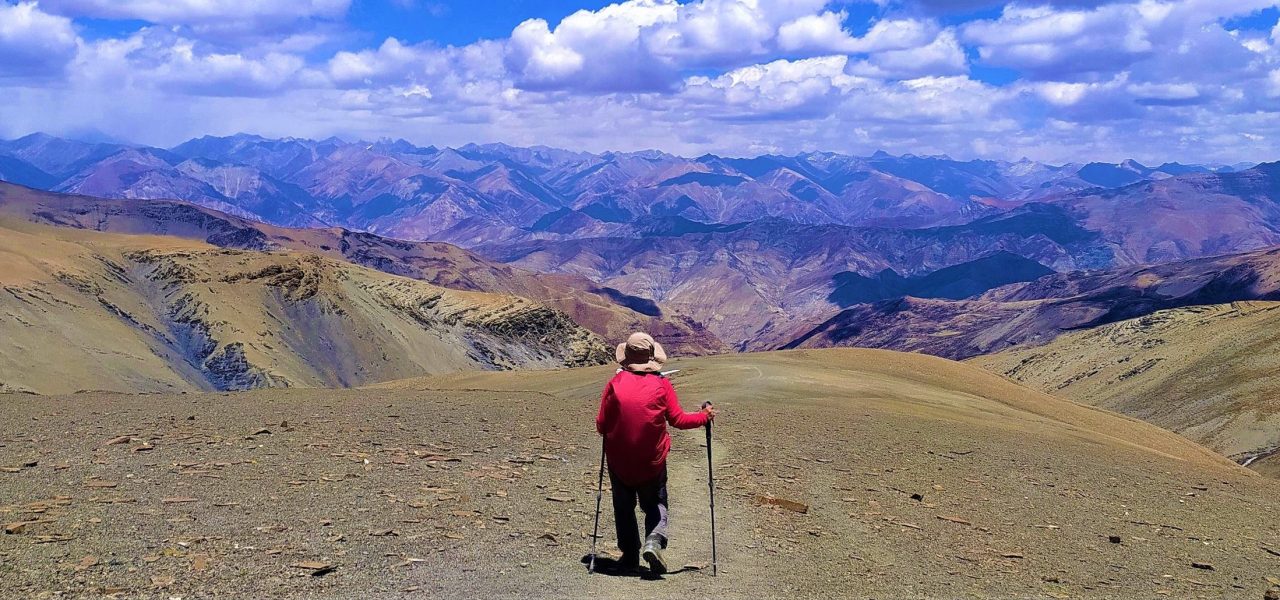
The Upper Dolpo Trek is one of the most remote and best off-the-beaten-path trekking adventures in Nepal, offering a true Himalayan wilderness trekking experience. Located between the Tibetan Plateau and the Dhaulagiri mountain range, this high-altitude trekking route in Nepal takes you deep into the untouched landscapes of the Dolpa region, famous for its ancient Tibetan culture, dramatic mountain scenery, and deep spiritual heritage.

As you follow the Upper Dolpo trekking route, you pass through traditional Tibetan Buddhist villages in Nepal, where colorful prayer flags, mani walls, and centuries-old monasteries reflect a living Himalayan culture. The trail offers an authentic cultural trekking experience in Dolpo, far from modern development and crowded trails.

A major highlight of the Upper Dolpo Trek is Shey Phoksundo Lake, one of Nepal’s deepest and most stunning alpine lakes. Known for its crystal-clear turquoise waters and dramatic cliffs, it is considered one of the most beautiful high-altitude lakes in Nepal and a key attraction of the Dolpa region trekking route.

Another spiritual highlight is Shey Gompa, a sacred monastery located beneath the mystical Crystal Mountain. Here, pilgrims perform the traditional kora pilgrimage (ritual circumambulation), a practice similar in spiritual importance to the Mount Kailash pilgrimage in Tibet. This makes the Upper Dolpo Trek not only a scenic trekking expedition in Nepal but also a deeply spiritual journey through one of the last preserved Himalayan cultures.

Why Choose Nepal Sanctuary Treks for the Upper Dolpo Trek?

With over 27 years of experience in Himalayan trekking in Nepal, Nepal Sanctuary Treks specializes in creating safe, well-organized, and memorable adventure journeys across Nepal’s most iconic regions, including the legendary Great Himalayan Trail. trekking route. We design both remote camping treks in Nepal and teahouse trekking experiences, customized to match your interests, fitness level, and travel style.

As a Travelife Certified trekking company, we are fully committed to sustainable tourism and responsible travel in Nepal. We actively promote eco-friendly trekking practices that protect fragile mountain environments and support local communities in remote Himalayan regions like Dolpo.

Our experienced team of professional trekking guides and support staff prioritizes your safety, comfort, and overall trekking experience throughout the Upper Dolpo Trek. From logistics and camping arrangements to route planning and acclimatization support, we ensure a smooth and well-managed Himalayan expedition.

With deep local expertise in Upper Dolpo trekking routes, our team helps you explore breathtaking landscapes, ancient Tibetan Buddhist culture, and high-altitude wilderness while promoting community-based tourism and environmental conservation.

This customizable sample itinerary can be tailored to suit your travel style and timeframe. Get in touch with our travel experts today at [email protected] or [email protected].

Trip Itinerary

Day 01: Arrive at Kathmandu airport

Altitude above sea level : 1,302 m / 4,269 ft.

Driving Time: Approx. 30 minutes, depending on traffic conditions.

Accommodation: Hotel Tibet or similar

Upon your arrival at Tribhuvan International Airport in Kathmandu,, you will be warmly welcomed by our representative, who will be holding a “Nepal Sanctuary Treks” sign outside the terminal to greet you.

You will be transferred to your hotel in a private vehicle. After checking in and freshening up, our representative will meet you to give a detailed briefing on the upcoming itinerary, along with important safety guidelines and hygiene to ensure a smooth and safe trek.

Day 02: Cultural Introductory Tour and Trek preparation

Altitude above sea level: 1,302 m / 4,269 ft
Accommodation: Hotel Tibet or similar
Meal: Breakfast

9:00 AM: Guided Cultural Tour of Kathmandu Valley

After breakfast, begin your day with a guided cultural tour of the Kathmandu Valley. Accompanied by knowledgeable guides, you’ll explore the rich heritage, ancient architecture, and spiritual landmarks that define the city.

Kathmandu Durbar Square
Your first stop is Kathmandu Durbar Square (Hanuman Dhoka Durbar), a historic royal complex filled with centuries-old temples, palaces, and shrines. Highlights include the Kumari Ghar, home of the Living Goddess, and Kasthamandap, an ancient structure built from a single tree.

Swayambhunath (Monkey Temple)
Next, visit Swayambhunath, commonly known as the Monkey Temple. This iconic hilltop stupa is revered by both Hindus and Buddhists. Enjoy panoramic views of the valley, the scent of incense, and the spiritual ambiance created by spinning prayer wheels and fluttering flags.

Afternoon: Boudhanath Stupa
In the afternoon, head to Boudhanath Stupa, one of the largest and most significant stupas in the world. This UNESCO World Heritage Site is a major center of Tibetan Buddhism, surrounded by monasteries, colorful prayer flags, and the rhythmic chanting of ‘Om Mani Padme Hum’.

Pashupatinath Temple
End your cultural exploration with a visit to Pashupatinath Temple, one of the holiest Hindu shrines dedicated to Lord Shiva. Located along the sacred Bagmati River, the temple is a place of powerful spiritual energy. Here, you’ll witness traditional rituals and the poignant open-air cremation ceremonies that reflect the deep spiritual beliefs of Nepali culture.

After the tour, our representative will transfer you back to your hotel.

Day 03: Fly to Nepalgunj – Gateway to Western Nepal

Altitude above sea level: 150m / 492ft
Flight duration: Approximately 45 minutes
Accommodation: Hotel
Meal: Breakfast

After breakfast, we will be transferred to the airport for our flight to Nepalgunj. If the weather is clear, you’ll enjoy breathtaking views of the Himalayan range from the air. Upon arrival in Nepalgunj, you’ll be escorted to your hotel. The afternoon will be free for you to relax or explore the city at your own pace.

Day 04: Scenic Flight to Juphal & Trek to Dunai – Gateway to Upper Dolpo

Altitude above sea level: 2,100 m / 6,889 ft.
Flight duration: Approximately 45 minutes
Hiking duration: Approximately 2–3 hours
Accommodation: Camping 
Meals: Breakfast, Lunch & Dinner

After an early breakfast, you’ll be transferred to the airport for a scenic mountain flight to Juphal—an unforgettable journey offering panoramic aerial views of the majestic Annapurna and Dhaulagiri ranges. This short domestic flight is a perfect introduction to the remote Himalayan trekking experience.

Upon arrival in Juphal (the starting point of the Upper Dolpo trek), you’ll meet your trekking crew and enjoy an early lunch before beginning your hike. The trail descends through beautiful terraced farmlands, gradually reaching the banks of the Bheri River. As you follow the river through a dramatic narrow gorge, you’ll experience the untouched natural beauty of the region.

By afternoon, you’ll arrive in Dunai, the administrative headquarters of the Dolpa district. This culturally rich village is nestled amidst rugged hills and offers a glimpse into authentic Himalayan life. After exploring the village, we’ll set up camp at a suitable site nearby and spend the night under the stars.

Day 05: Trek to Ankhe – Entering the Phoksundo River Valley

Altitude above sea level: 2,660 m / 8,727 ft
Hiking duration: Approximately 6–7 hours
Accommodation: Camping
Meals: Breakfast, Lunch & Dinner

After an early breakfast, we continue our Dolpo trekking adventure, rejoining the trail from Dunai. The day begins by crossing a suspension bridge over the Bheri River, followed by a steady ascent through a treeless landscape that gradually opens into the stunning Phoksundo River Valley.

As we gain altitude, the trail winds through the small villages of Dhera and Rahagaun, offering insights into remote mountain life in western Nepal. Continuing on, we descend through a dense forest filled with Himalayan flora and fauna—a great spot for nature lovers and photography enthusiasts.

By late afternoon, we arrive at Ankhe, a tranquil village located near the entrance to Shey Phoksundo National Park. This is a peaceful and scenic campsite where we’ll pitch our tents and spend the night surrounded by pristine nature.

Day 06: Trek to Renje

Altitude above sea level: 3,110m/10,203ft.
Hiking duration: Approximately 7 hours
Accommodation: Camping
Meals: Breakfast, Lunch & Dinner

After breakfast, we begin our day’s trek through the captivating landscapes of Upper Dolpo. The trail today alternates between both sides of the valley, offering a dynamic hiking experience along the Phoksundo River. As we follow the river upstream, the path takes us through a narrow gorge section, gradually opening into a wider valley surrounded by rugged Himalayan terrain.

The journey is rich with natural beauty, featuring rocky outcrops, cascading streams, and alpine vegetation. Eventually, we reach a bridge that crosses to the picturesque village of Renje, a peaceful settlement nestled in the mountains.

Upon arrival, we’ll set up camp in a suitable area near the village and spend the night immersed in the serene atmosphere of this remote Himalayan region.

Day 07: Trek to Ringmo Village – First Views of the Stunning Phoksundo Lake

Altitude above sea level: 3,600m/11,811ft.
Hiking duration: Approximately 6-7 hours
Accommodation: Camping
Meals: Breakfast, Lunch & Dinner

After breakfast, we continue our Dolpo trekking adventure with a scenic and rewarding hike toward one of the highlights of the journey. The trail leaves Renje as the valley narrows, leading us to Sumdo, a small settlement nestled at the confluence of streams. From here, the path climbs steadily uphill to a ridge that offers a breathtaking first view of Phoksundo Lake—one of the most beautiful and deepest lakes in Nepal.

After soaking in the panoramic scenery, we descend briefly through a forest of pine and birch trees before making a final uphill push toward Ringmo Village, a traditional Tibetan-influenced settlement perched on a plateau near the lake.

We set up camp at a peaceful and scenic campsite near Phoksundo Lake, where you can relax and take in the tranquil alpine surroundings. Overnight at camp.

Day 08: Rest and acclimatization day

Accommodation: Camping
Meals: Breakfast, Lunch & Dinner

Today is a crucial day for acclimatization as we adjust to the higher elevation to minimize the risk of altitude sickness. Instead of trekking to greater heights, we will stay at our current campsite to allow our bodies to adapt comfortably to the thinner air.

For those interested, a gentle day hike to a nearby Tibetan Buddhist monastery or a leisurely trek around the scenic Phoksundo Lake can be arranged. These activities provide an excellent opportunity to explore the local culture and stunning landscapes while helping your body acclimate safely.

After the day’s activities, we return to camp to rest and prepare for the upcoming trek. Overnight stay at the campsite.

Day 09: Trek to Phoksundo Khola

Altitude above sea level: 3,510m/11,515ft.
Hiking duration: Approximately 5-6 hours
Accommodation: Camping
Meals: Breakfast, Lunch & Dinner

After breakfast, we resume our trek by following the trail around the northwestern tip of Phoksundo Lake, one of Nepal’s most pristine and picturesque alpine lakes. Along this route, you’ll be treated to magnificent panoramic views of the turquoise lake waters framed by towering Himalayan peaks.

Before continuing, trekkers must obtain an Inner Dolpa permit, required for entry into the northern region of the Phoksundo area. This permit ensures access to some of the most remote and untouched parts of the region.

The trail gradually descends from the lake’s edge into a broad valley, where we will set up camp near the peaceful banks of the Phoksundo Khola (river). This tranquil campsite offers a perfect spot to relax and absorb the natural beauty of the Upper Dolpo region. Overnight camping.

Day 10: Trek to Phoksundo Bhanjyang or “Snowfields Camp

Altitude above sea level: 3,510m/11,515ft.
Hiking duration: Approximately 7-8 hours
Accommodation: Camping
Meals: Breakfast, Lunch & Dinner

Today is a demanding but rewarding trekking day. After breakfast, we leave our campsite and venture into a narrow valley, crossing several rivers along the way. The trail then ascends steadily to a lush meadow, where the scenery shifts dramatically.

From the meadow, the route veers sharply into a deep, steep-sided gorge (ravine). This challenging climb will test your endurance as you make your way to the top, emerging into another valley with breathtaking views of the Kang-La Pass—a key highlight of the trek.

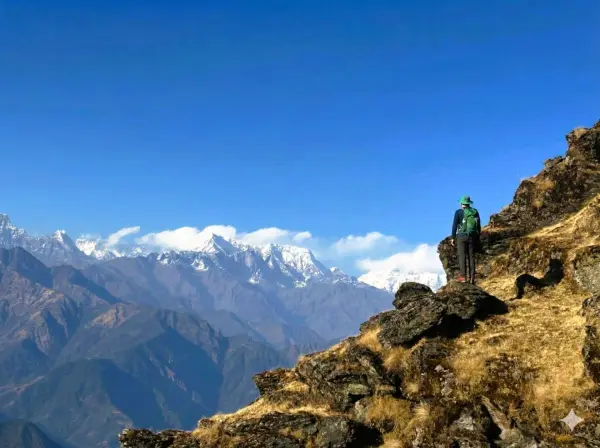
Along the ascent, you’ll be treated to spectacular vistas of Chamlang Peak (7,319m / 24,022ft) towering above the landscape. Upon reaching our destination, we will set up camp at the aptly named Snowfields Camp, located near the pass. This campsite offers a serene and stunning alpine environment to rest and prepare for the days ahead.

Day 11: Trek to Shey Gompa via Kang La pass

Altitude above sea level: 4,125m/13,533ft.
Hiking duration: Approximately 6-7 hours
Accommodation: Camping
Meals: Breakfast, Lunch & Dinner

After an early breakfast, we start a steep and challenging hike up to Kang La Pass (5,150 m / 16,896 ft). From the top, you’ll enjoy amazing views of a large valley, split by winding rivers and surrounded by towering mountains.

Then, we descend steeply into the valley and follow the riverbank as we make our way to Shey Gompa, a famous Tibetan Buddhist monastery. The name “Shey” means “crystal,” and the monastery is located below the impressive Crystal Peak.

We’ll camp nearby for the night, giving you a chance to relax and soak in the peaceful mountain atmosphere.

Day 12: Rest Day at Shey Gompa – Optional Hike to Tsakang Gompa

Accommodation: Camping
Meals: Breakfast, Lunch & Dinner

Today is a well-deserved rest day as we stay at Shey Gompa. After a leisurely breakfast, you can choose to relax in your tent or explore the beautiful surroundings at your own pace.

For those interested, an optional day hike to Tsakang Gompa, a nearby Buddhist monastery, will be organized. This hike offers a great opportunity to experience local culture and enjoy stunning mountain views.

In the evening, we’ll return to our campsite at Shey Gompa and spend the night there, resting and preparing for the next day’s trek.

Day 13: Trek to Bhijer Gaon

Altitude above sea level: 3,850m/12,631ft
Hiking duration: Approximately 8 hours
Accommodation: Camping
Meals: Breakfast, Lunch & Dinner

We start early from Shey Gompa, trekking through the Tartan River basin. The trail gradually ascends to the high plateau above Shey Gompa, offering beautiful views of the surrounding mountains.

Heading eastward for about three hours, we then descend to Tora village, located along the Yangu River. From there, the trail continues downhill to Tato village, situated at an altitude of 3,920 meters.

After crossing Tato, we reach Shyamling Gompa (4,020 m), another important and picturesque monastery in the Dolpo region. From Shyamling Gompa, it’s about an hour’s walk to the Bhijer Valley, where we set up camp for the night.

Bhijer is a village mainly inhabited by followers of the Bon tradition.  The village is also home to Nesar Monastery, a sacred Buddhist prayer site with a long history.

Day 14: Trek to Pho via Yambur La pass

Altitude above sea level:4,087m/13,408ft.
Hiking duration: Approximately 6-7 hours
Accommodation: Camping
Meals: Breakfast, Lunch & Dinner

After breakfast, we trek over the scenic Yambur La Pass (4,813 m / 15,791 ft) to reach the remote village of Pho. The trail is steep and challenging but offers spectacular views of the vast, Tibetan plateau-like landscape.


Day 15: Trek to Pung Kharka via Nyingma Gyanzen La pass

Altitude above sea level:4,650m/15,255ft.
Hiking duration: Approximately 6-7 hours
Accommodation: Camping
Meals: Breakfast, Lunch & Dinner

After breakfast, another demanding day begins as you cross Nyingma Gyanzen La, the highest pass on the trek at 5,563m/18,251ft.  The landscape becomes harsher but awe-inspiring, with expansive panoramic views in every direction.

Day 16: Trek to Chyandi Khola (4,830m/15,846ft) [via Yala La (5,414m/17,762ft)] 6 hrs trek

Altitude above sea level:4,830m/15,846ft.
Hiking duration: Approximately 6 hours
Accommodation: Camping
Meals: Breakfast, Lunch & Dinner

After breakfast, we descend from the high pastures before climbing again over Yala La (5,414 m / 17,766 ft), one of the less-traveled passes. The trail then leads us down to Chyandi Khola, a peaceful and secluded riverside campsite.

Day 17: Trek to Takla Khola

Altitude above sea level:3,785m/12,417ft.
Hiking duration: Approximately 7 hours
Accommodation: Camping
Meals: Breakfast, Lunch & Dinner

After breakfast, follow a remote, rugged trail descending through high alpine terrain into the Takla Khola Valley. As you approach the Mugu region, the scenery gradually shifts, revealing a new landscape and ecosystem

Day 18: Trek to Thajuchaur via Chyargo La pass

Altitude above sea level:4,050m/13,287ft.
Hiking duration: Approximately 7 hours
Accommodation: Camping
Meals: Breakfast, Lunch & Dinner

After breakfast, today is another high pass day as we cross the rugged Chyargo La (4,900 m / 16,076 ft). On the other side, we descend to Thajuchaur, an open grazing meadow offering stunning panoramic views.

Day 19: Trek to Shilenchaura Kharka

Altitude above sea level:2,945m/9,662ft.
Hiking duration: Approximately 6 hours
Accommodation: Camping
Meals: Breakfast, Lunch & Dinner

After breakfast, the trail steadily descends through lush meadows and highland forests, passing occasional herder camps before arriving at Shilenchaura Kharka, a traditional grazing area.

Day 20: Trek to Tiyar

Altitude above sea level:2,418m/7,933ft.
Hiking duration: Approximately 6 hours
Accommodation: Camping
Meals: Breakfast, Lunch & Dinner

After breakfast, the trail gently descends through forests and small settlements, leading to the village of Tiyar, nestled in a beautiful valley.

Day 21: Trek to Mangri

Altitude above sea level:1,950m/6,397ft.
Hiking duration: Approximately 4 hours
Accommodation: Camping
Meals: Breakfast, Lunch & Dinner

After breakfast, trek through forested paths and terraced hillsides to reach Mangri, a peaceful rural settlement in the far west.

Day 22: Trek to Gamgadhi

Altitude above sea level:2,095m/6,873ft.
Hiking duration: Approximately 4 hours
Accommodation: Camping
Meals: Breakfast, Lunch & Dinner

After breakfast, we descend to Gamgadhi, the district headquarters of Mugu. It’s the biggest town you’ve seen in weeks, with basic services and road access.

Day 23: Trek to Rara Lake

Altitude above sea level:2,990m/9,809ft.
Hiking duration: Approximately 4 hours
Accommodation: Camping
Meals: Breakfast, Lunch & Dinner

After breakfast, enjoy a beautiful day as you approach Rara Lake, Nepal’s largest and one of its most tranquil lakes. The deep blue waters are surrounded by forested hills and alpine pastures.


Day 24: Trek to Talcha Airport - Flight to Nepalgunj and onto Kathmandu

Hiking duration: Approximately 2-3 hours
Accommodation: Hotel Tibet or similar
Meals: Breakfast

In the early morning, you take a hike to Talcha Airport (2,200m/7,217ft). From there, catch a flight to Nepalgunj, then connect to your return flight to Kathmandu. Upon arrival, you’ll be transferred to your hotel, where you can spend the rest of the day at your leisure.

Day 25: Leisure day in Kathmandu

Accommodation: Hotel Tibet or similar
Meals: Breakfast

This day is reserved as a buffer for potential flight delays due to weather conditions in Lukla. Use this leisure day to shop for authentic Nepalese souvenirs, explore Kathmandu’s vibrant culture, or simply unwind after your epic trekking adventure.

Day 26: Final Departure

Meals: Breakfast

As your unforgettable journey comes to an end, it’s time to fly back home, cherishing all the incredible memories of Nepal. A representative from Nepal Sanctuary Treks will transfer you to Tribhuvan International Airport (TIA). Please make sure to check in 3 hours prior to your scheduled flight for a smooth departure.

Price Included

What's Included

  • Private airport transfer
  • Internal flight Kathmandu-Nepalgunj-Juphal, Nepalgunj-Kathmandu
  • Private  transfer to/from trek point as mentioned in itinerary
  • Guided sightseeing of Kathmandu with entrance fees
  • 4 nights in Hotel Tibet or similar in Kathmandu with breakfast
  • 1 night in Hotel in Nepalgunj with breakfast
  • Camping accommodation during trek on full board
  • Trek guide, assistant guide/s , cook and porter/s
  • Staff insurance on trek
  • Restricted area permit
  • Waterproof Duffel bag
  • First aid kit


What's not Included

  • Lunch and Dinner in Kathmandu & Nepalgunj (approx. US$ 20 per day)
  • Beverages
  • Personal equipment,
  • International airfare
  • Extra night accommodation in Nepalgunj because for any reason
  • Personal expenses (phone calls, laundry, bar bills, battery recharge, extra porters, bottle or boiled water, shower, etc.)
  • Excess baggage beyond 15 kilos, including day pack
  • Visa fee: US$ 30 for 15 days and US$ 50 for 30 days for multiple entries
  • Insurance (for cancellation, accident, health, emergency evacuation and loss, theft of or damage to baggage and personal effects) and Public Liability Insurance
  • Tips

Trip Important Notes

Upper Dolpo Trek Packing List

Footwear:

  • Walking boots. A pair of water-repellent boots with ankle support.
  • Walking socks.
  • Trainers or trail shoes. Can be used in and around the lodge in the afternoons/evenings.
  • Clothing:
  • Waterproof jacket and trousers (Gore-Tex or similar).
  • Trekking trousers.
  • Long sleeve shirts (not cotton).
  • Mid to heavyweight fleece.
  • Sleeveless or body warmer type fleece.
  • Thermals or base layer for top & bottom (merino wool or synthetic).
  • Fleece pants.
  • Medium weight down jacket (e.g.: Nuptse jacket by The North Face).

Hand wear:

  • Fleece gloves.
  • Warms mittens and/or gloves.
  • Headwear:
  • Wool or fleece hat.
  • Sun hat.
  • Bandana or scarf.
  • Head torch. Bring extra batteries.
  • Sunglasses.

For crossing passes:

  • Trekking poles
  • Gaiters
  • Yaktrax/ Microspikes

Personal Equipment:

  • Day pack (you’ll need during the day, such as warm clothes, a jacket, a camera, water bottles, snacks, and a personal first aid kit. Keep your daypack under 5 kg. A porter will transport the rest of your personal gear in a duffel or kit bag, which should not exceed 15 kg per trekker. Clearly mark your bag to help identify it easily.)
  • Stuff sacks for keeping your gear dry and organized.
  • Water bottles (Nalgene wide-mouth bottles are the best).
  • Sunscreen and lip salve with a high SPF.
  • Water purification tablets (Aqua Tab, Chlorine dioxide).
  • Favourite snack food.
  • Sleeping bag ( available for rental in Kathmandu approx.@ US$1.5/day)
  • Camera with spare batteries and memory cards.
  • Insurance certificate.
  • Flash Light
  • Earplugs (optional).
  • Hand sanitizer 
  • Face Mask
  • Spare cash for extra expenses like hot shower, boiled water, gadget charging during trek

Traveling:

  • Bring a small combination padlock to secure the bag.
  • Travel clothes. You will need casual clothing for air travel days and time spent in Kathmandu.
  • Toiletry bags include toilet paper, soap, towel, toothbrush, etc.
  • Quick dry towel

Personal first aid kit: Note: Nepal Sanctuary Treks provides a comprehensive group first aid kit, but please bring personal medications and other items you might use regularly.

What accommodation is available on the Upper Dolpo Trek route

The Upper Dolpo Trek is a remote, high-altitude expedition in Nepal that offers a true wilderness experience. It is primarily a fully supported camping trek, as no permanent teahouses exist along the route.

A professional trekking crew sets up complete campsites every day, including tents, mattresses, dining shelters, and kitchen equipment, all carried by porters. This setup ensures trekkers enjoy comfort even in one of Nepal’s most isolated regions.

An experienced expedition cooking team prepares all meals on the Upper Dolpo Trek. They serve nutrient-rich, energy-packed food designed for demanding high-altitude trekking. Because of the region’s remoteness, the team carries all major food supplies from the start of the journey. In lower villages, they source fresh local ingredients to support local communities along the trekking route.

The Upper Dolpo Trek follows a camping-based trekking style, offering an authentic Himalayan adventure. Nepal Sanctuary Treks provides fully supported logistics, including high-quality tents, comfortable bedding, experienced guides, porters, and dedicated kitchen staff to ensure a smooth trekking experience.

Meals on the Upper Dolpo Trek

On the Upper Dolpo camping trek, we serve fresh, nutritious, and high-energy meals designed to support long trekking days at high altitude. All meals are prepared by an experienced expedition cooking team in a fully equipped kitchen tent.

Breakfast includes a balanced selection of porridge or cereal, toast or chapatis, eggs, and hot drinks such as tea or coffee. This provides the energy needed for a strong start to the trekking day in the Himalayas.

The kitchen crew prepares lunch in advance and serves it shortly after the group reaches a suitable resting point along the trail. Since the cook and kitchen staff move ahead early in the morning, they ensure hot, freshly prepared meals are ready on arrival. After lunch, trekkers take a short rest before continuing the afternoon hike.

Upon arrival at the campsite, the team serves hot drinks and biscuits to help trekkers relax and recover after the day’s walk.

Dinner is served in the mess tent between 6:00 and 6:30 pm. The meal begins with a warm soup, followed by a hearty main course designed to replenish energy after a full day of trekking in remote terrain.

We also accommodate a wide range of dietary requirements, including vegetarian and special meal requests, which are confirmed during the booking process to ensure a safe and comfortable trekking experience.

Typical Day on a Camping Trek in Nepal

On a camping trek, we provide all essential expedition facilities, including personal tents, a mess tent, a kitchen tent, and toilet tents. The trekking crew handles full camp setup and dismantling each day, while a trained cook and kitchen staff prepare all meals.

The day begins with wake-up tea served inside your tent, followed by warm water for washing. Breakfast is served between 7:30 and 8:00 am. Before breakfast, you should place your packed main duffel bag outside your tent so the porters can organize the load efficiently while you eat.

After breakfast, the trek begins. You typically walk for 3 to 4 hours in the morning, enjoying scenic Himalayan trails and gradual elevation gain. Lunch is served around 12:30 to 1:00 pm. Depending on the location, the team either prepares a fresh hot meal or provides a packed lunch. After a short break, you continue trekking for another 3 to 4 hours, although some days may involve longer hiking distances depending on the route and terrain.

By mid-afternoon, you arrive at the campsite. The crew already sets up your tent, and you are welcomed with tea or coffee and light snacks such as biscuits. This is your time to relax and recover after a long trekking day.

Dinner is served in the mess tent between 6:00 and 6:30 pm. The meal usually starts with a warm soup, followed by a main course prepared to provide energy and recovery support for high-altitude trekking.

After dinner, the guide briefs the group about the next day’s itinerary, trail conditions, and elevation gain.

Some trekkers spend time socializing or playing cards in the mess tent, while most prefer to rest early in their tents. On days involving high passes or summit climbs, the team starts earlier in the morning but follows the same structured routine throughout the trek.

Electricity on the Upper Dolpo Trek

Electricity on the Upper Dolpo Trek is very limited and unreliable compared to popular routes like Everest Base Camp or the Annapurna region, so trekkers should be largely self-sufficient for power needs.

In lower towns such as Dunai and Juphal, small hydroelectric power is sometimes available, and you may charge devices for a small fee, though facilities are basic and inconsistent. In higher villages like Shey Gompa and Saldang, electricity mainly comes from solar power, which depends on weather and may not always be available.

Since the Upper Dolpo Trek is a remote camping expedition in Nepal, we strongly recommend carrying high-capacity power banks, solar chargers, and spare batteries for essential devices like cameras, headlamps, and phones to ensure a smooth trekking experience.

Communication on the Upper Dolpo Trek

Communication on the Upper Dolpo Trek is extremely limited, making it one of the most remote trekking routes in Nepal. Mobile signals are weak and unreliable, with occasional 2G coverage in Juphal and Dunai, but no consistent connectivity on most of the trail.

Internet access is very limited, with only basic or slow Wi-Fi available in a few lower areas and near Shey Phoksundo Lake. For emergencies, guides carry satellite phones (Thuraya) to ensure safety in this remote high-altitude trekking region of Nepal.

Upper Dolpo Trek Difficulty and Fitness

The Upper Dolpo Trek is a strenuous, high-altitude expedition and is more demanding than treks like Everest Base Camp or the Annapurna Circuit due to its remoteness, long duration, and high passes.

The route stays mostly above 4,000m and crosses passes such as Kang La (5,360m), Saldang La (5,200m), and Jeng La (5,110m). It typically takes 22–28 days and covers around 200–230 km over steep, rocky, and remote trails.

This is a fully camping-based trek with no teahouses and very limited facilities, making it suitable only for experienced trekkers.

You must be able to walk 6–10 hours daily for several weeks with a light backpack. We recommend 4–6 months of preparation with cardio, strength training, and long hikes.

Proper fitness, acclimatization, mental endurance, and high-altitude travel insurance (up to 6,000m evacuation cover) are essential for Upper Dolpo Trek.

Permits Required for Upper Dolpo Trek

The Upper Dolpo Trek is a restricted area trek in Nepal, so all trekkers must obtain official permits before entering the region. Nepal Sanctuary Treks arranges all required permits on your behalf, including the Upper Dolpo Restricted Area Permit, the Shey Phoksundo National Park Permit, and the Lower Dolpo Permit (if required by itinerary).

A registered guide is mandatory, and solo trekking is not allowed. Permit checks are carried out at several points along the route to ensure full compliance.

If you are planning the Upper Dolpo Trek, please email us at [email protected] for detailed information, customized itineraries, and expert guidance.

Best Time for the Upper Dolpo Trek

Spring (Transition Season)

Spring offers improving conditions for the Upper Dolpo Trek. In early spring (March to early April), high pass such as Kang La  often remain covered in deep snow, and night temperatures can fall to around -15°C. From mid-May onward, the weather becomes much milder, making trekking routes more accessible and comfortable for a high-altitude trekking expedition in Nepal.

Monsoon (Rain Shadow Region)

Upper Dolpo lies in a trans-Himalayan rain shadow zone behind the Dhaulagiri range, making it one of the few regions in Nepal that stays relatively dry during the monsoon. Daytime temperatures are generally warmer, creating comfortable conditions for camping treks in Upper Dolpo. However, flights between Nepalgunj and Juphal are often delayed due to weather conditions in lower regions.

Winter (Extreme Conditions)

Winter is not recommended for the Upper Dolpo Trek. Temperatures can drop below -20°C at high passes, and heavy snowfall often blocks key routes. Many villages partially migrate to lower altitudes, and most trekking support services close, making winter trekking in Dolpo extremely difficult and unsafe.


Faqs

Where in Tribhuvan airport I will be paying my visa fee?  I’ve already completed the application online but I’m unclear where I make my payment at the airport.  

Since you completed the process online, you will receive a submission receipt with a barcode. Please print this receipt and bring it with you when you visit the visa fees collection counter. Make sure about the type of visa you will need (15 days, 30 days, or 90 days) and make the payment accordingly. We recommend you bring the exact amount in US currency of the current visa fee while paying at the visa counter.

Next, you should head to the Immigration Desk, taking along your online application form, payment receipts, and your passport. Hand over these documents to the immigration officer to initiate the visa processing procedure.

Do I need travel insurance covered while trekking/traveling in Nepal?

Travel insurance is compulsory for all our travelers and should be taken out at the time of booking.  We recommend that you take out insurance as soon as your booking is confirmed. The insurance must comprise medical coverage, helicopter rescue, and ambulance services.  Read more about Travel Insurance

Can I rent or buy trekking equipment in Nepal?

Yes, you can rent or purchase trekking gear in Kathmandu or Pokhara, including items like sleeping bags, down jackets, and trekking poles. Make sure to check the quality and condition of rented equipment. For instance, sleeping bags are available for rent at rates ranging from USD 1 to USD 1.50 per day. For more information, please contact [email protected].

Are there any health risks or altitude sickness concerns on the trek?

Altitude sickness can be a serious risk for trekkers at high elevations, so it’s important to acclimatize properly. Start slowly to give your body time to adjust, and stay hydrated, as dehydration can worsen symptoms. Watch for signs of altitude sickness, like headaches, nausea, and dizziness. Consulting a healthcare professional before your Nepal trek can provide helpful advice for a safer experience. The team at Nepal Sanctuary Treks carries a portable altitude chamber (PAC), an oximeter, and the Lake Louise form during the trek. They monitor each traveler’s condition and track their progress. Additionally, the expert team at Nepal Sanctuary Treks carefully designs itineraries that include acclimatization days, allowing trekkers to gradually adjust to the changing altitude. These carefully planned rest days are strategically placed throughout the trek to help minimize the risk of altitude sickness. . Read more on Altitude Sickness

Do I have a porter for the trek?

Porter for the trek services are included to make your journey easier and more comfortable. Keep your daypack under 5 kg with essentials like warm clothes, water, snacks, and a first-aid kit. Porters carry up to 15 kg in a labeled duffel bag.

Contact us for more information.

Are there any specific dietary requirements for the meals provided during the trek?

Dietary requirements should be noted on the pre-trip form from Nepal Sanctuary Treks. Based on your information, we will tailor meals during the trek to accommodate any allergies or preferences.

What cultural considerations and etiquettes should I keep in mind while trekking?

Trekking etiquette in Nepal emphasizes the importance of responsible tourism: when trekking, practice respect for local culture by dressing modestly and asking permission before taking photos. Leave no trace, stick to marked trails, and adhere to local guidelines. Greet others with “Namaste,” acclimatize properly, and stay hydrated. Support the local economy by purchasing local goods. Enjoy your trek while making a positive difference in the communities you visit! For more information please refer to Responsible Travel

How much weight do I have to carry or how much will my porter carry?

You can bring as much as clothes you want but extra luggage is not required for the trek, you can leave your extra luggage in Kathmandu or Pokhara’s hotel. For the trek you can carry enough clothes you require in your backpack or carry only the camera, water bottle few clothes etc in your backpack. The potter can carry your extra duffle bag clothes which can weigh up to  30kg. However the local domestic flights (Lukla, Jomsom, Juphal, Simikot) allows maximum of 15kg per person including carry-on baggage.

What are the emergency evacuation options in case of severe illness or injury?

In case of a medical emergency, helicopters can be used for evacuation from higher altitudes to Kathmandu with better medical facilities. Make sure you have adequate travel insurance that covers emergency evacuations.

Why should I trek with Nepal Sanctuary Treks (NST)?

For over two decades, Nepal Sanctuary Treks has been crafting sustainable and bespoke trekking adventures in Nepal. Our deep knowledge of the region allows us to meticulously tailor itineraries to guest’s specific desires, ensuring a transformative journey. Committed to sustainability, our efforts are recognized by the prestigious Travelife Certified Award. Nepal Sanctuary Treks actively empowers local communities by supporting female-owned businesses and promoting girls’ education. Learn more


Ask Our Travel Expert

Affiliations & Recommendations

Upper Dolpo Trek