Khopra Ridge Trek temperatures vary by season, so timing your trek is important. In spring from March to May, expect mild days between 8°C and 15°C, with colder nights dropping to -5°C to 5°C.
The monsoon season from June to August brings warmer conditions, with daytime temperatures of 15°C to 25°C and nights between 5°C and 15°C.
Autumn from Mid-September to November offers stable weather, with pleasant daytime temperatures of 10°C to 20°C and cooler nights from -5°C to 10°C.
In winter from December to February, it gets much colder, with daytime temperatures of 0°C to 10°C and night temperatures falling to -15°C to -5°C.
Altitude also affects temperatures along the trek. Lower villages like Ghandruk and Swanta stay warmer, often reaching 20°C to 25°C during spring and autumn.
In contrast, higher areas such as Khayer Lake at 4,665 meters are significantly colder, typically 5°C to 10°C lower than Khopra Ridge, with strong wind chill even on sunny days.
Temperatures are approximate and vary with altitude, weather conditions and time of day. Always prepare for colder conditions at higher elevations.
Teahouse Accommodation on Khopra Ridge Trek: What to Expect
Accommodation on the Khopra Ridge Trek mainly consists of teahouses and community lodges. These stays are simple but clean, safe, and comfortable. By staying here, you directly support local communities, especially in areas with community-run lodges.
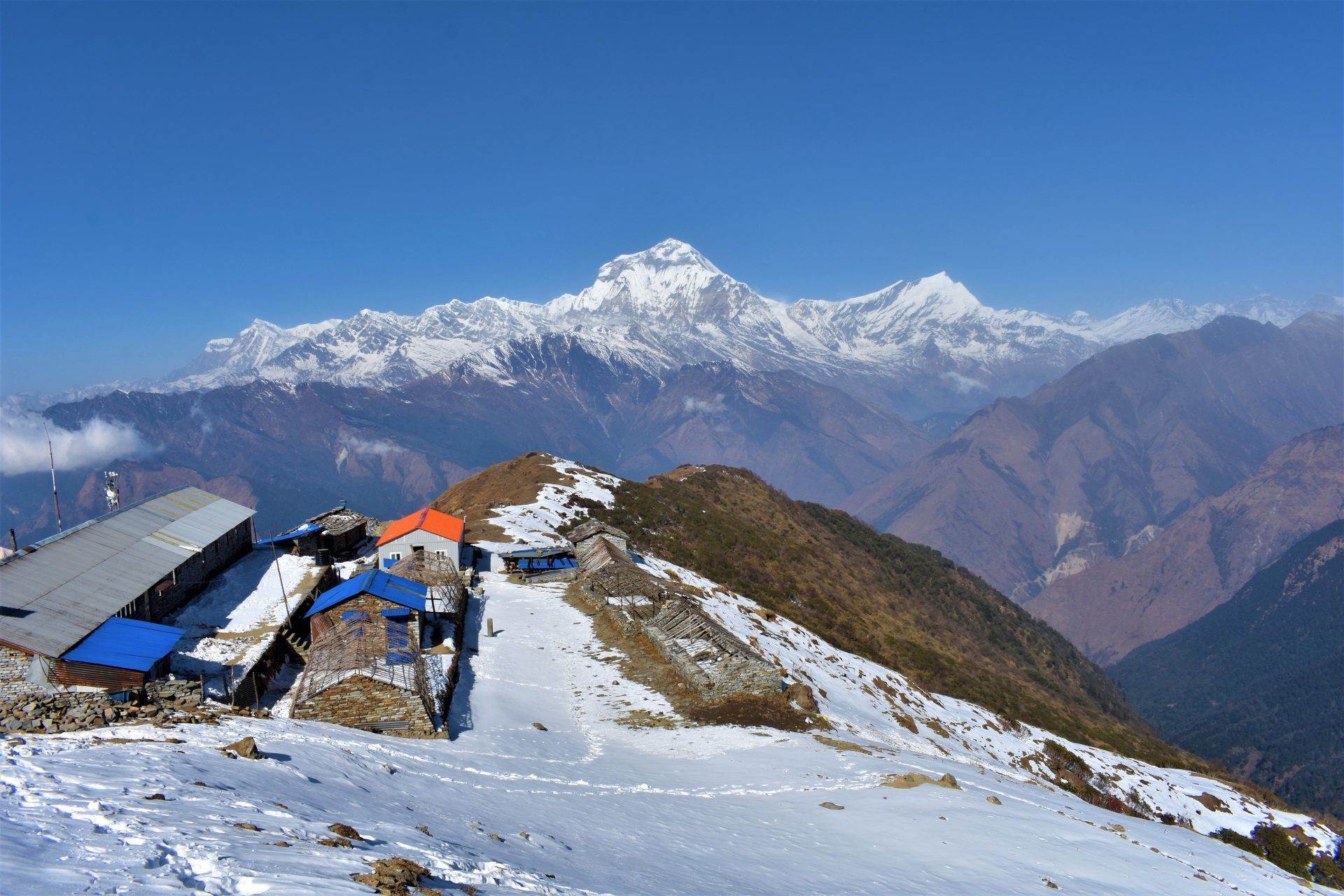
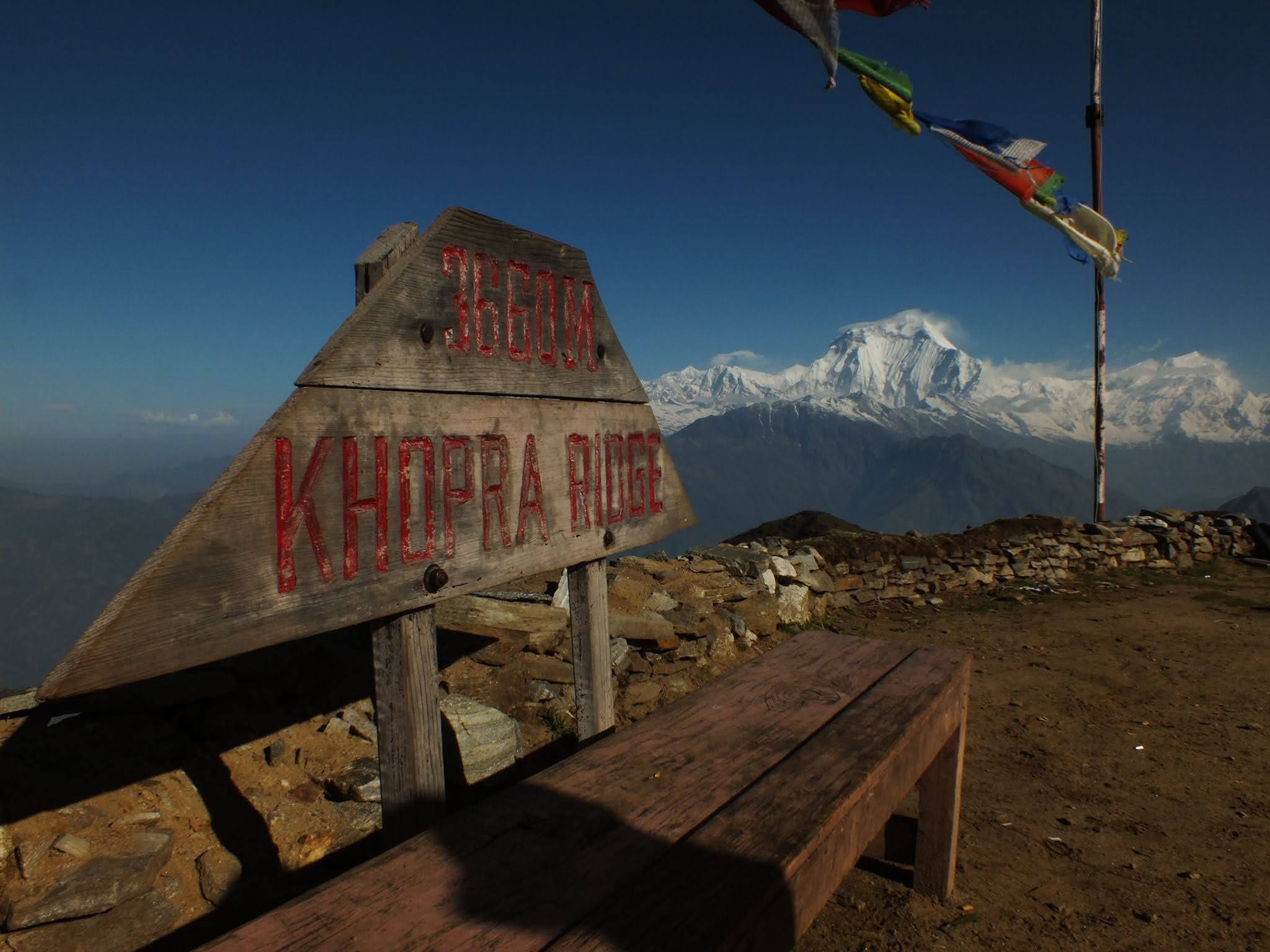
Teahouses are available along most of the trail. However, Khopra Ridge at 3,660 meters has only a few lodges, and there are no accommodation options near Khayer Lake at 4,665 meters, which trekkers visit as a day hike.
Rooms are basic and usually twin-sharing, with some dormitory-style options at higher altitudes. Lodges provide mattresses and blankets, while bathrooms are shared and may be either Western-style or squat toilets.
Most teahouses offer hot showers for an extra fee of NPR 150 to 500, typically using a bucket of boiled water.
Khopra Ridge Trek Cost
The cost of the Khopra Ridge Trek depends on your travel dates, group size and preferred travel arrangements.
The Nepal Sanctuary Treks 12-day package includes accommodation in Kathmandu and Pokhara, internal flights, trekking accommodation, meals during the trek, a licensed trekking guide, porter services and the permits and transport specified in the itinerary.
For a personalized quotation, please contact Nepal Sanctuary Treks with your preferred travel dates and group size. Our team will provide a detailed breakdown of the package price, inclusions and exclusions.
Permits Required for Khopra Ridge Trek
Trekkers planning the Khopra Ridge Trek need standard permits required for the Annapurna Conservation Area. These permits support conservation work and local community development in the region.
Annapurna Conservation Area Permit (ACAP)
This is the main permit required for the Khopra Ridge Trek.
- Foreign trekkers: NPR 3,000 (approx. USD 25)
- SAARC nationals: NPR 1,000 (approx. USD 10)
The permit is checked at multiple entry points along the route, including Ghorepani and other checkpoints.
How to Reach the Khopra Ridge Trek Starting Point
Pokhara is the main gateway to the Khopra Ridge Trek. You can travel from Kathmandu to Pokhara by a short domestic flight or by road.
For the Nepal Sanctuary Treks 12-day itinerary, you fly from Kathmandu to Pokhara and drive to Syauli Bazaar. The trek begins from Syauli Bazaar and continues towards Ghandruk.
The route passes through Ghandruk, Tadapani, Dobato, Mulde Peak, Upper Chistibung and Khopra Ridge. You then descend through Swanta and Ulleri before returning to Pokhara.
A Typical Day on the Khopra Ridge Trek
A typical day on the Khopra Ridge Trek includes three meals. Mornings start with packing your overnight gear before breakfast, while porters set off early. Trekking usually begins around 8 a.m. at a relaxed pace, allowing time to enjoy the scenery, take photos, and visit local villages. Lunch is served at a teahouse along the trail between 11 a.m. and noon.
After lunch, trekking resumes around 1 p.m., with most days ending at the lodge by mid-afternoon. Upon arrival, you receive a hot drink and biscuits. Dinner usually has two courses, starting with soup and followed by a main dish such as dal bhat, momos, or Sherpa stew, with local specialties recommended. After dinner, the trek leader provides a briefing on the next day’s itinerary.
Electricity on the Khopra Ridge Trek
Most teahouses and lodges provide electricity, though it becomes less reliable at higher altitudes like Khopra Ridge. Power comes from hydropower and solar panels, but solar is less effective in cloudy weather. Lodges usually offer communal charging stations in dining halls rather than private rooms, often for a fee of NPR 100–500 ($1–$4 USD) per device. During peak season, outlets can be crowded, and cold temperatures drain batteries quickly.
To stay powered, carry a high-capacity power bank and a headlamp with spare batteries. Bring a C-type plug adapter, as most lodges have circular pins. Save battery life by lowering screen brightness, turning off GPS and Wi-Fi, and avoiding unnecessary screen use. Cold weather can drain or damage devices, so keep unused gadgets wrapped warmly inside your backpack or in the pocket of your down jacket.
Communication on the Khopra Ridge Trek
Communication on the Khopra Ridge Trek is generally reliable, thanks to the high-speed wireless initiative led by Mahabir Pun. However, signals can be patchy at higher elevations or during bad weather. For the best coverage, buy a local SIM card in Kathmandu or Pokhara. Nepal Telecom (NTC) provides the widest reach, including 3G at higher altitudes, while Ncell offers fast 4G in lower villages like Ghorepani but weakens on steeper ridges.
Blackout zones are common in dense forests between camps. Most teahouses provide Wi-Fi for NPR 150–200 per device, though some, like Khopra Danda’s main lodge, offer free access. Wi-Fi is sufficient for messaging and light social media, but not for streaming or large uploads. To stay prepared, download maps and essential apps offline, as signals can be weak in forested or remote areas.
Khopra Ridge Trek Difficulty and Fitness
The Khopra Ridge Trek is graded moderate. The itinerary includes several days of walking through forests, stone steps, village trails and mountain ridges. Walking times vary by day, with some stages taking approximately five to six hours.
The highest overnight point on the published itinerary is Khopra Ridge at 3,660 metres. Although the trek does not require technical climbing skills, you should have reasonable fitness and be comfortable walking for several hours on uneven terrain.
Preparing with regular walks, hill hikes, stair climbing or other cardiovascular exercise can help build stamina. The pace can be adjusted to suit the group, with appropriate rest breaks along the way.
The optional Khayer Lake excursion reaches a higher elevation and involves additional effort. It should be discussed with your guide and assessed according to fitness, weather and available time.
Khopra Ridge Trek ATMs
There are no reliable ATMs along the Khopra Ridge Trek. You can access cash only in major cities like Kathmandu and Pokhara. The trek is entirely cash-based, as teahouses, shops, and vendors accept only Nepali Rupees, and credit cards are rarely accepted in smaller villages. Carry enough cash to cover extra expenses such as hot showers, device charging, and boiled water.





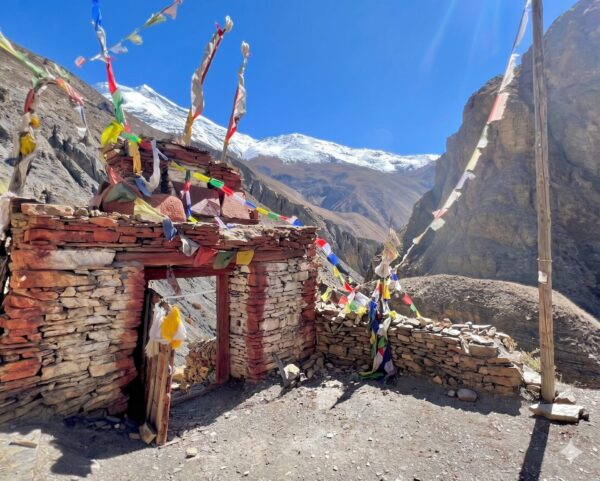
 Altitude:
5,240m/17,191ft.
 Difficulty:
Strenuous