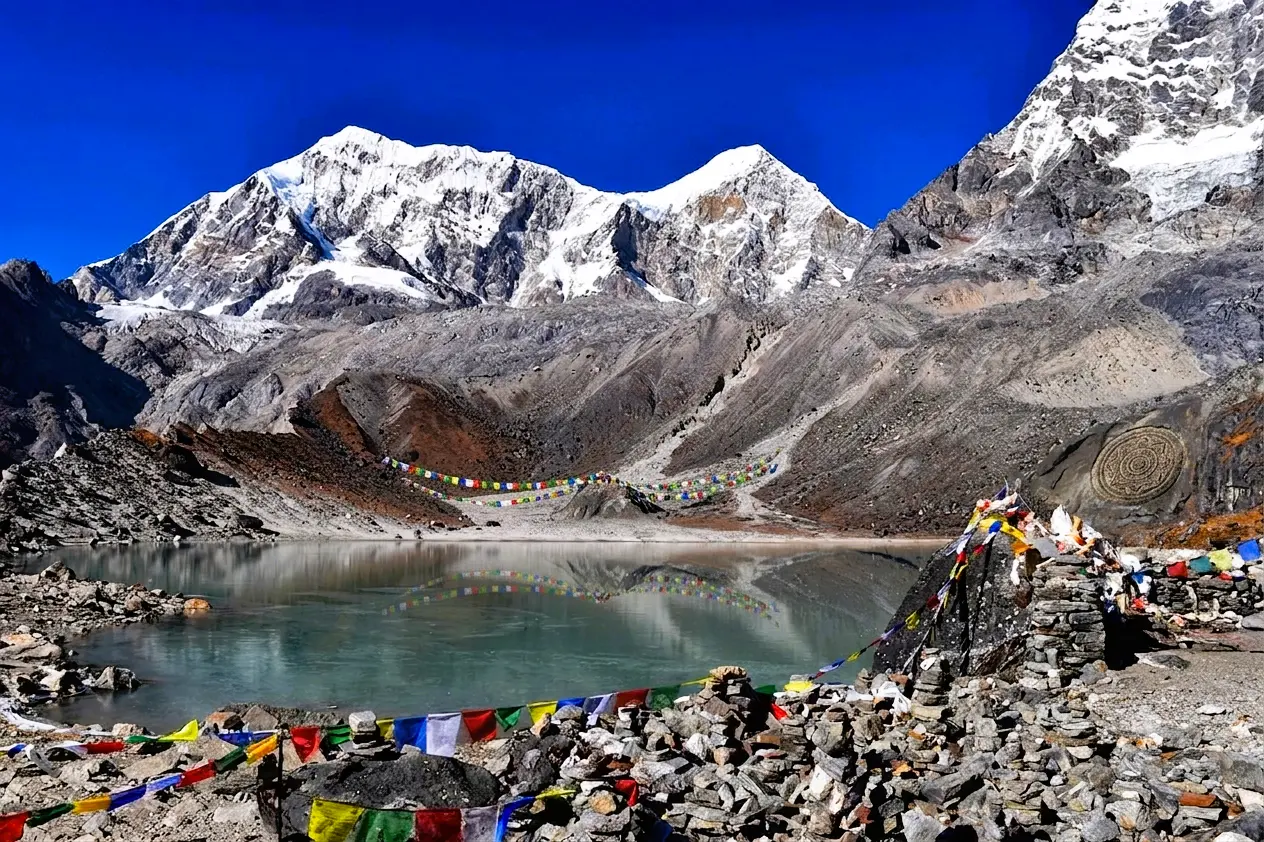
Dudh Kunda Lake Trek Packing List
Footwear:
- Walking boots. A pair of water-repellent boots with ankle support.
- Walking socks.
- Yaktrax
- Gaiters
- Trainers or trail shoes. Can be used in and around the lodge in the afternoons/evenings.
Clothing:
- Waterproof jacket and trousers (Gore-Tex or similar).
- Trekking trousers.
- Soft shell trousers
- Long sleeve shirts (not cotton).
- Mid to heavyweight fleece.
- Sleeveless or body warmer type fleece.
- Thermals or base layer for top & bottom (merino wool or synthetic).
- Fleece pants.
- Medium weight down jacket (e.g.: Nuptse jacket by The North Face).
Hand wear:
- Fleece gloves.
- Warms mittens and/or gloves.
Headwear:
- Wool or fleece hat.
- Sun hat.
- Bandana or scarf.
- Head torch. Bring extra batteries.
- Sunglasses.
Personal Equipment:
- Day pack (you’ll need during the day, such as warm clothes, a jacket, a camera, water bottles, snacks, and a personal first aid kit. Keep your daypack under 5 kg. A porter will transport the rest of your personal gear in a duffel or kit bag, which should not exceed 15 kg per trekker. Clearly mark your bag to help identify it easily.)
- Stuff sacks for keeping your gear dry and organized.
- Water bottles (Nalgene wide-mouth bottles are the best).
- Sunscreen and lip salve with a high SPF.
- Water purification tablets (Aqua Tab, Katadyn Micropur, and Chlorine dioxide).
- Favourite snack food.
- Trekking poles (optional).
- Camera with spare batteries and memory cards.
- Insurance certificate.
- Flash Light
- Earplugs (optional).
- Hand sanitizer
- Face Mask
- Sleeping bag (available in Kathmandu for rental at US$ 1.5 per day)
- Fleece or silk liner for your sleeping bag.
- Spare cash for extra expenses like hot shower, boiled water, gadget charging during trek
Traveling:
- Bring a small combination padlock to secure the bag.
- Travel clothes. You will need casual clothing for air travel days and time spent in Kathmandu.
- Toiletry bags include toilet paper, soap, towel, toothbrush, etc.
- Quick dry towel
Personal first aid kit: Note: Nepal Sanctuary Treks provides a comprehensive group first aid kit, but please bring personal medications and other items you might use regularly.
Electricity at Dudh Kunda Lake Trek
Most teahouses along the Dudhkunda Lake Trek have electricity, usually from local hydropower or solar panels. Access often costs a small fee and can be unreliable, especially at higher altitudes.
Lodges at stops like Dhap, Jhapre, Pikey Base Camp, and Junbesi usually provide charging points, often in the communal dining area rather than in rooms. Fees typically range from USD 2–5 (NPR 260–650) per device, though some places may offer free charging.
In the high-altitude areas near Dudhkunda Lake, electricity may be extremely limited or completely unavailable. In such cases, solar chargers are often the only option for emergency power.
For this reason, carrying a power bank and a headlamp with spare batteries is highly recommended. Nepal uses Type C and Type D power plugs, so bringing a universal adapter is also advisable.
Some useful tips:
- To save the batteries from dying fast, avoid looking in the screens, turn the brightness down, and make sure you switch GPS and Wi-Fi options off.
- Furthermore, there’s a high possibility that batteries will drain quickly or gadgets will damage due to cold. You can avoid this by wrapping up the unused devices warmly inside your backpack when not in use.
- For phones and spares batteries that you carry, you can keep them inside the pocket of your down jacket.
Dudh Kunda Lake Trek Difficulty and Physical Fitness
The Dudh Kunda Lake Trek is a moderate trek in Nepal. It does not require technical climbing, but it is more challenging than the Pikey Peak Trek due to its higher altitude and remote, rugged terrain.
Trekkers climb to 4,561–4,592 meters at Dudh Kunda Lake, so proper acclimatization is very important. This helps reduce the risk of altitude sickness. The trail passes through lush forests, rocky alpine ridges, and steep mountain slopes. At higher elevations, the path can be rough, with loose scree and uneven glacial rocks.
Most trekking days involve 5 to 8 hours of walking. The toughest section is the climb from Saharsa Beni to Dudh Kunda Lake, where the trail becomes steep and the air is noticeably thinner.
Facilities along the route are basic, especially when compared to popular treks like Everest Base Camp. In some remote areas, teahouses may be full or closed, so trekkers should be prepared to camp if needed.
To complete the trek comfortably, trekkers need good fitness, strong legs, and mental stamina. Long walking days, steep ascents, cold nights, and changing mountain weather make this trek demanding but deeply rewarding.