Trip Facts

icon-calendar
Trip Duration 22 Days
icon-meter
Trip Difficulty Strenuous
icon-mountain
Maximum Altitude 5,545m/18,192 ft.
icon-season
Best Season To Visit Mid Sep- November/ March- May
icon-group
Average Group Size Min. 2 pax

Trip Overview

Everest High Passes Trek: Cross Majestic Mountain Passes with Stunning Everest Views

Embark on the Everest High Passes Trek, a thrilling 22-day adventure through the breathtaking Khumbu region. Experience towering peaks, serene valleys, and the rich cultural heritage of the Himalayas. Your journey begins in the picturesque Khumbu Valley and takes you deep into Sagarmatha National Park, a UNESCO World Heritage Site.

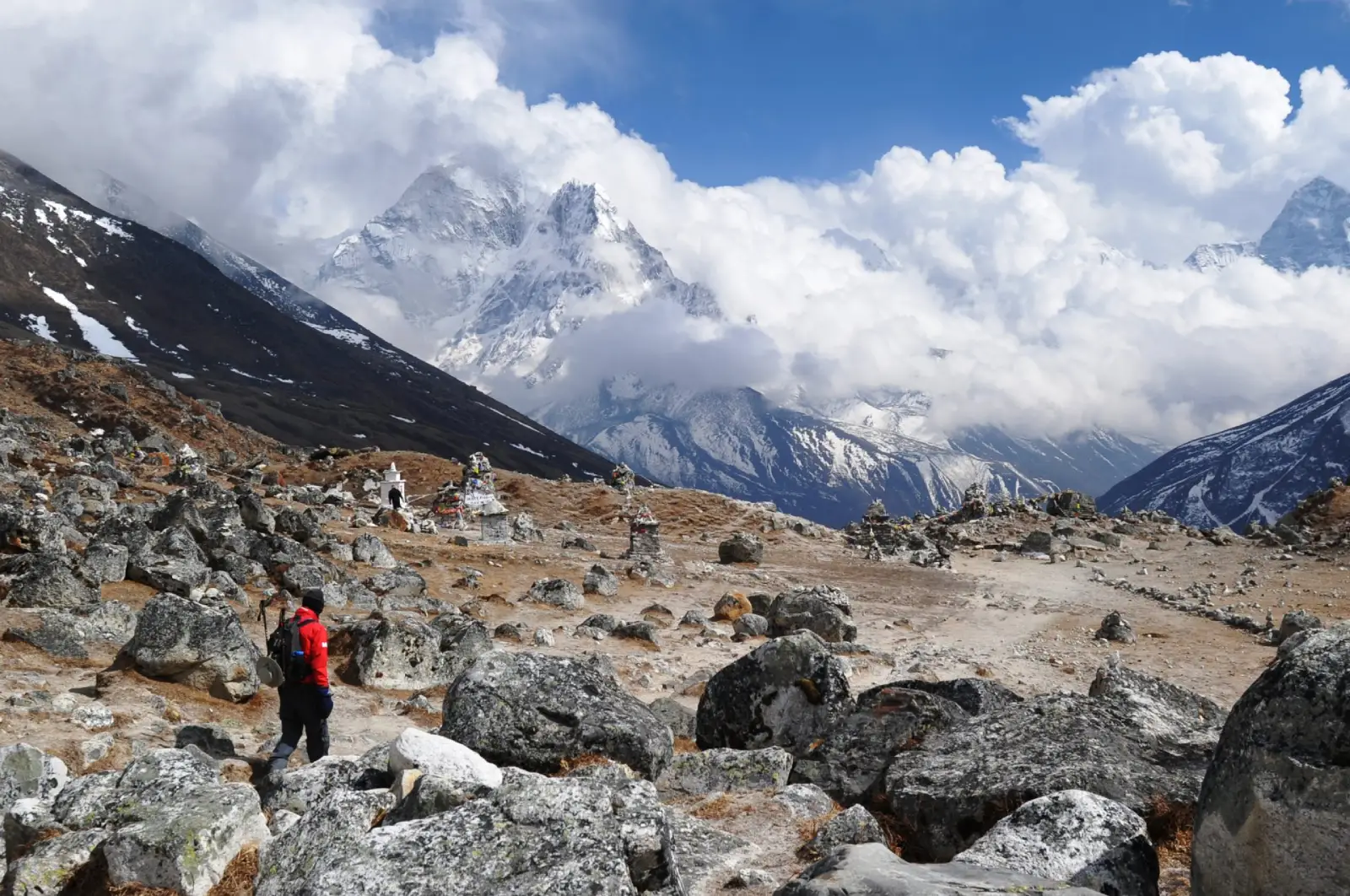
This trek features two iconic high-altitude passes: Cho La Pass (5,420 m / 17,782 ft.) and Renjo La Pass (5,340 m / 17,520 ft.). Along the way, enjoy panoramic views of the world’s tallest mountains, including Mount Everest (8,848 m), Lhotse, Makalu, Cho Oyu, and Ama Dablam.

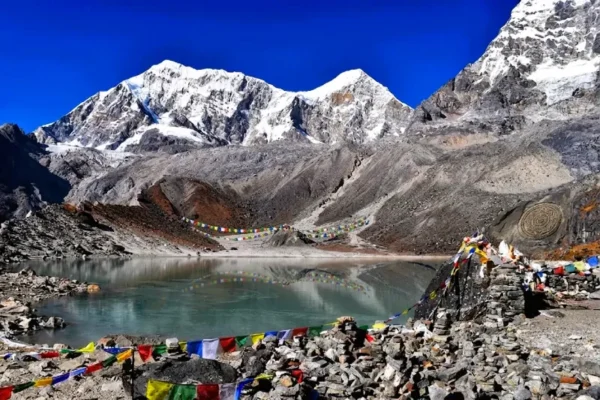
Highlights of the Everest High Passes Trek include famous landmarks like  Kala Patthar, and Gokyo Lakes, offering unforgettable scenery. Cross thrilling suspension bridges over the roaring Dudh Koshi River and spend acclimatization days in key locations such as Namche Bazaar, Dingboche, and Gokyo Valley, perfect for adjusting to the altitude while soaking in Himalayan views.

Sunrise and sunset from vantage points like Kala Patthar and Gokyo Ri create a magical atmosphere. Along the route, experience the Sherpa culture, visiting monasteries, spinning prayer wheels, and walking past colorful prayer flags and Mani walls. Keep an eye out for rare wildlife, such as musk deer, Himalayan Tahr, snow cocks, and pheasants.

Why Choose the Everest High Passes Trek with Nepal Sanctuary Treks

With over 26 years of experience, Nepal Sanctuary Treks offers fully personalized Everest High Passes Trek itineraries. Our expert guides provide cultural insights and ensure safety throughout your journey. Small group sizes, top-notch accommodations, and sustainable practices make this trek both memorable and responsible.

As a Travelife Certified company, we are committed to sustainable tourism. Trekking with us supports local communities and helps minimize environmental impact, making your adventure both memorable and responsible.

Best Time to Trek Everest High Passes Trek

The ideal time for the Everest High Passes Trek are during spring (March to May) and autumn (October to December). These seasons offer perfect trekking conditions with clear skies, mild temperatures, and stunning views of the Himalayan peaks.

In spring, temperatures average around 17°C, with daytime highs of 25°C on sunny days. However, mornings and evenings above 4,000 meters can dip to -15°C.

In autumn, the average temperature is 15°C, with highs of 20°C on sunny days. At higher altitudes, temperatures can drop to -10°C in the mornings and evenings.

For the best Everest High Passes Trek experience, these seasons ensure optimal weather and spectacular views.

Physical Fitness for the Everest High Passes Trek

The Everest High Passes Trek is challenging and requires good endurance, strength, and mental resilience. Cardiovascular exercises, leg training, and hiking with a backpack are recommended. Yoga or Pilates can improve flexibility and reduce injury risk.

Customizable Everest High Passes Trek

This journey is more than crossing high passes; it’s an adventure through Nepal’s Himalayan culture and scenery. Each itinerary is tailored to your goals, fitness level, and interests. Enjoy tea houses, local villages, and personal experiences along the way.

Ready for your adventure? Contact Nepal Sanctuary Treks today to plan your customized Everest High Passes Trek.

Please note that this is a sample itinerary for the Everest High Passes Trek. We can tailor the program to your specific needs and preferences. For more details, contact our travel expert or email us at info@nepalsanctuarytreks.com.

Note: Below trekking hours, altitudes and distances are approximate, and absolutely for the general idea only.

Trip Itinerary

Day 01: Arrive at Kathmandu Airport

Altitude above sea level: 1,302 m / 4,269 ft.

Driving Time: Approx. 30 minutes, depending on traffic conditions.

Accommodation: Hotel Tibet or similar

Upon your arrival at Tribhuvan International Airport in Kathmandu,, you will be warmly welcomed by our representative, who will be holding a “Nepal Sanctuary Treks” sign outside the terminal to greet you.

You will be transferred to your hotel in a private vehicle. After checking in and freshening up, our representative will meet you to give a detailed briefing on the upcoming itinerary, along with important safety guidelines and hygiene practices to ensure a smooth and enjoyable trek.

Day 02: Leisure day in Kathmandu- Drive Ramechhap

Altitude above sea level: 1,218 m / 3,996 ft. – Ramechhap
Drive Duration: Approx. 4 hrs.
Accommodation: Guest House
After breakfast, take the morning to relax and enjoy at your own pace. In the afternoon, a private vehicle will take you to Ramechhap.

Day 03: Flight to Lukla –Hike to Phakding

Altitude above sea level: 2,610 m / 8,563 ft. – Phakding
Driving Duration: Approximately 1 hour
Flight Duration: Around 25 minutes
Flight Time: 6:15 AM
Hiking Duration: 4–5 hrs. approx. (9 km / 5.6 mi)
Ascent: 280 m / 919 ft
Descent: 510 m / 1,673 ft
Accommodation: Tea House Lodge
Meals Included: Breakfast, Lunch, and Dinner
Begin your day with an early breakfast before heading to Ramechhap Airport for a short yet thrilling flight to Lukla (2,840 m / 9,315 ft), renowned for its adventurous mountain runway. During the flight, enjoy stunning views of the majestic Himalayan peaks, including Cho Oyu (8,153 m / 26,781 ft), Lhotse (8,516 m / 27,940 ft), Gauri Shankar (7,145 m / 23,444 ft), and Menlungtse (7,181 m / 23,557 ft).
Upon arrival in Lukla, your Everest Base Camp journey officially begins as you start trekking toward Phakding. The route follows the beautiful Dudh Koshi River, often called the “Milk River” for its milky-blue glacial waters. Along the trail, you’ll pass through traditional Sherpa villages, suspension bridges, and colorful prayer wheels, with Mani stones carved with Buddhist prayers lining the path.
After passing through the quaint villages of Chaurikharka and Ghat, you’ll reach Phakding, a peaceful riverside settlement that serves as your first overnight stop on the remarkable trek to Everest Base Camp.

Day 04: Trek to Namche Bazaar

Altitude above sea level: 3,445 m / 11,302 ft. Namche Bazaar
Hiking Duration: 6–7 hrs. approx.  (11 km / 6.8 mi)
Ascent: 1,150 m / 3,773 ft.
Descent: 320 m / 1,050 ft. 
Accommodation: Tea House Lodge
Meals : Breakfast, Lunch, and Dinner

After a nourishing breakfast, set out on your trek, crossing and re-crossing the Dudh Koshi River, whose milky-blue waters flow from glaciers high in the Himalayas. The trail passes through pine forests, open meadows, and terraced farmlands, offering glimpses of local crops and rural mountain life. Along the way, you’ll likely encounter donkeys and yaks carrying supplies and trekking gear along the narrow paths.

You’ll pass through the picturesque villages of Benkar, Monjo, and Jorsale before tackling a steep ascent of around 600 meters (2,000 ft) leading up to Namche Bazaar—the gateway to the high Himalayas.

Namche Bazaar is the largest and most vibrant town in the Khumbu region, beautifully situated on a natural amphitheater with sweeping views of the Dudh Koshi Valley. This bustling mountain hub offers everything from cafes and bakeries to trekking shops and lodges. Historically, Namche served as a vital trading point where Tibetan yak caravans met Hindu merchants from the lowlands, creating a rich blend of cultures that still thrives today.

Day 05: Acclimatization day in Namche

Altitude above sea level: 3,790 m / 12,434 ft. Khumjung
Hiking Duration: 4–5 hrs. approx.  ( 7.6 km / 4.7 mi)
Ascent: 520 m / 1,706 ft.
Descent: 520 m / 1,706 ft.
Accommodation: Tea House Lodge
Meals : Breakfast, Lunch, and Dinner

Namche is the perfect spot for acclimatization, offering stunning views and plenty of exciting activities. The surrounding landscape is breathtaking, making it an excellent base for exploration. Start with a short hike above Namche to enjoy panoramic views of Mount Everest. Hiking to the nearby villages not only offers stunning views but also help your body acclimate before you venture higher toward Everest Base Camp.

We hike to the picturesque village of Khumjung, a hidden gem in the Khumbu region. Khumjung is home to a monastery said to house a Yeti scalp, the historic Hillary School founded in 1961, and charming homes with signature green roofs. This cultural stop enriches your Everest journey, blending natural beauty with Sherpa heritage.

After exploring Khumjung, we trek back to Namche Bazaar, completing a rewarding day of acclimatization and cultural discovery.

Day 06: Trek to Debuche

Altitude above sea level: 3,770 m / 12,369 ft — Debuche
Hiking Duration: Approximately 6–7 hours (10 km / 6.2 mi)
Ascent: 985 m / 3,232 ft
Descent: 810 m / 2,657 ft
Accommodation: Tea House Lodge
Meals: Breakfast, Lunch, and Dinner

Leaving Namche Bazaar, you trek to Debuche, located about a 30-minute walk from Tengboche, home to the region’s largest monastery. This monastery hosts the vibrant Mani Rimdu festival each autumn shortly after the full moon, featuring religious ceremonies, traditional songs, dances, and legendary performances, and visitors are warmly invited to join. The trail to Debuche winds through rhododendron forests and follows the Dudh Koshi River. While the path is steep at times, it rewards trekkers with spectacular views of Everest, Lhotse, and Nuptse. Along the way, colorful prayer flags and smaller gompas add a rich cultural and spiritual dimension to your journey.

Day 07: Trek to Pangboche

Altitude above sea level: 3,875 m / 12,713 ft — Pangboche
Hiking Duration: Approximately 2–3 hours (3.5 km / 2.17 mi)
Ascent: 240 m / 787 ft.
Descent: 80 m / 262 ft.
Accommodation: Tea House Lodge
Meals: Breakfast, Lunch, and Dinner

After breakfast, you follow winding trails along roaring rivers and through lush forests, gradually entering a more rocky and barren terrain. The scenic route from Debuche crosses the Imja River before reaching Pangboche. In the afternoon, you can relax or explore the nearby monasteries. The village offers a tranquil atmosphere and stunning views of the Everest trekking region. From here, the majestic peaks of Mount Everest, Lhotse, Nuptse, Thamserku, Kangtega, and Ama Dablam can be admired in all their glory.

Day 08: Trek to Dingboche

Altitude above sea level: 4,350 m / 14,268 ft — Dingboche
Hiking Duration: Approximately 3–4 hours (6.5 km / 4.04 mi)
Ascent: 600 m / 1,969 ft.
Descent: 120 m / 394 ft.
Accommodation: Tea House Lodge
Meals: Breakfast, Lunch, and Dinner

Leaving Pangboche behind, the uphill trail continues to Dingboche, offering breathtaking views of Lhotse, Island Peak, Ama Dablam, and the surrounding deep valleys. Trekking along dry, rocky paths through typical Sherpa villages, you gradually ascend, with opportunities to spot wildlife such as musk deer, mountain goats, and various birds. As you approach Dingboche, a Buddhist stupa marks the village’s entrance. Nestled at the base of towering Ama Dablam and other peaks hidden from Namche’s view, Dingboche also serves as the gateway to Chukung Village and Island Peak.

Day 09: Acclimatization at Dingboche

Accommodation: Tea House Lodge
Meals: Breakfast, Lunch, and Dinner

Today is an acclimatization day in Dingboche, giving your body time to adjust to the higher altitude. These shorter hikes are important for your safety and comfort as you continue toward Everest Base Camp.

Acclimatization Hike Options:

Option 1 – Hike to Nangkartshang (Viewpoint): 5,080 m / 16,700 ft; 3 hrs approx. (3.5 km / 2.2 mi); 670 m / 2,198 ft ascent, 670 m / 2,198 ft descent
This rewarding 3-hour hike leads to Nangkartshang Hill, situated above Dingboche on the edge of the Chukkung Valley. From the viewpoint, enjoy sweeping vistas of Lobuche East (6,119 m), Lobuche West (6,145 m), Kangtega (6,685 m), Taboche (6,367 m), Thamserku (6,608 m), and Ama Dablam (6,856 m). This scenic location is perfect for photography, quiet reflection, and soaking in the Himalayan panorama.

Option 2 – Chukung Village Hike: 4,730 m / 15,518 ft; 5–6 hrs approx. (5 km / 3.1 mi); 430 m / 1,411 ft ascent, 13 m / 43 ft descent
For a longer trek, head toward Chukung Village, a key stop for trekkers en route to Island Peak. This 5–6 hour hike provides spectacular views of Ama Dablam, Makalu, and other Himalayan giants. Chukung is a serene village that offers insight into the traditional Sherpa lifestyle and local culture.

Both hikes are designed to aid acclimatization while immersing you in the breathtaking beauty of the Everest Region, preparing you for higher altitudes ahead.

Day 10: Trek to Lobuche

Altitude above sea level: 4,931 m / 16,175 ft.–Lobuche
Hiking Duration: 5 hrs. approx. (12 km / 7.5 mi)
Ascent: 965 m / 3,166 ft.
Descent: 445 m / 1,460 ft.
Accommodation: Tea House Lodge
Meals: Breakfast, Lunch, and Dinner

After an early breakfast, your trek begins with a gradual ascent across a plateau dotted with yak herder shelters. The trail offers stunning views of iconic peaks including Everest, Cholatse, Lobuche, and Pumori, creating a dramatic alpine landscape.

After roughly two and a half hours of steady hiking, you will arrive at Thukla, located beneath the terminal moraine of the Khumbu Glacier, the highest glacier in the world. From here, the path climbs the moraine, passing the Climber and Sherpa Memorial, which honors those who have lost their lives on Everest. Some memorials feature inscriptions recounting heroic efforts, while others are simple cairns, commemorating unsung adventurers.

As you leave the tree line behind, the trail enters the expansive glacial moraine, where the landscape becomes rugged and surreal. Here, you will catch your first glimpse of Kala Patthar, a famous viewpoint offering one of the most breathtaking panoramic views of Mount Everest. The trail then gradually descends into the Lobuche Valley, where you can rest and reflect on the awe-inspiring journey ahead.

Day 11: Trek to Gorak Shep - Everest Base Camp - Gorak Shep

Altitude above sea level: 5,288 m / 17,340 ft.-  Gorak Shep
Hiking Duration: 7–8 hrs. approx. (12 km / 7.5 mi)
Ascent: 490 m / 1,608 ft.
Descent: 260 m / 853 ft.
Accommodation: Tea House Lodge
Meals: Breakfast, Lunch, and Dinner

Today marks the highlight of your Everest Base Camp trek. After breakfast, embark on an exciting hike to Gorak Shep, traversing the rocky terrain of the Khumbu Glacier. Along the way, enjoy breathtaking views of the Khumbu Icefall and towering Himalayan peaks, setting the scene for this epic journey.

After a well-earned lunch in Gorak Shep, continue to Everest Base Camp (5,360 m / 17,590 ft.). The final stretch is adorned with colorful prayer flags, leading you to the iconic base camp where you’ll be surrounded by Mount Everest and the magnificent Himalayas.

Celebrate this once-in-a-lifetime achievement before returning to Gorak Shep to rest and reflect on your trek. Reaching Everest Base Camp is a truly unforgettable milestone in your journey.

Day 12: Kalapathar Sunrise-Descent to Lobuche

Altitude above sea level: 4,930 m / 16,178 ft. — Lobuche
Hiking Duration: 6–7 hrs. approx. (9.11 km / 5.66 mi)
Ascent: 450 m / 1,476 ft.
Descent: 680 m / 2,231 ft.
Accommodation: Tea House Lodge
Meals: Breakfast, Lunch, and Dinner

Start your day early with a rewarding hike to Kala Patthar (5,545 m / 18,192 ft.), the renowned viewpoint offering breathtaking panoramic views of the Himalayas. From here, admire Mount Everest, Nuptse, Lhotse, Pumori, and other towering peaks. Experience the sunrise or sunset casting golden light over the mountains.

After taking in the spectacular scenery, descend back to Gorak Shep for a hearty breakfast. Continue your trek down to Lobuche, where you can relax, unwind, and reflect on your incredible Everest journey.

Day 13: Trek to Cross Dzong La

Altitude above sea level: 5,200 m / 17,060 ft — Dzong La
Hiking Duration: Approximately 4 hours (6.5 km / 4 mi)
Ascent: 117 m / 384 ft
Descent: 220 m / 722 ft
Accommodation: Tea House Lodge
Meals: Breakfast, Lunch, and Dinner

After breakfast, leave Lobuche behind and trek toward Dzong La. The trail gently descends along the right bank of the Dudh Koshi River, passing through local villages and the scenic Chola Tso Lake before arriving at Dzong La. This village lies at the base of Cho La Pass, connecting the main Everest Base Camp trek with the Gokyo region. During summer, the area serves as grazing land for yak herders. From here, enjoy breathtaking views of Ama Dablam, Taboche, and a distant glimpse of Cholatse Lake.

Day 14: Trek to Thangnak

Altitude above sea level: 4,620 m / 15,157 ft. — Thangnak
Hiking Duration: Approximately 7–8 hours (8.1 km / 5.0 mi)
Ascent: 690 m / 2,264 ft.
Descent: 830 m / 2,723 ft.
Accommodation: Tea House Lodge
Meals: Breakfast, Lunch, and Dinner

After an early breakfast, begin a long but rewarding trek with spectacular views of Cholatse. The trail starts with a lateral ascent along moraines, passing small, rushing lakes. The stunning scenery provides motivation throughout the uphill trek. After several hours, you reach Cho La Pass (5,400 m / 17,717 ft), where panoramic views of snow-capped peaks—Taboche, Cholatse, Baruntse, and Thamserku.

After enjoying the vistas, descend toward the Ngozumpa Glacier, the longest glacier in Nepal. Continue trekking until you reach Thangnak, a small Sherpa settlement nestled beneath towering rock walls, located just a short distance from the glacier.

Day 15: Trek to Gokyo

Altitude above sea level: 4,800 m / 15,748 ft. — Gokyo
Hiking Duration: Approximately 2 hours (4 km / 2.5 mi)
Ascent: 142 m / 466 ft.
Descent: 63 m / 207 ft.
Accommodation: Tea House Lodge
Meals: Breakfast, Lunch, and Dinner

After breakfast, cross the Ngozumpa Glacier and trek along the lateral moraine valley. Along the way, you’ll pass the first Gokyo Lake, Longponga Tsho, followed by the larger second lake, Taboche Tsho, where green-headed ducks are often seen swimming in the chilly waters. Continue onward to the picturesque village of Gokyo, located on the shore of the third Gokyo Lake, Dudh Pokhari (Milk Lake), surrounded by majestic mountain scenery.

Day 16: Ascend Gokyo Ri and back to Gokyo Village

Altitude above sea level: 5,486 m / 18,007 ft — Gokyo Ri
Hiking duration: 2 km / 1.2 mi to Gokyo Ri (approx. 2 hours), 9 km / 5.6 mi to Gokyo 5th Lake (approx. 4 hours)
Ascent: 560 m / 1,837 ft
Accommodation: Tea House Lodge
Meals: Breakfast, Lunch, and Dinner

After breakfast, start your day with a hike to Gokyo Ri (5,357 m / 17,575 ft), beginning with a short walk from the village. The ascent is steep, so it’s best to go slowly to enjoy the views and allow your body to acclimatize.

From the summit of Gokyo Ri, you’ll be rewarded with breathtaking panoramic views of Everest, Lhotse, Makalu, Cho Oyu, and surrounding peaks, along with the Ngozumpa Glacier and the Gokyo Lakes below.

After descending from Gokyo Ri, continue trekking north to visit the 4th and 5th Gokyo Lakes. The 4th lake is located north of Gokyo, framed by high cliffs and Himalayan peaks. Proceed further to reach the 5th lake, the farthest point of this part of the hike.

On the return journey, hike back to the 4th lake, then follow the trail to Gokyo Village. This path runs along the northern edge of the Ngozumpa Glacier, the longest glacier in the world. Along the way, enjoy stunning mountain scenery and capture the glacial landscape in photos.

Day 17: Cross Renjo-La and descend to Lungden

Altitude above sea level: 3,867 m / 12,687 ft. — Lungden
Hiking duration: Approximately 7–8 hours (12 km / 7.5 mi)
Ascent: 570 m / 1,870 ft.
Descent: 980 m / 3,215 ft.
Accommodation: Tea House Lodge
Meals: Breakfast, Lunch, and Dinner

After breakfast, leave Gokyo behind for a long and challenging hike toward Lungden. The trail takes you over the Renjo La Pass (5,092 m / 16,703 ft), with several ups and downs along the way. You gradually ascend through grassy areas and rocky terrain, following a winding path that becomes steeper as you approach the pass.

Upon reaching Renjo La, you’ll be rewarded with breathtaking panoramic views of Cho Oyu, Nuptse, Everest, Cholatse, Makalu, and surrounding peaks. After taking in the scenery, begin a steep descent on the west side into a remote valley with stunning landscapes.

Continue downhill through lush meadows toward the Bhote Koshi Valley, following the river until you reach the peaceful village of Lungden, where you will stay overnight.

Day 18: Trek to Namche Bazaar

Altitude above sea level: 3,445 m / 11,302 ft — Namche Bazaar
Hiking duration: Approximately 7–8 hours (18.17 km / 11.29 mi)
Descent: 940 m / 3,084 ft
Accommodation: Tea house lodge
Meals: Breakfast, Lunch, and Dinner

After a hearty breakfast, you start your descent from Lungden to Thame. The hike today includes downhill stretches, flat paths, and a few short uphill sections. You follow a trail along the east side of the river, passing through several charming villages. The path continues steadily downhill to Marulung, where you cross a bridge over the Bhote Koshi River. From there, the trail has a series of ups and downs until you reach Taranga.

You then trek through dense forests filled with diverse flora and fauna. Along the way, you’ll pass traditional Sherpa villages with distinctive stone walls. Continuing downhill, you arrive at Thame, a village with an ancient monastery where you can join evening prayers. Afterwards, you have time to explore the valley and enjoy spectacular views of Teng Kangpoche and Kwangde peaks.

Day 19: Trek to Lukla

Altitude above sea level: 2,840 m / 9,317 ft. — Lukla
Hiking duration: Approximately 7–8 hours (15 km / 9.32 mi)
Ascent: 694 m / 2,276 ft.
Descent: 1,200 m / 3,937 ft.
Accommodation: Tea house lodge
Meals: Breakfast, Lunch, and Dinner

After breakfast, you begin descending to Monjo, then continue down through the Dudh Koshi Valley, passing villages such as Phakding, Ghat, and Cheplung. The sound of the rushing Dudh Koshi River accompanies you throughout the trek. Along the way, you cross several suspension bridges and pass by monasteries and local villages. The landscape remains below the tree line, dotted with terraced farms and picturesque settlements.

Once you reach Chaurikharka, you tackle the final climb to Lukla, completing your trek.

Day 20: Flight to Ramechhap-Drive back to Kathmandu

Altitude above sea level: 1,302 m / 4,272 ft — Kathmandu
Flight time: Approximately 25 minutes
Driving duration: Approximately 4 hours
Accommodation: Hotel Tibet or similar
Meals: Breakfast

After an early breakfast, you’ll take a flight from Lukla back to Ramechhap airport. Upon arrival, you will drive for about four hours back to Kathmandu, completing your journey.

Day 21: Cultural Introductory Tour

Altitude above sea level: 1,302 m / 4,272 ft. – Kathmandu
Accommodation: Hotel Tibet or similar
Meal: Breakfast
It’s also a spare day in case of bad weather in Lukla if we could not fly on the scheduled date and time, or we can organize a guided day tour in or around Kathmandu.

9:00 AM: Guided Cultural Tour of Kathmandu Valley
Start your day with a guided cultural tour around Kathmandu Valley. Explore the vibrant Kathmandu with our expert guides, who will share insights into the area’s rich history.

Kathmandu Durbar Square
Visit Kathmandu Durbar Square (Hanuman Dhoka Durbar), a historical royal complex with temples, palaces, and shrines dating back to the 15th century. Key attractions include Kumari Ghar (the house of the living goddess) and Kasthamandap, built from a single tree.

Swayambhunath (Monkey Temple)
Next, head to Swayambhunath, the Monkey Temple, a sacred site for both Hinduism and Buddhism. Admire the stunning white dome and golden spire, while soaking in the serene atmosphere filled with incense and prayer wheels.

PM: Boudhanath Stupa
Visit the massive Boudhanath Stupa, a UNESCO World Heritage Site. It’s a spiritual center for Tibetan culture, surrounded by prayer flags, monks, and devotees chanting ‘Om Mani Padme Hum’.

Pashupatinath Temple
Conclude your tour at the Pashupatinath Temple, one of the most sacred Hindu temples, located along the Bagmati River. Here, you can witness profound spiritual rituals, including the moving sight of open-air cremations, which hold deep cultural significance. After immersing yourself in this sacred experience, you will transfer back to your hotel.

Day 22: Final Departure

Meal: Breakfast

It is time to fly back home, keeping all the incredible experiences of Nepal in mind. The representative from Nepal Sanctuary Treks will transfer you to TIA airport, where you should check in 3 hours prior to your scheduled flight.

Price Included

What's Included

  • Private Airport transfers,
  • Private transfer to/from Ramechhap
  • Internal flight: Ramechhap-Lukla –Ramechhap
  • 3 nights in Hotel Tibet or similar in Kathmandu with breakfast
  • 1-night hotel in Ramechhap with breakfast
  •  Tea house lodges during the trek on full board
  • Guided Kathmandu sightseeing tour with entrance fees
  • Trek Permit & National Park Fees,
  • Staff insurance on the trek,
  • Trek guide, assistant guide & porter/s
  • Map

What's not Included

  • Additional tours and meals that are not mentioned
  • Beverage,
  • Personal equipment,
  • Personal bills
  • Visas
  • Excess baggage beyond 15 kilos, including day pack
  • Insurance (for cancellation, accident, health, emergency evacuation and loss, theft of or damage to baggage and personal effects), liability insurance
  • Tips

Faqs

When is the best season to embark Everest Base Camp?

The best times for the trek are the pre-monsoon season (March to May) and the post-monsoon season (September to November), offering more stable weather conditions.

Are there any ATM facilities available during the Everest Base Camp trek?

During the Everest Base Camp trek, ATM access is limited to Lukla and Namche Bazaar. Lukla has a few ATMs, but they can be unreliable due to power and connectivity issues. Namche Bazaar has more dependable ATMs, but it’s still wise to carry spare cash. As you ascend beyond Namche, the availability of ATMs decreases considerably, and there are no ATMs in villages such as Tengboche, Dingboche, and Lobuche.

How many guides/assistant will be with us during the Everest Base Camp trek?

For a trek with 2 members, there will be 1 guide and 1 porter. If there are more than 5 participants, an additional assistant guide will also be provided.

What essential items should be included in the packing list for the Everest Base Camp Trek?

Please find the comprehensive packing list for Everest Base Camp Trek:

Footwear:

  • Walking boots. A pair of water-repellent boots with ankle support.
  • Gaiters. A pair used to keep boots dry if walking through deep snow.
  • Walking socks.
  • Yaktrax
  • Trainers or trail shoes. Can be used in and around the lodge in the afternoons/evenings.

Clothing:

  • Waterproof jacket and trousers (Gore-Tex or similar).
  • Trekking trousers.
  • Long sleeve shirts (not cotton).
  • Micro fleece.
  • Mid to heavyweight fleece.
  • Sleeveless or body warmer type fleece.
  • Thermals or base layer for top & bottom (merino wool or synthetic).
  • Fleece pants.
  • Medium weight down jacket (e.g.: Nuptse jacket by The North Face).

Handwear:

  • Fleece gloves.
  • Warms mittens and/or gloves.

Headwear:

  • Wool or fleece hat.
  • Sun hat.
  • Bandana or scarf.
  • Head torch. Bring extra batteries.
  • Sunglasses.

Personal Equipment:

  • Sleeping bag (Note: it is possible to rent this in Kathmandu for about $1 per day).
  • Day packs large enough to carry water bottles, a camera, lunch, and extra clothing.
  • Stuff sacks for keeping your gear dry and organized.
  • Two water bottles (Nalgene wide-mouth bottles are the best).
  • Sunscreen and lip salve with a high SPF.
  • Water purification tablets (Pristine, Biox Aqua, or Aqua Mira).
  • Favorite snack food.
  • Trekking poles (optional).
  • Camera with spare batteries and memory cards.
  • Insurance certificate.
  • Earplugs (optional).
  • Baby wipes
  • Hand sanitizer
  • Face Mask

Traveling:

  • Bring a small combination padlock to secure the bag.
  • Travel clothes. You will need casual clothing for air travel days and time spent in Kathmandu.
  • Toiletry bags include toilet paper, soap, towel, toothbrush, etc.

Personal first aid kit:

Note: we provide a comprehensive group first aid kit, but please bring personal medications and other items you might use regularly, such as:

  • Any personal medications.
  • Malaria prophylactic tablets.
  • Blister treatment (Compeed patches are the best).
  • Rehydration powder, e.g. Dioralyte.
  • Analgesics (paracetamol, ibuprofen and aspirin).
  • Plasters and zinc oxide tape.
  • Throat lozenges.
  • Diamox (helps with acclimatization).

Can we expect attached bathrooms and hot water at each overnight stay throughout the Everest Base Camp Trek?

The bathroom and hot water facilities are available in City hotels. However, if you prefer to have a room with an attached bathroom, then an additional cost is applicable. Please note that these facilities are available from Lukla till Dingboche. Further, hot water costs between Rs.200-Rs.400 per liter (approx.) in a teahouse

How challenging is the Everest Base Camp trek, and what level of physical fitness is recommended?

EBC Trek considered a strenuous trek that requires a good level of fitness, a good training plan prior to your trip will make the trek that much more enjoyable. Depending on your individual fitness level, a few weeks to a few months of prior training should be enough to get you into shape for the Everest Base Camp Trek.

Starting from Lukla, you’ll be walking an average of 15 km a day for around 5 – 7 hours. Whilst some days will be far easier than others. Typically, the trek starts from 2,600m, Lukla Airport and reaching a high point of just beyond at Kala Patthar (5,500m). For acclimatization, the itinerary includes rest days which would give you enough time to acclimatize yourself with the altitude.

How should altitude sickness be managed during the Everest Base Camp trek, and is the trek safe?

Proper acclimatization is key for altitude sickness management. The trek is generally safe with adequate preparation, but awareness of altitude-related risks is crucial.

Will I be able to purchase the pre-paid WIFI card for Everest Link at the airport? 

You can use either NCELL or NTC prepaid cards until you get to Pangboche. However, after Pangboche, the internet and mobile signal become less reliable. Also you can use paid WI-FI available in teahouse lodges. Once you go past Pangboche, Everest Link becomes operational, and you can buy it for NPR 700, valid for one day.

How can travelers acquire SIM cards in Nepal for their mobile phones upon arrival at Kathmandu International Airport?

Both Ncell and NTC telecom companies provide free prepaid SIM cards to international travelers upon arrival at the airport. You can obtain them with a copy of your passport and a passport-sized photo.

What cultural considerations and etiquettes should I keep in mind while trekking?

Trekking etiquette in Nepal emphasizes the importance of responsible tourism: when trekking, practice respect for local culture by dressing modestly and asking permission before taking photos. Leave no trace, stick to marked trails, and adhere to local guidelines. Greet others with “Namaste,” acclimatize properly, and stay hydrated. Support the local economy by purchasing local goods. Enjoy your trek while making a positive difference in the communities you visit! For more information please refer to Responsible Travel

Are there any health risks or altitude sickness concerns on the trek?

Altitude sickness can be a serious risk for trekkers at high elevations, so it’s important to acclimatize properly. Start slowly to give your body time to adjust, and stay hydrated, as dehydration can worsen symptoms. Watch for signs of altitude sickness, like headaches, nausea, and dizziness. Consulting a healthcare professional before your Nepal trek can provide helpful advice for a safer experience. The team at Nepal Sanctuary Treks carries a portable altitude chamber (PAC), an oximeter, and the Lake Louise form during the trek. They monitor each traveler’s condition and track their progress. Additionally, the expert team at Nepal Sanctuary Treks carefully designs itineraries that include acclimatization days, allowing trekkers to gradually adjust to the changing altitude. These carefully planned rest days are strategically placed throughout the trek to help minimize the risk of altitude sickness. . Read more on Altitude Sickness

Are there communication facilities along the trek?

Communication facilities during the trek can vary widely. While mobile phone services are available throughout Nepal, including at Everest Base Camp, the quality of reception differs by location. The main communication technologies used on the trails are NTC and Ncell SIM cards, though their coverage is inconsistent. Some trails may have no service, while popular routes often provide Wi-Fi. To ensure reliable contact when necessary, the Nepal Sanctuary Treks team carries a satellite phone or portable communication device.

Can I charge my electronic devices during trek?

While trekking in Nepal, you can charge your devices at most lodges and tea houses, especially on popular trekking routes. Charging usually costs USD 1-5, though many places offer it for free. As you trek higher, electricity becomes less reliable, so it’s advisable to bring a power bank. Nepal uses two-pin (type C) and three-pin (type D) plugs, so you can pack adapters or buy them in Kathmandu.


Can I rent or buy trekking equipment in Nepal?

Yes, you can rent or purchase trekking gear in Kathmandu or Pokhara, including items like sleeping bags, down jackets, and trekking poles. Make sure to check the quality and condition of rented equipment. For instance, sleeping bags are available for rent at rates ranging from USD 1 to USD 1.50 per day. For more information, please contact info@nepalsanctuarytreks.com.

Do I need travel insurance covered while trekking/traveling in Nepal?

Insurance is a compulsion as anything can happen in the trek; for emergency rescue, personal liabilities, cancellation, loss of luggage and other reasons if necessary.

Why should I trek with Nepal Sanctuary Treks (NST)?

For over two decades, Nepal Sanctuary Treks has been crafting sustainable and bespoke trekking adventures in Nepal. Our deep knowledge of the region allows us to meticulously tailor itineraries to guest’s specific desires, ensuring a transformative journey. Committed to sustainability, our efforts are recognized by the prestigious Travelife Certified Award. Nepal Sanctuary Treks actively empowers local communities by supporting female-owned businesses and promoting girls’ education. Learn more


Ask Our Travel Expert

Affiliations & Recommendations

Everest High Passes Trek