Trip Facts

icon-calendar
Trip Duration 16 Days
icon-meter
Trip Difficulty Moderate
icon-mountain
Maximum Altitude 5,357m/19,216 ft.
icon-season
Best Season To Visit Mid Sep- Nov / March- May
icon-group
Average Group Size Min. 2 pax

Trip Overview

Explore the breathtaking Gokyo Lakes Trek, a serene alternative to the busy Everest Base Camp route. This high-altitude adventure takes you through pristine glacial landscapes, traditional Sherpa villages, and the world’s highest freshwater lakes.

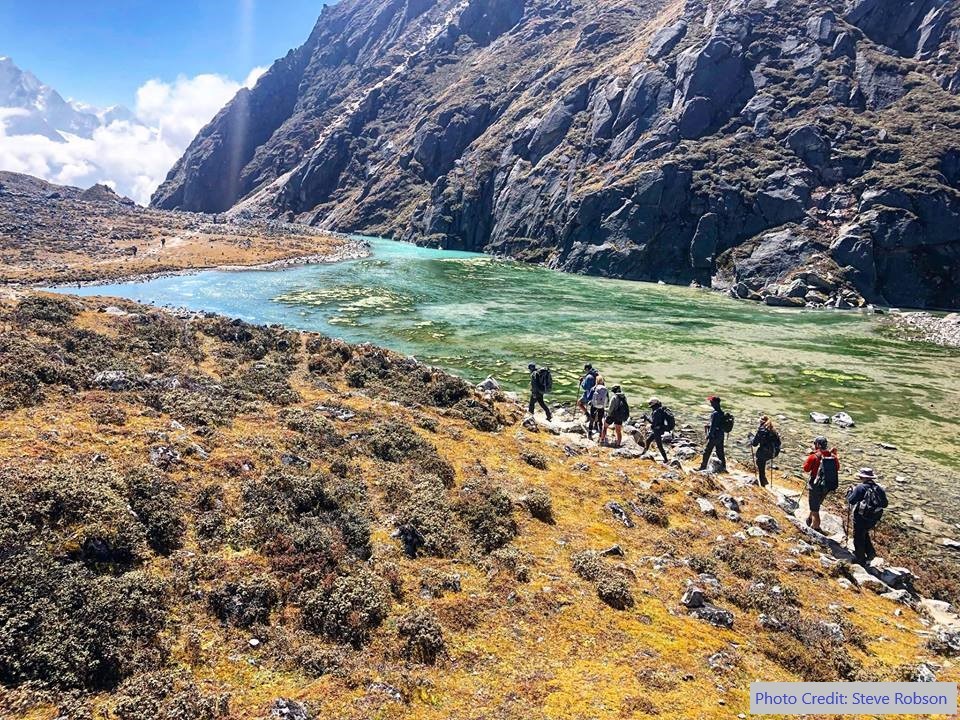
The trek winds through the Gokyo Valley, passing lush alpine forests and villages like Namche, Dole, and Machhermo. Walk beside the Ngozumpa Glacier, the longest in the Himalayas, and experience an icy, otherworldly landscape few travelers see.

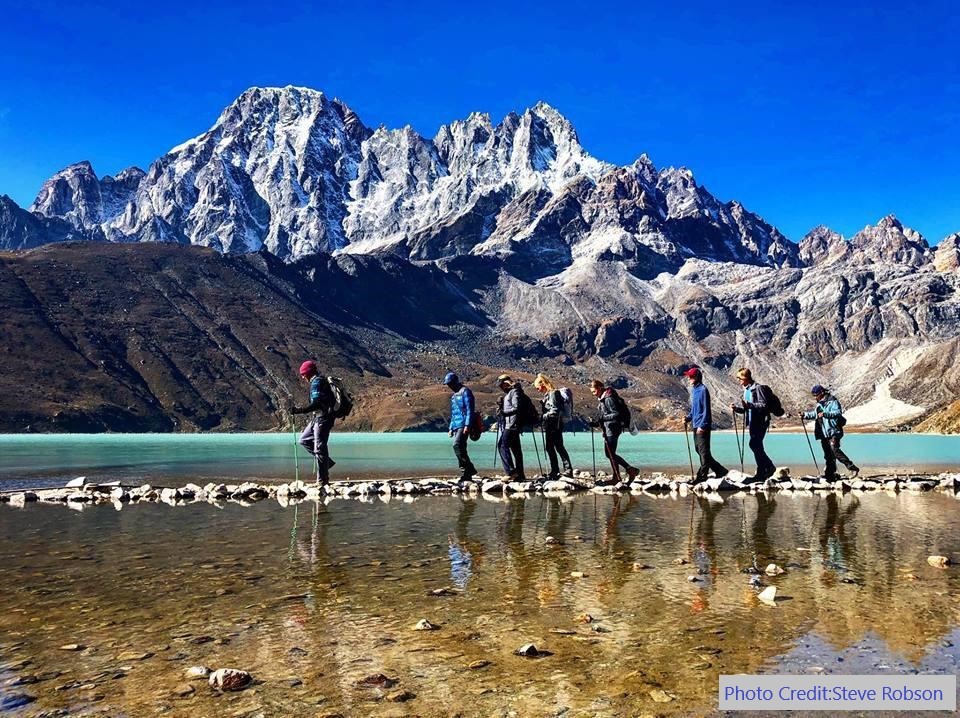
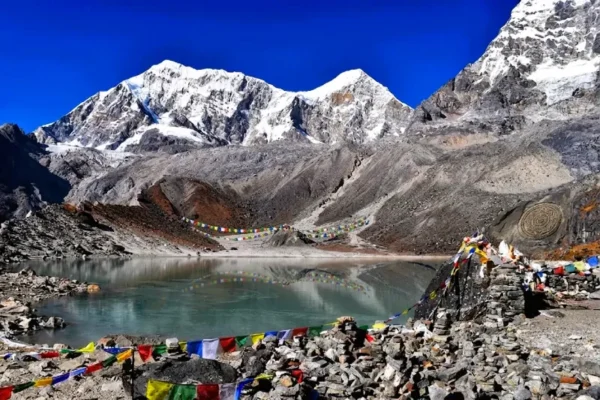
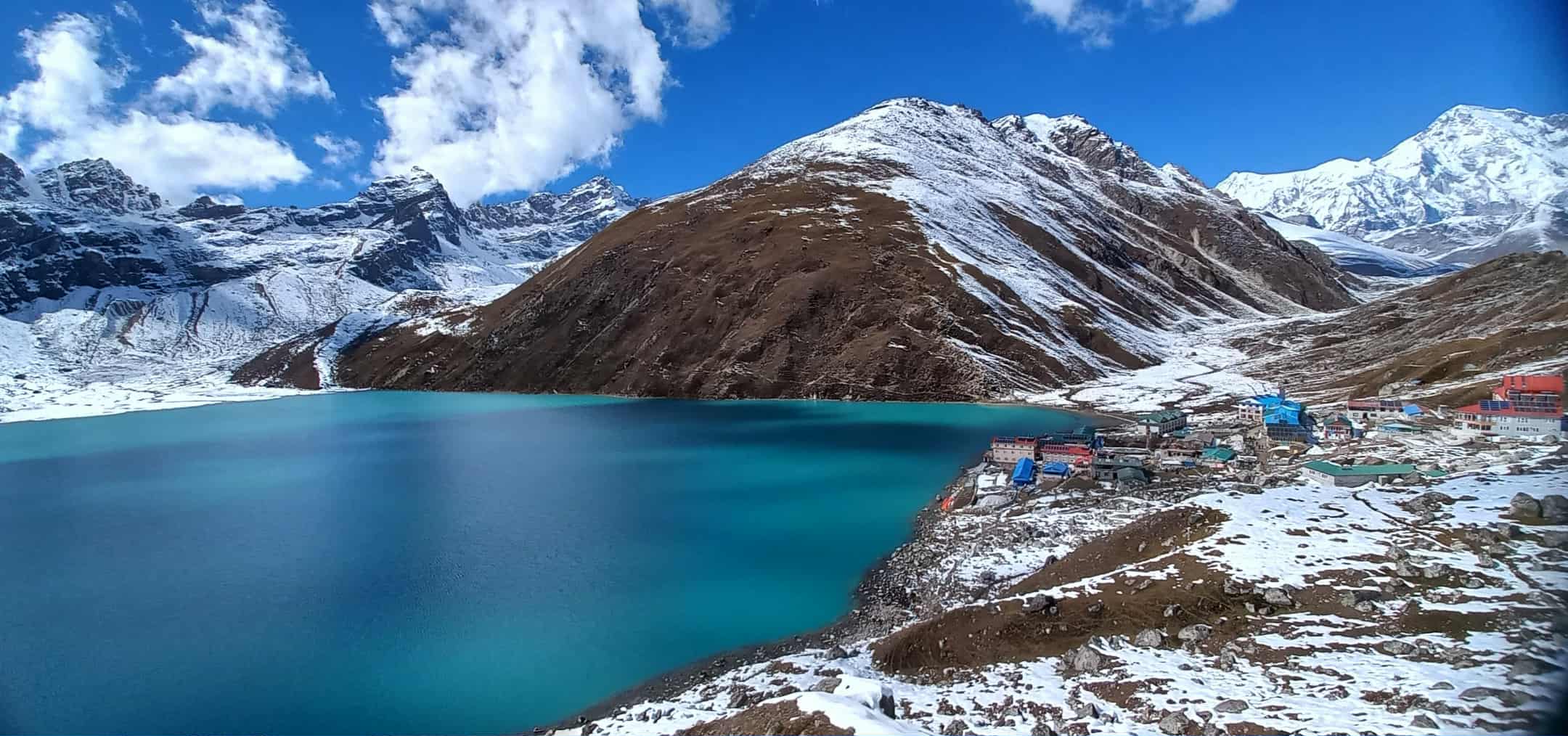
At the heart of the journey are the six stunning Gokyo Lakes, shimmering in shades of blue and green, and the peaceful village of Gokyo, with stone lodges and grazing yaks.

A highlight of the trek is Gokyo Ri (5,360 m), offering a sunrise view over four 8,000-meter peaks: Everest, Lhotse, Makalu, and Cho Oyu. From this vantage point, the combination of glaciers, lakes, and towering mountains creates one of the most unforgettable sights in the Himalayas.

Perfect for adventurers seeking scenic, less crowded trekking experiences, the Gokyo Lakes Trek blends natural beauty, cultural insight, and a sense of peaceful exploration.

Why Choose the Gokyo Lakes Trek with Nepal Sanctuary Treks?

At Nepal Sanctuary Treks, we provide a personalized Gokyo Lakes Trek experience. With over 27 years of expertise in the field, we customize Gokyo Lakes Trek itineraries to suit your pace and preferences.

Our experienced Sherpa guides share their invaluable knowledge, giving you insights into the rich local culture while keeping you safe throughout the journey. With extensive experience on the Gokyo Lakes Trek, our professional team knows the region inside out and ensures a smooth, enjoyable trek.

We keep our group sizes small and follow strict safety protocols. This allows us to give you personalized attention and ensure your safety. We work with trusted suppliers to provide carefully selected accommodations and reliable transportation for your Gokyo Lakes Trek. Our goal is to make every trek stress-free and safe for all our trekkers.

As a Travelife Certified company, we are dedicated to promoting sustainable and eco-friendly travel. When you choose our Gokyo Lakes Trek , you support local communities and help minimize environmental impacts, making responsible tourism a key part of your adventure. Your safety, comfort, and unforgettable experience are our top priorities.

Customizable Gokyo Lakes Trek Itinerary

This is a sample itinerary of the Gokyo Lakes Trek. We can customize the program according to your needs and preferences, ensuring a trek experience that suits your pace, interests, and adventure style.

Contact us today to plan your custom Gokyo Lakes Trek.

Note: Below trekking hours, altitudes, and distances are approximate, and absolutely for the general idea only.

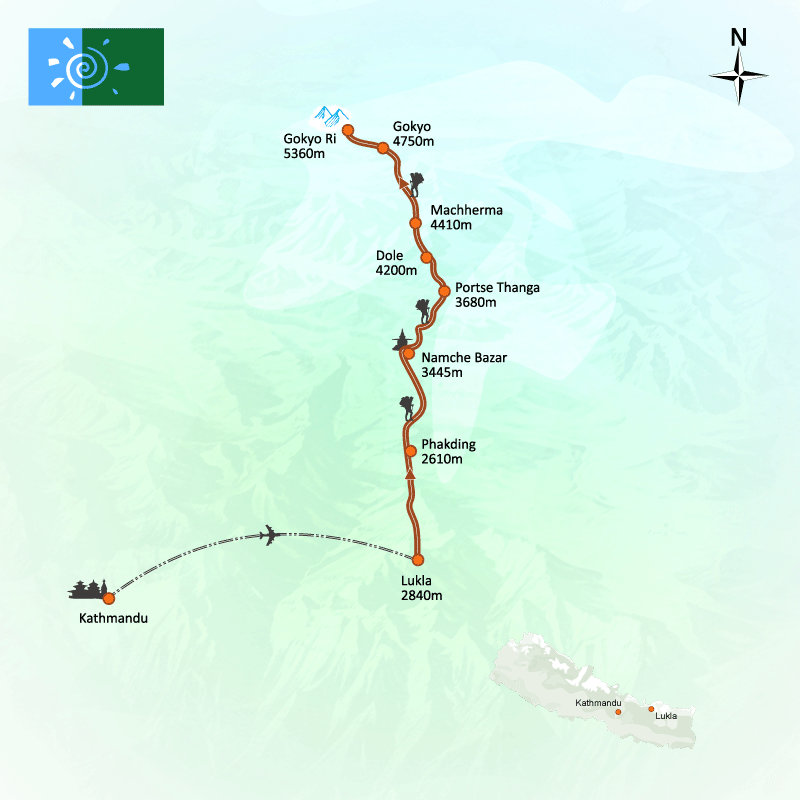
Gokyo Lakes Trek Altitude Chart

Trip Itinerary

Day 01: Arrive at Kathmandu Airport

Altitude above sea level: 1,302 m / 4,269 ft.

Driving Time: Approx. 30 minutes, depending on traffic conditions.

Accommodation: Hotel Tibet or similar

Upon your arrival at Tribhuvan International Airport in Kathmandu,, you will be warmly welcomed by our representative, who will be holding a “Nepal Sanctuary Treks” sign outside the terminal to greet you.

You will be transferred to your hotel in a private vehicle. After checking in and freshening up, our representative will meet you to give a detailed briefing on the upcoming itinerary, along with important safety guidelines and hygiene practices to ensure a smooth and enjoyable trek.

Day 02: Leisure day and trek preparation- Drive Ramechhap in the afternoon

Altitude above sea level: 1,218 m / 3,996 ft – Ramechhap
Drive Duration: Approx. 4 hrs.
Accommodation: Guest House
Meal: Breakfast
After breakfast, take the morning to relax and enjoy at your own pace. In the afternoon, a private vehicle will take you to Ramechhap.

Day 03: Flight to Lukla –Hike to Phakding

Altitude above sea level: 2,610 m / 8,563 ft. – Phakding
Driving Duration: Approximately 1 hour
Flight Duration: Around 25 minutes
Flight Time: 6:15 AM
Hiking Duration: 4–5 hrs. approx. (9 km / 5.6 mi)
Ascent: 280 m / 919 ft
Descent: 510 m / 1,673 ft
Accommodation: Tea House Lodge
Meals Included: Breakfast, Lunch, and Dinner
Begin your day with an early breakfast before heading to Ramechhap Airport for a short yet thrilling flight to Lukla (2,840 m / 9,315 ft), renowned for its adventurous mountain runway. During the flight, enjoy stunning views of the majestic Himalayan peaks, including Cho Oyu (8,153 m / 26,781 ft), Lhotse (8,516 m / 27,940 ft), Gauri Shankar (7,145 m / 23,444 ft), and Menlungtse (7,181 m / 23,557 ft).
Upon arrival in Lukla, your Everest Base Camp journey officially begins as you start trekking toward Phakding. The route follows the beautiful Dudh Koshi River, often called the “Milk River” for its milky-blue glacial waters. Along the trail, you’ll pass through traditional Sherpa villages, suspension bridges, and colorful prayer wheels, with Mani stones carved with Buddhist prayers lining the path.
After passing through the quaint villages of Chaurikharka and Ghat, you’ll reach Phakding, a peaceful riverside settlement that serves as your first overnight stop on the remarkable trek to Everest Base Camp.

Day 04: Trek to Namche Bazaar

Altitude above sea level: 3,445 m / 11,302 ft. Namche Bazaar
Hiking Duration: 6–7 hrs. approx.  (11 km / 6.8 mi)
Ascent: 1,150 m / 3,773 ft.
Descent: 320 m / 1,050 ft. 
Accommodation: Tea House Lodge
Meals : Breakfast, Lunch, and Dinner

After a nourishing breakfast, set out on your trek, crossing and re-crossing the Dudh Koshi River, whose milky-blue waters flow from glaciers high in the Himalayas. The trail passes through pine forests, open meadows, and terraced farmlands, offering glimpses of local crops and rural mountain life. Along the way, you’ll likely encounter donkeys and yaks carrying supplies and trekking gear along the narrow paths.

You’ll pass through the picturesque villages of Benkar, Monjo, and Jorsale before tackling a steep ascent of around 600 meters (2,000 ft) leading up to Namche Bazaar—the gateway to the high Himalayas.

Namche Bazaar is the largest and most vibrant town in the Khumbu region, beautifully situated on a natural amphitheater with sweeping views of the Dudh Koshi Valley. This bustling mountain hub offers everything from cafes and bakeries to trekking shops and lodges. Historically, Namche served as a vital trading point where Tibetan yak caravans met Hindu merchants from the lowlands, creating a rich blend of cultures that still thrives today.

Day 05: Acclimatization day in Namche

Altitude above sea level: 3,790 m / 12,434 ft. Khumjung
Hiking Duration: 4–5 hrs. approx.  ( 7.6 km / 4.7 mi)
Ascent: 520 m / 1,706 ft.
Descent: 520 m / 1,706 ft.
Accommodation: Tea House Lodge
Meals : Breakfast, Lunch, and Dinner

Namche is the perfect spot for acclimatization, offering stunning views and plenty of exciting activities. The surrounding landscape is breathtaking, making it an excellent base for exploration. Start with a short hike above Namche to enjoy panoramic views of Mount Everest. Hiking to the nearby villages not only offers stunning views but also help your body acclimate before you venture higher toward Everest Base Camp.

We hike to the picturesque village of Khumjung, a hidden gem in the Khumbu region. Khumjung is home to a monastery said to house a Yeti scalp, the historic Hillary School founded in 1961, and charming homes with signature green roofs. This cultural stop enriches your Everest journey, blending natural beauty with Sherpa heritage.

After exploring Khumjung, we trek back to Namche Bazaar, completing a rewarding day of acclimatization and cultural discovery.

Day 06: Trek to Phortse Tenga

Altitude above sea level: 3,860 m / 12,664 ft.- Phortse Tenga
Hiking Duration: 5–6 hrs. approx. (5.7 km / 3.5 mi)
Ascent: 530 m / 1,740 ft.
Descent: 290 m / 951 ft.
Accommodation: Tea House Lodge
Meals: Breakfast, Lunch, and Dinner

After breakfast, the trek starts from Namche at 3,440 m (11,286 ft) and heads first to Mong La, a point of higher elevation. From Mong La, the trail descends toward the Dudh Koshi River at Phunki Tenga, located at around 3,250 m. After crossing a suspension bridge, the path continues with a steep uphill climb to reach Phortse Tenga.

Day 07: Trek to Dole

Altitude above sea level: 4,040 m / 13,255 ft.-Dole
Trek Duration: 3–4 hrs. approx.(3.43 km / 2.13 mi)
Ascent: 444 m / 1,457 ft.
Descent: 21 m / 69 ft.
Accommodation: Tea House Lodge
Meals: Breakfast, Lunch, and Dinner

Leaving Phortse Tenga, the trail climbs steeply through lush rhododendron forests, which burst into color during spring. As you gain altitude, the vegetation gradually changes to juniper and conifers, creating a serene alpine atmosphere.

This section of the Gokyo Lakes Trek offers enchanting scenery, with cascading waterfalls, glacier views of Taweche and Cholatse, and your first glimpse of Cho Oyu. Behind you, rugged ridges rise toward Khumblia and other 6,000-meter peaks.

You will arrive at the peaceful village of Dole, nestled in the Dudh Koshi Valley and surrounded by mountains and forest . It is a quiet, scenic stop on this less-crowded Everest region trek.

Day 08: Trek to Machhermo

Altitude above sea level: 4,465 m / 14,652 ft.-Machhermo
Trek Duration: 5–6 hrs. approx. (5.43 km / 3.37 mi)
Ascent: 513 m / 1,683 ft.
Descent: 146 m / 479 ft.
Accommodation: Tea House Lodge
Meals: Breakfast, Lunch, and Dinner

After breakfast, the trail leads toward Gokyo Valley with a steep climb through lush juniper forests. Along the way, you’ll cross suspension bridges and walk along cliff edges, enjoying stunning panoramic views.

You then leave the main trail to follow a rocky path toward the moraine of the Ngozumpa Glacier, the longest glacier in the Himalayas. Your day concludes in the peaceful village of Machhermo, where you will stay overnight.

Spend a restful afternoon relaxing or exploring the village, allowing your body to acclimatize to the altitude before the next day’s trek.

Day 09: Trek to Gokyo

Altitude above sea level: 4,750 m / 15,584 ft.-Gokyo
Trek Duration: 4–5 hrs (7.1 km / 4.41 mi)
Ascent: 461 m / 1,512 ft.
Descent: 113 m / 371 ft.
Accommodation: Tea House Lodge
Meals: Breakfast, Lunch, and Dinner

After breakfast, you ascend toward the Gokyo Valley, passing a cluster of farm buildings at Pangka (4,548 m). The trail then descends slightly to a river fed by the Ngozumpa Glacier, following its scenic course along the glacier’s west side.

The highlight of the day is the breathtaking view of Cholatse’s towering ice face and the shimmering glacial lakes. You’ll climb steeply to the first of the three sacred lakes, marking the transition from the lower to the more remote upper Gokyo Valley.

A gentle walk leads to the second lake, while the summer settlement of Gokyo sits on the east shore of Dudh Pokhari. Here, the emerald green waters perfectly reflect the peaks of Cho Oyu and Gyachung Kang, making the Gokyo Valley one of the world’s most spectacular high-altitude lake systems.

Day 10: Trek to Gokyo Ri Peak

Altitude above sea level: 5,486 m / 18,007 ft — Gokyo Ri
Hiking duration: 2 km / 1.2 mi to Gokyo Ri (approx. 2 hours), 9 km / 5.6 mi to Gokyo 5th Lake (approx. 4 hours)
Ascent: 560 m / 1,837 ft
Accommodation: Tea House Lodge
Meals: Breakfast, Lunch, and Dinner

After breakfast, start your day with a hike to Gokyo Ri (5,357 m / 17,575 ft), beginning with a short walk from the village. The ascent is steep, so it’s best to go slowly to enjoy the views and allow your body to acclimatize.

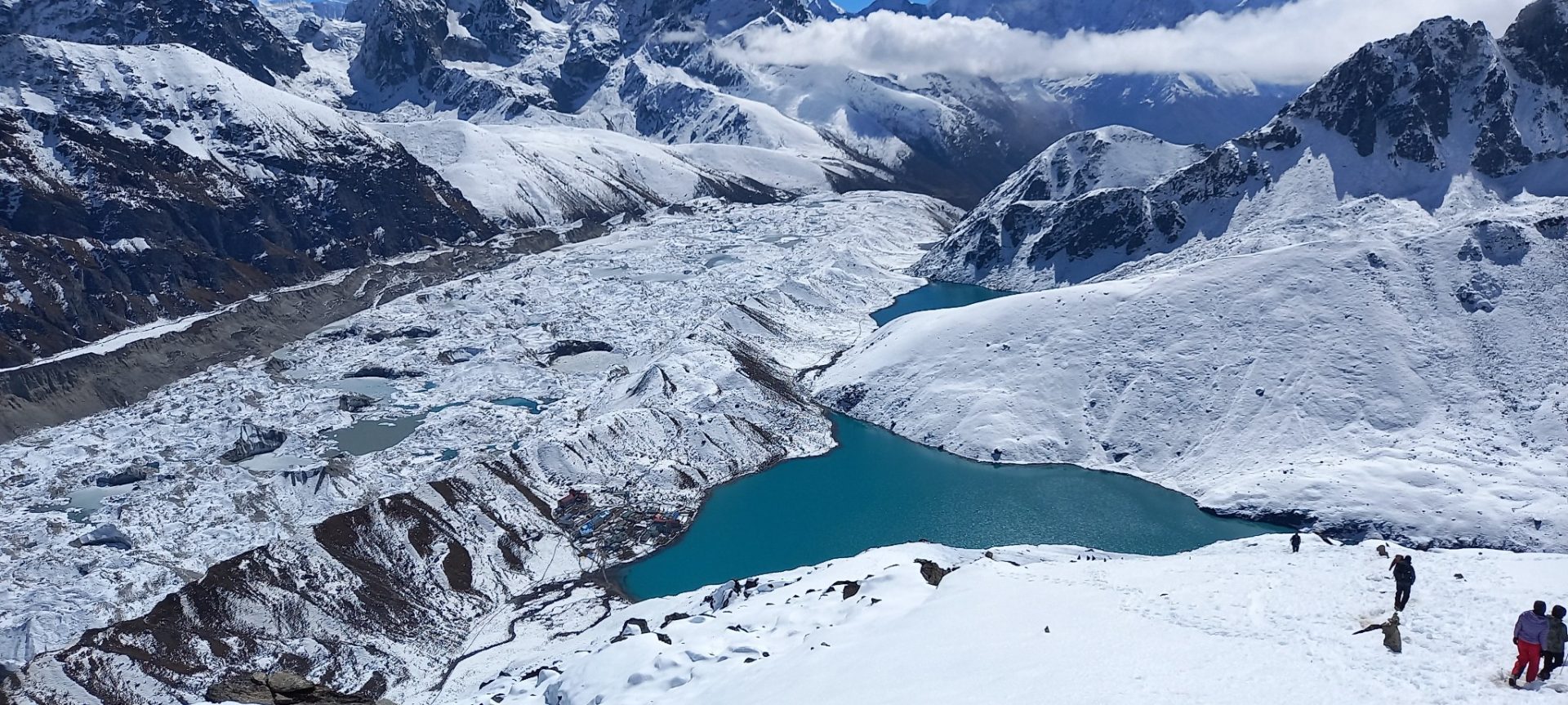
From the summit of Gokyo Ri, you’ll be rewarded with breathtaking panoramic views of Everest, Lhotse, Makalu, Cho Oyu, and surrounding peaks, along with the Ngozumpa Glacier and the Gokyo Lakes below.

After descending from Gokyo Ri, continue trekking north to visit the 4th and 5th Gokyo Lakes. The 4th lake is located north of Gokyo, framed by high cliffs and Himalayan peaks. Proceed further to reach the 5th lake, the farthest point of this part of the hike.

On the return journey, hike back to the 4th lake, then follow the trail to Gokyo Village. This path runs along the northern edge of the Ngozumpa Glacier, the longest glacier in the world. Along the way, enjoy stunning mountain scenery and capture the glacial landscape in photos.

Day 11: Trek to Phortse Village

Altitude above sea level: 3,796 m / 12,454 ft.-Phortse
Hiking Duration: 7–8 hrs. approx. (16.84 km / 10.46 mi)
Ascent: 506 m / 1,660 ft.
Descent: 1,181 m / 3,874 ft.
Accommodation: Tea House Lodge
Meals: Breakfast, Lunch, and Dinner

After breakfast, you retrace your steps back toward Phortse Village. The trail descends past the 2nd and 1st Gokyo Lakes, then continues downhill to Pangka before climbing a hill. Along the way, you pass through Machhermo, Luza Lhafarma, and Dole villages, enjoying the scenic and less-crowded paths of the Gokyo Lakes Trek.

Day 12: Trek to Monjo via Namche Bazaar

Altitude above sea level: 2,850 m / 9,350 ft.- Monjo
Hiking Duration: 6–7 hrs. (16 km / 9.94 mi)
Ascent: 540 m / 1,772 ft.
Descent: 1,485 m / 4,869 ft.
Accommodation: Tea House Lodge
Meals: Breakfast, Lunch, and Dinner

Leaving Phortse, the trail descends steeply through birch and rhododendron forests to the Dudh Koshi River. After crossing, you continue past the villages of Mong La (3,980 m), Sanasa, and Khumjung (3,970 m), before arriving at the bustling Namche Bazaar (3,340 m).

From Namche, the trek passes through dense forests, crosses suspension bridges, and goes by small settlements on the way to today’s stop at Monjo Village. It is a charming, less-crowded spot on the Everest region trail.

Day 13: Trek to Lukla via Gumila Monastery

Altitude above sea level: 2,840 m / 9,318 ft. — Lukla
Hiking Duration: 6 hrs. approx. (13.84 km / 8.6 mi)
Ascent: 954 m / 3,130 ft.
Descent: 935 m / 3,068 ft.
Accommodation: Tea House Lodge
Meals: Breakfast, Lunch, and Dinner

After a hearty breakfast, leave Monjo behind and begin your final trek toward Lukla. The return route takes a slightly different path to avoid retracing your steps through the Sherpa village of Phakding. Following a higher trail along the opposite side of the Dudh Koshi River, you will visit Gumila Monastery, one of the region’s most notable gompas and home to monks of the Gelugpa sect, the youngest school of Tibetan Buddhism.

After exploring the monastery, descend to rejoin the main trail and stop for lunch at Ghat. From there, continue your gentle trek back to Lukla, where you will spend your final night in the Everest region, reflecting on the incredible journey you have completed.

Day 14: Flight to Ramechhap-Drive back to Kathmandu

Altitude above sea level: 1,302 m / 4,272 ft — Kathmandu
Flight time: Approximately 25 minutes
Driving duration: Approximately 4 hours
Accommodation: Hotel Tibet or similar
Meals: Breakfast

After an early breakfast, you’ll take a flight from Lukla back to Ramechhap airport. Upon arrival, you will drive for about four hours back to Kathmandu, completing your journey.

Day 15: Cultural Introductory tour

Altitude above sea level: 1,302 m / 4,272 ft. – Kathmandu
Accommodation: Hotel Tibet or similar
Meal: Breakfast
It’s also a spare day in case of bad weather in Lukla if we could not fly on the scheduled date and time, or we can organize a guided day tour in or around Kathmandu.

9:00 AM: Guided Cultural Tour of Kathmandu Valley
Start your day with a guided cultural tour around Kathmandu Valley. Explore the vibrant Kathmandu with our expert guides, who will share insights into the area’s rich history.

Kathmandu Durbar Square
Visit Kathmandu Durbar Square (Hanuman Dhoka Durbar), a historical royal complex with temples, palaces, and shrines dating back to the 15th century. Key attractions include Kumari Ghar (the house of the living goddess) and Kasthamandap, built from a single tree.

Swayambhunath (Monkey Temple)
Next, head to Swayambhunath, the Monkey Temple, a sacred site for both Hinduism and Buddhism. Admire the stunning white dome and golden spire, while soaking in the serene atmosphere filled with incense and prayer wheels.

PM: Boudhanath Stupa
Visit the massive Boudhanath Stupa, a UNESCO World Heritage Site. It’s a spiritual center for Tibetan culture, surrounded by prayer flags, monks, and devotees chanting ‘Om Mani Padme Hum’.

Pashupatinath Temple
Conclude your tour at the Pashupatinath Temple, one of the most sacred Hindu temples, located along the Bagmati River. Here, you can witness profound spiritual rituals, including the moving sight of open-air cremations, which hold deep cultural significance. After immersing yourself in this sacred experience, you will transfer back to your hotel.

Day 16: Final Departure

Meal: Breakfast

It is time to fly back home, keeping all the incredible experiences of Nepal in mind. The representative from Nepal Sanctuary Treks will transfer you to TIA airport, where you should check in 3 hours before your scheduled flight.

Price Included

What's Included

  • Private Airport transfers,
  • Private transfer to/from Ramechhap
  • Internal flight: Ramechhap-Lukla –Ramechhap
  • 3 nights in Hotel Tibet or similar in Kathmandu with breakfast
  • 1-night hotel in Ramechhap with breakfast
  •  Tea house lodges during the trek on full board
  • Kathmandu sightseeing tour with entrance fees
  • Trek Permit & National Park Fees,
  • Staff insurance on the trek,
  • Trek guide, assistant guide & porter/s
  • Map

What's not Included

  • Additional tours and meals that are not mentioned
  • Beverage,
  • Personal equipment,
  • Personal bills
  • Visas
  • Excess baggage beyond 15 kilos, including day pack
  • Insurance (for cancellation, accident, health, emergency evacuation and loss, theft of or damage to baggage and personal effects), liability insurance
  • Tips

Trip Important Notes

Porter Limit Baggage during trek in Nepal

When trekking in Nepal, the typical porter baggage limit allows porters to carry up to 30 kg of gear. However, for flights to remote trekking destinations like Lukla, Jomsom, Juphal, or Simikot, the baggage allowance is reduced to just 15 kg, including your carry-on items. Your porter will typically carry your luggage between 25-30 kg on the trek. It’s important to pack efficiently to make sure your load is manageable for both you and your porter.

Packing Tips for Your Trek in Nepal

Packing light is key to staying within the porter baggage limit and ensuring a smooth trek. Here are some useful packing tips for trekking in Nepal:

  • Pack only essentials: Choose lightweight clothing, necessary trekking gear, and personal items such as toiletries.

  • Use compact, travel-friendly containers for toiletries and medications to save space.

  • Avoid overpacking: The less you carry, the easier it will be for you and your porter to manage your load.

Important Tips for Managing Your Porter Baggage Limit

If you exceed the 15 kg baggage limit for flights to Lukla and remote destinations, you may incur extra charges. To avoid this, you can store non-essential items at your Kathmandu hotel. Make sure to check your airline’s baggage policy in advance and pack accordingly.

The Nepal Sanctuary Treks team will send you a trip dossier before your journey, which includes details on both porter and flight baggage limits.  Check the baggage allowance : Tara Airlines and Buddha Air 

Gokyo Lakes Trek Temperature

The Gokyo Lakes Trek temperature varies by season: Spring (Mar–May) and Autumn (Sep–Nov) have daytime temperatures of 5–15°C and nights from -10 to 0°C; Summer (Jun–Aug) ranges 8–20°C during the day and 0–10°C at night; Winter (Dec–Feb) is the coldest, with daytime -5 to 5°C and nights dropping to -25 to -15°C.

Temperature Considerations:

  • Effect of Altitude: Temperatures drop roughly 6°C per 1,000 meters climbed.

  • Wind Chill: High-elevation winds can make it feel 5–10°C colder than actual temperatures.

  • Lakes & Ice: By January, Gokyo Lakes are typically frozen, with 10–30 cm of snow on trails.

  • Essential Gear: Since teahouses are unheated, a four-season sleeping bag rated at -20°C (-4°F) is crucial for safety and comfort.

For more information, contact Nepal Sanctuary Treks, a Travelife-certified trekking company, at [email protected].

Gokyo Lakes Trek Communication

Gokyo Lakes Trek communication can be challenging, especially when crossing high-altitude passes like Kongma La, Cho La, and Renjo La. While major villages have some connectivity, remote valleys and passes often have no mobile or Wi-Fi signal.

Local SIM cards work best during the early and mid-trek sections. Coverage is generally reliable up to Namche Bazaar (3,440 m), but signals may disappear at high passes or in remote areas.  Nepal Telecom reaches higher-altitude areas like Gorak Shep and parts of the Gokyo Valley, while Ncell is faster in lower hubs such as Lukla and Namche but often loses signal beyond Dingboche. Carrying both SIMs increases your chances of staying connected.

For Wi-Fi, satellite services are the main option at high-altitude lodges. Everest Link covers villages including Gokyo, Dzongla, Lobuche, and Chhukhung, costing around $20 for 10 GB or $30 for 20 GB, valid for 30 days. Airlink is another option at some lodges for about NPR 600 ($4.50). Speeds above 4,000 m are generally slow, making video calls and large uploads difficult.

For assistance, please contact an expert at Nepal Sanctuary Treks, a Travelife-certified trekking company, at [email protected]

Gokyo Lakes Trek Electricity

Gokyo Lakes Trek Electricity is limited and becomes more expensive at higher altitudes. Lower villages such as Lukla and Namche Bazaar have relatively stable power, while higher settlements like Dole, Machhermo, and Gokyo rely mainly on solar energy, which can lead to frequent outages. Charging points are usually located in teahouse dining halls and are managed by staff. Charging costs typically range from $1–$3 USD in lower villages and $3–$7 USD in Gokyo, payable in Nepali Rupees.

Due to frequent power cuts, crowded outlets, and weather-dependent solar systems, carrying a power bank is strongly recommended. Nepal uses Type C and Type D plugs, so a universal travel adapter is also essential. Cold temperatures at high altitude can drain batteries quickly, so reduce screen brightness, switch off GPS and Wi-Fi when not in use, and keep phones or spare batteries inside your down jacket or wrapped warmly in your backpack to preserve battery life.

For more information, contact Nepal Sanctuary Treks, a Travelife-certified trekking agency at [email protected].

Gokyo Lakes Trek Accommodation

Gokyo Lakes Trek Teahouses are basic high-altitude lodges that provide food and shelter, becoming more rustic the higher you go into the Gokyo Valley. Rooms are usually unheated twin-sharing spaces with wooden beds, thin mattresses, pillows, and blankets. Nights can drop below 0°C, so a four-season sleeping bag rated at least -15°C is essential.

The dining area is the only heated space, warmed by a stove fueled with yak dung, and serves as a social hub for meals. Toilets are shared squat-style, and hot showers may be available as a bucket of heated water for a small extra fee. Gokyo is a remote settlement with only a few lodges near the third lake. Electricity, Wi-Fi, and phone charging are limited and often available at an extra cost.

For more information, contact Nepal Sanctuary Treks, a Travelife-certified company, at [email protected].


Reviews

Jeff Scales, U.S.A. 

We (my partner and I) had an amazing experience trekking to the Gokyo Lakes and Gokyo Ri with Nepal Sanctuary Treks! From the very beginning, Tulsi was incredibly responsive,...

Jeff Scales, U.S.A.

Faqs

Where in Tribhuvan airport I will be paying my visa fee?  I’ve already completed the application online but I’m unclear where I make my payment at the airport.  

Since you completed the process online, you will receive a submission receipt with a barcode. Please print this receipt and bring it with you when you visit the visa fees collection counter. Make sure about the type of visa you will need (15 days, 30 days, or 90 days) and make the payment accordingly. We recommend you bring the exact amount in US currency of the current visa fee while paying at the visa counter.

Next, you should head to the Immigration Desk, taking along your online application form, payment receipts, and your passport. Hand over these documents to the immigration officer to initiate the visa processing procedure.

How can travelers acquire SIM cards in Nepal for their mobile phones upon arrival at Kathmandu International Airport?

Both Ncell and NTC telecom companies provide free prepaid SIM cards to international travelers upon arrival at the airport. You can obtain them with a copy of your passport and a passport-sized photo.

What is the Temperature on the Gokyo Lakes Trek by Season?

The Gokyo Lakes Trek  temperature: Spring/Autumn 5–15°C day, -10–0°C night; Summer 8–20°C day, 0–10°C night; Winter -5–5°C day, -25–-15°C night. Temps drop ~6°C per 1,000 m, with wind chill making it feel 5–10°C colder. Lakes freeze and trails may have 10–30 cm snow in January. Teahouses are unheated, so a -20°C (-4°F) sleeping bag is essential. Contact Nepal Sanctuary Treks: [email protected].

For more information, contact Nepal Sanctuary Treks, a Travelife-certified trekking company, at [email protected].

What are the teahouses like on the Gokyo Lakes Trek?

Gokyo Lakes Trek Teahouses are basic, unheated lodges with shared toilets, limited electricity and Wi-Fi, and hot showers for a fee. Bring a four-season sleeping bag.

For more information, contact Nepal Sanctuary Treks, a Travelife-certified company, at [email protected].

Is electricity available on the Gokyo Lakes Trek?

Gokyo Lakes Trek Electricity is limited and costly at high altitudes; lower villages have stable power, higher settlements rely on solar, so carry a power bank and universal adapter, keep devices warm, and reduce GPS/Wi-Fi usage

For more information, contact Nepal Sanctuary Treks, a Travelife-certified trekking agency at [email protected].


Can children do trek with their families in Nepal?

Yes, children can join our Nepal treks! Nepal Sanctuary Treks offers family-friendly itineraries with experienced guides. Personalized advice ensures a safe and enjoyable adventure for all ages.

What is the Porter Baggage Limit on a Trek in Nepal?

Porters in Nepal usually carry 25 to 30 kg, but flights to remote destinations like Lukla or Jomsom have a 15 kg limit including carry-on. Pack only essentials, such as lightweight clothing, trekking gear, and toiletries, to stay within limits. Extra baggage may incur charges, so store non-essentials in Kathmandu and check airline rules with Tara Airlines or Buddha Air.

Can I rent or buy trekking equipment in Nepal?

Yes, you can rent or purchase trekking gear in Kathmandu or Pokhara, including items like sleeping bags, down jackets, and trekking poles. Make sure to check the quality and condition of rented equipment. For instance, sleeping bags are available for rent at rates ranging from USD 1 to USD 1.50 per day. For more information, please contact [email protected].

What food can I expect at tea houses on the Gokyo Lakes Trek?

Gokyo Lakes Trek teahouses food offers trekkers a delicious mix of Nepali and Western dishes, making every meal on the trail a treat. Breakfast and dinner are usually served at your lodge, while lunch is often available at trail-side restaurants. Typical breakfast options include porridge, cornflakes, Tibetan bread with honey, boiled eggs, omelets, and tea.

Lunch and dinner may feature Nepali thali, momo, thukpa, pizza, noodles, fried rice, and curries. Don’t miss local specialties like Hyakpa (a Sherpa stew with hand-pulled noodles and vegetables) and Riki Kur (crispy potato pancakes), which are unique to the region.

To stay healthy on the trek, it’s recommended to avoid meat dishes and use hand sanitizer when handling money. Keep in mind that any extra items outside the set menu are charged separately.

With a variety of options and local flavors, Gokyo Lakes Trek teahouses food is a highlight of the trekking experience, giving you energy and a taste of Nepali culture along the trail.

How reliable is communication on the Gokyo Lakes Trek?

Gokyo Lakes Trek Communication can be limited, especially at high passes. Local SIMs work best early or mid-trek, with Nepal Telecom for high-altitude areas like Gorak Shep and Ncell for lower hubs like Lukla and Namche. Lodges offer satellite Wi-Fi (Everest Link $20–$30, Airlink ~$4.50), but speeds above 4,000 m are slow. Carry both SIMs to stay connected.

For assistance, please contact an expert at Nepal Sanctuary Treks, a Travelife-certified trekking company, at [email protected]

Ask Our Travel Expert

Affiliations & Recommendations

Gokyo Lakes Trek